BEIRUT (Reuters) – Lebanese Prime
Minister Saad al-Hariri asked the United Nations on Friday to help
Lebanon and Israel move towards a permanent ceasefire and end what he
called Israel’s “continuous violations” of Lebanese territory. Israel
and Lebanon’s Shi’ite Hezbollah group fought a month-long war in 2006
that concluded with a cessation of hostilities but without a formal
peace deal. “I urge the U.N. secretary general to
support efforts to secure, as soon as possible, a state of permanent
ceasefire. This is long overdue and my government is committed to move
this agenda forward,” Hariri said. Hariri was speaking
on a visit to south Lebanon a day after Hezbollah officials staged a
media tour near the same area to view what they said were recent Israeli
fortifications on the border and to state their preparedness in c
The tour drew a response from
Israeli military spokesman Lieutenant Colonel Peter Lerner, who said in a
Facebook post that Hezbollah’s media tour was to “shake their sabres
and pound their chests”. Under U.N. resolution 1701,
which ended the 2006 war between Israel and Hezbollah, the Lebanese army
is responsible for security on its side of the border in a zone from
which any other armed force, including Hezbollah, is banned. The United Nations also maintains a peacekeeping force on the border. Resolution
1701 also required Israel to withdraw from Lebanese territory. Lebanon
says that Israel has not fulfilled this because it continues to occupy a
disputed area known in Lebanon as the Shebaa Farms. (Reporting By Angus McDowall and Ellen Francis; Additional reporting by Ari Rabinovitch in Jerusalem; Editing by Tom Heneghan)
Nasser Karimi, Associated Press TEHRAN, Iran (AP) — Iranian state TV said Thursday that the body charged with vetting candidates has disqualified former hard-line President Mahmoud Ahmadinejad from running in next month’s presidential election. It carried an Interior Ministry statement saying that President Hassan Rouhani has been approved to run for re-election, along with hard-line cleric […]
by Mark Abadi One police officer was killed and two more were injured in a shooting in Paris on Thursday, multiple news outlets are reporting. According to The Guardian, an attacker opened fire on a police van at around 9 p.m. local time on the Champs-Elysees in central Paris. Reports stated the gunman was using an automatic Kalashnikov rifle. […]
by gulfnews – Joseph A. Kechichian, Senior Writer Beirut: Lebanon is the healthiest Arab country, according to the Bloomberg 2017 Healthiest Country Index. While Italy came in first among the 163 ranked countries, Lebanese came in at 32, perhaps because of its similar Mediterrean cuisine offerings. The renowned Lebanese cuisine includes an abundance of grains […]
by english.aawsat.com – Beirut – Lebanon’s electoral law crisis intensifies as various proposals submitted by Lebanese politicians have failed to please the different factions and groups. In light of the current deadlock, the country has two difficult options. The first is to extend the parliament’s term during a session scheduled on May 15, and the […]
by The New Arab A US military transport plane has been spotted at an airport in eastern Lebanon during a brief stopover leaving local residents in Zahle baffled. The US air force C-130 transport plane stopped briefly on the tarmac at Riyaq airbase, near Zahle, at around noon on Monday before taking off again around […]

MOSCOW
(Sputnik) — Lebanon is hoping to boost its trade with Russia threefold
to some $1.5 billion within two to three years by increasing exports,
Lebanese Minister of Economy and Trade Raed Khoury told Sputnik
on Wednesday. “Now, the trade is around $500 million
on Russia’s side and Lebanon $10 or $20 million. It makes me happy if we
go to eventually in 2-3 years to around $1.5 billion and Lebanon
[exports] go to around $700 million for our products,” Khoury said
on the sidelines of a business summit hosted by the Russian-Lebanese
Business Committee in Moscow. He explained that Beirut would like to boost its exports of agricultural products, such as olive oil and juices. “If we reach this figure and we will try
to work to have this figure in front of us — we’ll be very happy,” the
economy minister added.
Russia’s
embargo on EU imports imposed in 2014 briefly increased trade relations
between the two countries. However, the bilateral trade volumes have
since been dropping, amounting to some $540 million last year, compared
to $800 million in 2014, according to the Russian Federal Customs
Service data. The minister explained the drop by the recent dip in energy prices,
with oil and gas making up much of bilateral trade, as well as the
political turmoil in Lebanon which left the country in paralysis with no
president for two years. The impasse ended in late 2016 with Michel Aoun becoming the new president.
“The reason for [the drop in value of the total
trade turnover] is two things. First, 70 percent of this amount comes
from importation of fuel, gas and oil. The prices went down, as you
know, so the value went down, although the amount has not gone down. So
this is the first reason- because the price of oil went down. The second
reason is because Lebanon’s GDP has not been increasing lately because
of the socio-political events,” Khoury explained.
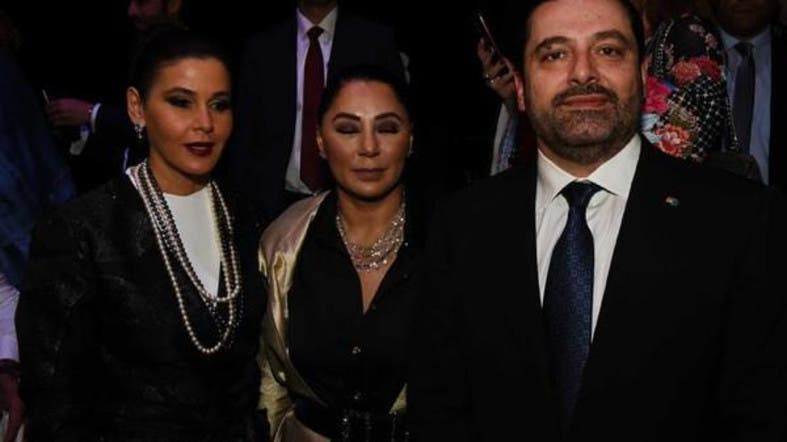
Lebanese designer Amal Azhari opened the Lebanese Fashion Week in the
presence of the Lebanese Prime Minister Saad Hariri. (Supplied)
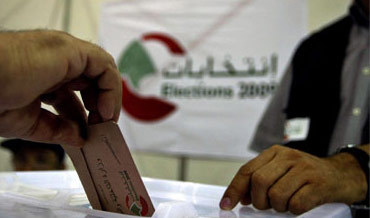
by Joseph A. Kechichian, Senior Writer – gulf news
Beirut: A few days after Lebanon President Michel Aoun suspended all
parliamentary activities for a month, the publicly lauded but privately
condemned decision garnered fresh controversies, as Speaker Nabih Berri
hailed the Maronite Patriarch Mar Bisharal Al Rai’s latest position on
the electoral law. The powerful patriarch considered the
controversial 1960 electoral law as the best available alternative to
resolve the country’s ongoing political crisis, and prevent granting
another extension to the present parliament.
Berri criticised the
latest hybrid electoral law format proposed by Free Patriotic Movement
chief Gibran Bassil, who has asked his ally Lebanese Forces (LF) leader
Samir Geagea to give it a “chance”, after the LF and Druze leader Walid
Jumblatt voiced reservations about it. Jumblatt lashed out at the
proposal, which involves sectarian voting in the first round, as
“divisive” and the product of a “sick mentality”. A similar idea was
initially proposed by Nabih Berri several months ago, but it was no
longer deemed useful.
The latest proposal regarding the electoral
law would see voting taking place in the current 26 districts with
voters only allowed to vote for candidates from their own sects. Two
candidates for each sectarian seat would thus qualify for the second
round during which voting would take place in 10 newly-defined electoral
districts and according to a non-sectarian proportional representation
polling system.

Wednesday, the sound of mortar and rifle fire has echoed across the
streets of the southern Lebanese city of Sidon. As usual, the world has
ignored it on the grounds that Palestinians have been fighting
Palestinians yet again in the largest refugee camp in Lebanon. And
so they have. Palestinian secular factions have been fighting Islamist
groups. The camp lies just to the east of the centre of Sidon and is the
usual warren of poverty and concrete huts and filthy apartment blocks,
ironically called Ein el-Helweh — which means the “sweet well” or “sweet
spring”.
Few noticed that this latest series of battles
was set off shortly after an official visit to Lebanon by Mahmoud
Abbas, the doddering old Palestinian president who long ago lost his
legal electoral mandate in the occupied West Bank but who remarked
before he left Beirut that Palestinians were dedicated to crushing
“terrorism”. Yet again, nobody took him very seriously. In fact, he was
in earnest. What he really came to Lebanon to arrange was an all-out
struggle by Fatah — the same Fatah which Abbas himself represents — and
other groups against a small but alarmingly active bunch of Islamist
Palestinians and Lebanese who had taken over the al-Tiri suburb of Ein
el-Helweh.
They are — or were — led by a man called
Bilal Badr, who in the past few hours appears to have settled in a
different area of the camp under the protection of Fatah el-Islam, whose
leader is another gang leader called Osama el-Shehabi. His Sunni Muslim
Fatah el-Islam (“Conquest of Islam”) was responsible for a series of
militant Islamic State (IS) group-like assaults on the Lebanese army in
the north of the country in 2007 — a number of soldiers had their
throats cut with knives — and its black and white flag has a hauntingly
similar design to that of the real IS. The fact that IS’s own flags do actually hang in
several of Ein el-Helwe’s streets — as they have briefly in the northern
Sunni Muslim city of Tripoli — only makes the situation more
disturbing. Many Palestinian suicide bombers have in the
past set off from Ein-el-Helweh for Iraq and have actually died
attacking the Americans there.
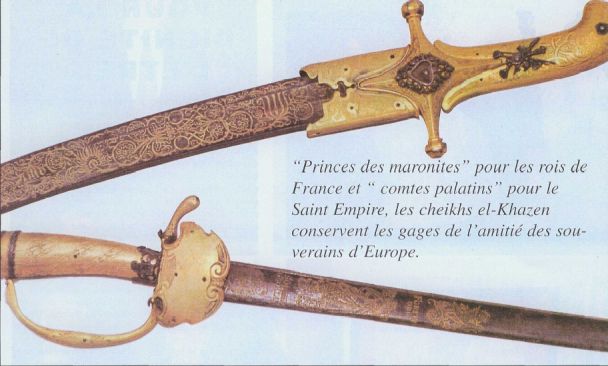
Population Movements to Keserwan - The Khazens and The Maans
ما جاء عن الثورة في المقاطعة الكسروانية
ثورة أهالي كسروان على المشايخ الخوازنة وأسبابها
Origins of the "Prince of Maronite" Title
Growing diversity: the Khazin sheiks and the clergy in the first decades of the 18th century
Historical Members:
Barbar Beik El Khazen [English]
Patriach Toubia Kaiss El Khazen(Biography & Life Part1 Part2) (Arabic)
Patriach Youssef Dargham El Khazen (Cont'd)
Cheikh Bishara Jafal El Khazen
Patriarch Youssef Raji El Khazen
The Martyrs Cheikh Philippe & Cheikh Farid El Khazen
Cheikh Nawfal El Khazen (Consul De France)
Cheikh Hossun El Khazen (Consul De France)
Cheikh Abou-Nawfal El Khazen (Consul De France)
Cheikh Francis Abee Nader & his son Yousef
Cheikh Abou-Kanso El Khazen (Consul De France)
Cheikh Abou Nader El Khazen
Cheikh Chafic El Khazen
Cheikh Keserwan El Khazen
Cheikh Serhal El Khazen [English]
Cheikh Rafiq El Khazen [English]
Cheikh Hanna El Khazen
Cheikha Arzi El Khazen
Marie El Khazen