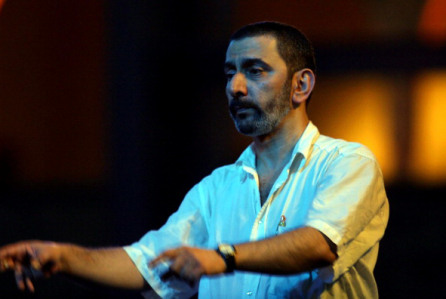
A new Lebanese film, What About Tomorrow?, which is made up of grainy footage of a 38-year-old play by legendary singer-writer Ziad Rahbani, is crushing box office records in the country. The film opened on Thursday January 21 and has already garnered 28,000 admissions in its first day. To put that into context, that’s more than Star Wars: The Force Awakens did in its entire opening weekend. The film is now anticipated to become the highest grossing Lebanese film of all time. A lot of tickets sold were part of a new phenomenon in Lebanon where people buy out whole screens and invite their friends and family for a private showing on the day of release. 12,000 tickets were sold in pre-sales alone, an un-heard of number for a film in the country.
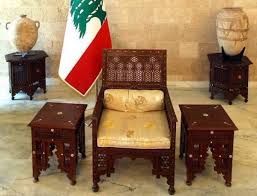
Averting to take position on the move of the Lebanese Forces’ President nominating his historic opponent, the leader of “Change and Reform”, could be labeled as the political feature theme in the Lebanese scene, yesterday; where every team took some “wiggle room” to take position on the presidential post nomination of the Republic that has been vacant since May 2014. By the time it is said that the French ambassador in Beirut is working on resolving the situation between the Lebanese political leaders.
Conversely, it seemed crystal clear that the Aoun-Geagea consensus is inadequate to resolve the presidential issue, with both sides being incapable of persuading their allies of this agreement that has for fact stunned many, for what both Christian leaders’ past partook in conflicts and bloodsheds.
For instance, Geagea failed in convincing his ally the “Future Movement” aka Tayar Al-Mustakbal, in adopting Aoun’s candidacy nomination, where the team persisted on nominating Aoun’s ally, MP Suleiman Franjieh for the post; and Aoun did not succeed in persuading the Parliament Speaker Nabih Berri in voting for him, as the latter seemed to clutch tightly to the nomination of Franjieh.
Averting to take position on the move of the Lebanese Forces’ President nominating his historic opponent, the leader of “Change and Reform”, could be labeled as the political feature theme in the Lebanese scene, yesterday; where every team took some “wiggle room” to take position on the presidential post nomination of the Republic that has been vacant since May 2014. By the time it is said that the French ambassador in Beirut is working on resolving the situation between the Lebanese political leaders.
Conversely, it seemed crystal clear that the Aoun-Geagea consensus is inadequate to resolve the presidential issue, with both sides being incapable of persuading their allies of this agreement that has for fact stunned many, for what both Christian leaders’ past partook in conflicts and bloodsheds.
For instance, Geagea failed in convincing his ally the “Future Movement” aka Tayar Al-Mustakbal, in adopting Aoun’s candidacy nomination, where the team persisted on nominating Aoun’s ally, MP Suleiman Franjieh for the post; and Aoun did not succeed in persuading the Parliament Speaker Nabih Berri in voting for him, as the latter seemed to clutch tightly to the nomination of Franjieh.
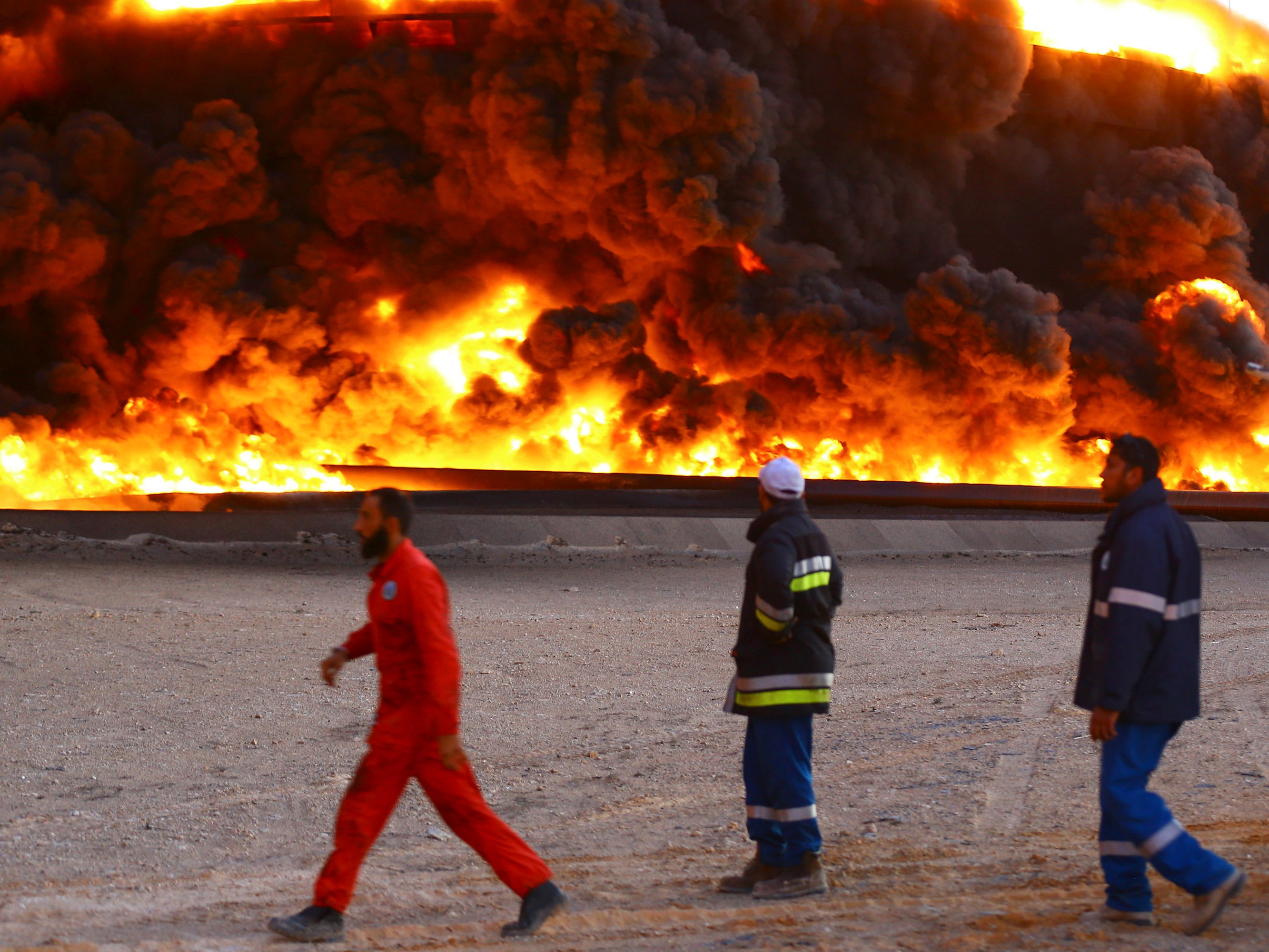
While the world has had its eyes glued on Iran, Saudi Arabia, and Syria, the Islamic State group, also known as ISIS or IS, has been creeping into another chaotic state: Libya.
And analysts think this will be a major stress point for Europe going forward.
"One of the most concrete geopolitical risks for Europe in the near future will be the complete or partial takeover of Libya by the militias of the so-called Islamic State," Citi Research’s Tina Fordham wrote.
"While the world’s attention was absorbed by the war in Syria, IS systematically increased its presence there in 2015," she added. "Their goal is to establish another resources-rich stronghold in the Arab world, thereby creating another stepping-stone towards the erection of a ‘new Caliphate.’"
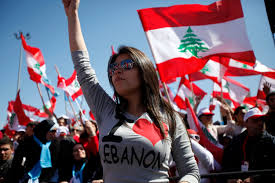
Dubai: Lebanese residents in the UAE say they were surprised by the announcement of Lebanese Forces leader Samir Geagea when he gave his backing to his rival Michael Aoun for the presidency on Monday night.
Suzanna Mounzer, 25, who works in public relations, told Gulf News the move will unite the largest Christian parties in Lebanon.
“Personally, I don’t follow Lebanese politics because it is shameful. It is a shame we couldn’t even agree on a president. [The issue] has been dragging the country down and making it’s citizens’ lives more difficult,” she said.
“I have been away from Lebanon for so long, its politics don’t affect me much,” she said, adding that she was against sectarianism.
catholicherald.co.uk/
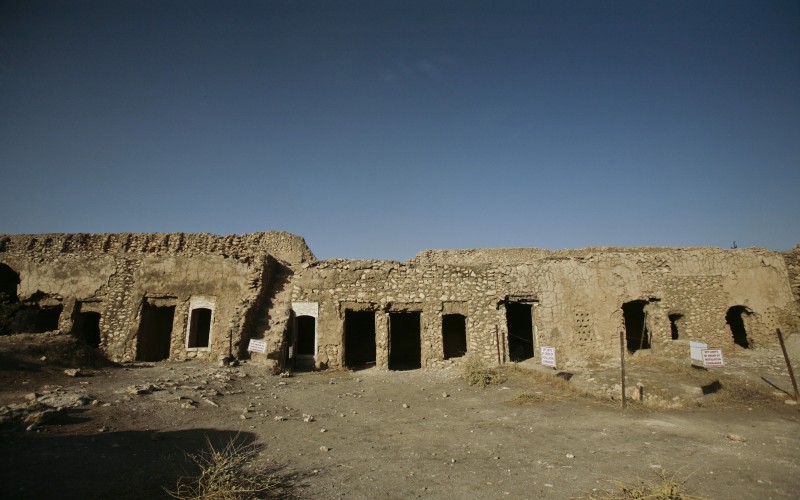
The oldest monastery in Iraq has been destroyed by ISIS, according to reports.
St Elijah’s Monastery of Mosul had stood for 1,400 years and had recently been used as a place of worship by US troops. However, satellite photos obtained by Associated Press (AP) show that the monastery has been razed.
Fr Paul Thabit Habib, 39, a priest exiled in Irbil, Iraq, said: “I can’t describe my sadness. Our Christian history in Mosul is being barbarically leveled. We see it as an attempt to expel us from Iraq, eliminating and finishing our existence in this land.”
After reviewing the satellite images, imagery expert Stephen Wood, CEO of Allsource Analysis, told AP that the destruction of the monastery took place between August 27 and September 28, 2014.
Ya Libnan
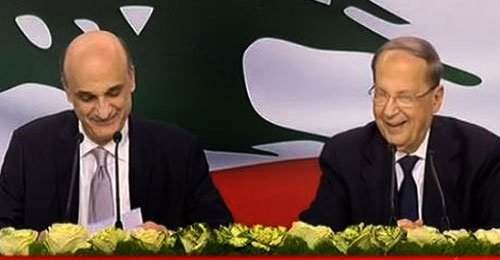
Speaker Nabih Berri has said that he would not announce his stance with regards to Lebanese Forces chief Samir Geagea’s endorsement of Change and Reform bloc leader MP Michel Aoun for the presidency before the picture becomes clear.
In remarks to his visitors, Berri said: “As the head of Amal Movement, I will bring together the leadership council and the Politburo when the picture becomes clearer to take the final stance from the presidency.”
Huffington Post–
Back in August 2014, the al-Qaida affiliate in Syria, the Nusra Front, and Islamic State group (IS) forces attacked the Lebanese town of Arsal. The fighting concluded with the capture of 30 Lebanese policemen and soldiers. Immediately after the battle, the Nusra Front and IS executed two soldiers each. One died from wounds sustained from fighting in Arsal, while 16 soldiers remained in the custody of the Nusra Front, and nine remained imprisoned by IS. Sixteen months later, an exchange of captives took place between Lebanon and the Nusra Front. The deal was brokered by Qatar, who has over the last decade been playing somewhat controversial, but often crucial roles in conflict mediation throughout the region. At the time, December 1, 2015, the event attracted substantial public attention, but it quickly faded into the background of the news cycle. At first glance, the return of 16 Lebanese policemen and soldiers–held by the Nusra Front since August 2014–seemed like a routine swap between belligerents as a result of successful local level negotiations–most of which took place recently as a result of the stalemate felt by all sides on the ground. Yet, this exchange differs because it took place between a non-state actor–in this case, an internationally agreed upon terrorist organization–and a neighboring state, Lebanon; with the blessing of the Syrian and Saudi governments.
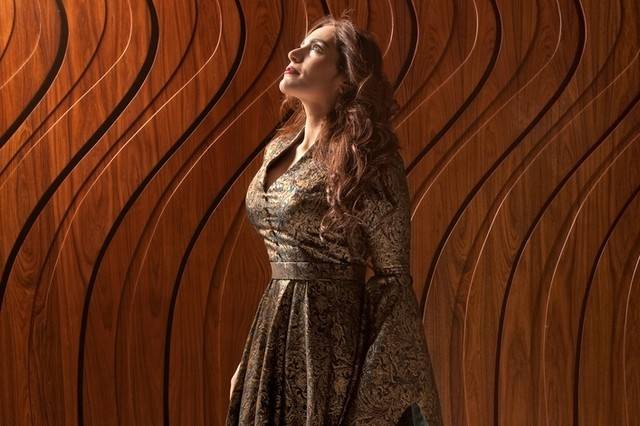
It’s said that music has the power to cross borders – but few artists have exerted quite as much energy exploring the ability of rhythm and melody to transcend time, place and faith as Abeer Nehme.
The Lebanese performer is one of those fluid talents best described as a polymath. A learned musicologist, devoted to the academic study of music’s roots, she is also an actor and TV presenter, who recently completed a four-year journey filming Ethnopholia Musiqa Al Chou’oub, a 40-episode musical documentary in which she criss-crossed the globe to explore the ethnic musical traditions of more than 10 countries.But first and foremost, Nehme is a performer, a gifted vocalist who draws on these experiences to present her own concerts.
She will take to the stage at Abu Dhabi’s Mushrif Park on Sunday to launch the Um
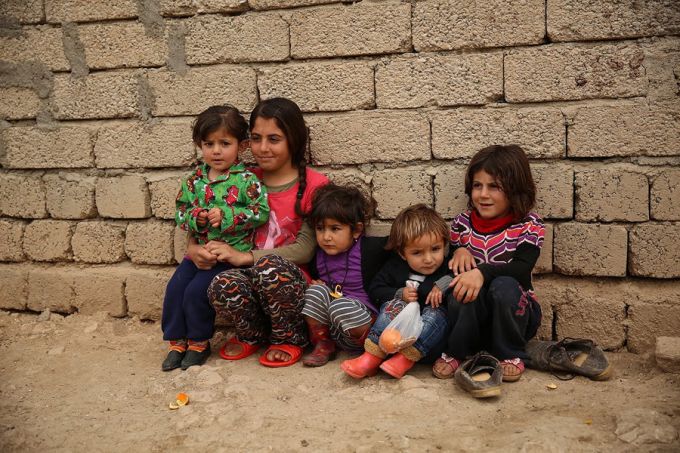
.- A new United Nations report has tried to count the civilian toll of continuing conflict in Iraq, largely at the hands of Islamic State militants, and the numbers are "staggering."
“Even the obscene casualty figures fail to accurately reflect exactly how terribly civilians are suffering in Iraq,” Zeid Ra’ad Al Hussein, the U.N. High Commissioner for Human Rights, said Jan. 19.
“The figures capture those who were killed or maimed by overt violence, but countless others have died from the lack of access to basic food, water or medical care.”
He said the report showed the sufferings of Iraqi civilians and “starkly illustrates what Iraqi refugees are attempting to escape when they flee to Europe and other regions.”
“This is the horror they face in their homelands.” Between January 2014 and October 2015, at least 18,802 civilians were killed in Iraq. About half of them died in Baghdad province. Another 36,000 were injured.




Population Movements to Keserwan - The Khazens and The Maans
ما جاء عن الثورة في المقاطعة الكسروانية
ثورة أهالي كسروان على المشايخ الخوازنة وأسبابها
Origins of the "Prince of Maronite" Title
Growing diversity: the Khazin sheiks and the clergy in the first decades of the 18th century
Historical Members:
Barbar Beik El Khazen [English]
Patriach Toubia Kaiss El Khazen(Biography & Life Part1 Part2) (Arabic)
Patriach Youssef Dargham El Khazen (Cont'd)
Cheikh Bishara Jafal El Khazen
Patriarch Youssef Raji El Khazen
The Martyrs Cheikh Philippe & Cheikh Farid El Khazen
Cheikh Nawfal El Khazen (Consul De France)
Cheikh Hossun El Khazen (Consul De France)
Cheikh Abou-Nawfal El Khazen (Consul De France)
Cheikh Francis Abee Nader & his son Yousef
Cheikh Abou-Kanso El Khazen (Consul De France)
Cheikh Abou Nader El Khazen
Cheikh Chafic El Khazen
Cheikh Keserwan El Khazen
Cheikh Serhal El Khazen [English]
Cheikh Rafiq El Khazen [English]
Cheikh Hanna El Khazen
Cheikha Arzi El Khazen
Marie El Khazen