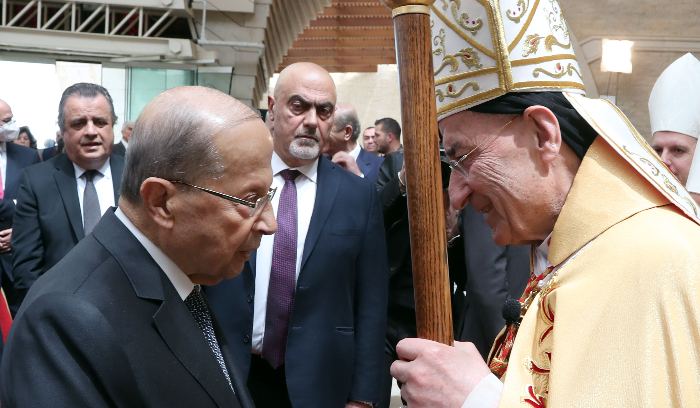
by reuters — BEIRUT — Lebanese and Israeli leaders finalized a U.S.-brokered maritime demarcation deal on Thursday, bringing a measure of accommodation between the enemy states as they eye offshore energy exploration. Leaders from Lebanon, Israel and the U.S. have all hailed the deal as “historic” but the possibility of a wider diplomatic breakthrough remains slim. As a result, there was no joint signing ceremony. Lebanese President Michel Aoun signed a letter approving the deal at his palace in Baabda in the presence of the U.S. official who mediated the accord, Amos Hochstein. “We have heard about the Abraham Accords,” said top Lebanese negotiator and deputy parliament speaker Elias Bou Saab, referring to the 2020 U.S.-brokered normalization of ties between Israel and the UAE and Bahrain. “Today there is a new era. It could be the Amos Hochstein accord.” Israeli Prime Minister Yair Lapid signed separately in Jerusalem, saying the deal was a “tremendous achievement” that had produced Lebanon’s de facto recognition of Israel. “It is not every day that an enemy country recognizes the state of Israel, in a written agreement, in view of the international community,” Lapid told his cabinet in broadcast remarks.
In a pre-recorded interview aired later on Thursday, Aoun said delineating the boundary would prevent war with Israel and that the full status of the southern border would be resolved later through “dialogue.” But he insisted the accord did not constitute a peace agreement with Israel, after having earlier said the deal was purely “technical” and would have “no political dimensions or impacts that contradict Lebanon’s foreign policy.” Lebanon does not recognize Israel’s right to exist and still considers itself at war with its neighbor, with laws barring contact with Israeli officials. It is not every day that an enemy country recognizes the state of Israel, in a written agreement, in view of the international community. — Israeli Prime Minister Yair Lapid “Confidence-building measure” Lower-level delegations from each country headed to the United Nations’ peacekeeping base at Naqoura along their contested land border, which has yet to be delineated.