Khazen

NO COMMUNION for first time in 2,000 years

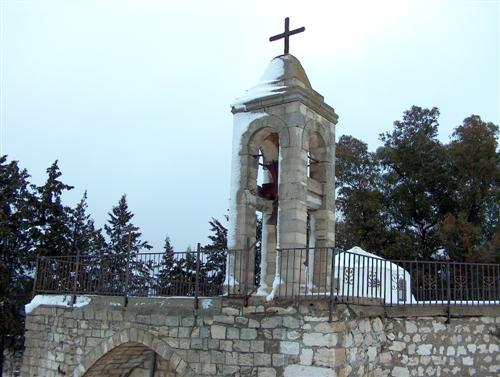
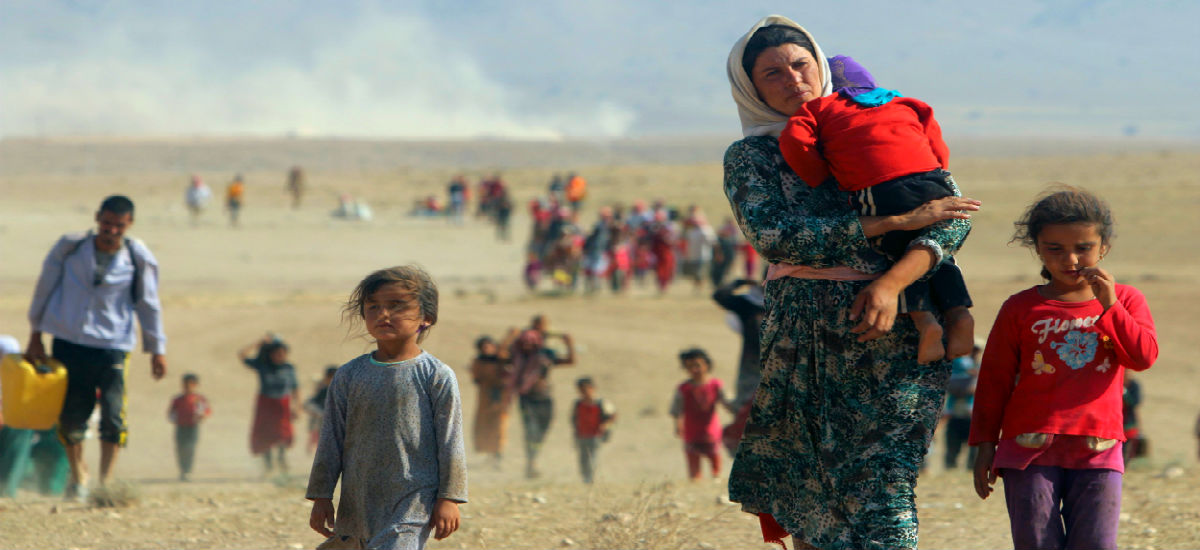
LOS ANGELES, CA (Catholic Online) – The ancient region of Nineveh in Iraq, one of the world’s first Christian enclaves, has been emptied of its Christians. Islamic State terrorists have driven off or murdered the entire city’s population of Christians. Across Iraq other Christians have fled en masse. Canon Andrew White, the only Anglican Vicar in Iraq told the Telegraph "Last week there was no communion in Nineveh for the first time in 2,000 years. All are closed, all their people have run away."

Despite the extreme dangers, Christians are permitted to live in the Islamic State, but only if they pay a punishing tax. All who could flee did so. Christians in other parts of Iraq have also fled, lacking confidence in that nation’s security forces. According to Canon White, only the poor remain, without the means to flee or pay any taxes. Should the Islamic State resume its advance, these people will simply have to choose between conversion and martyrdom.  Canon White expressed skepticism to The Telegraph that airstrikes would stop the Islamic State, and that he, along with many others, thought that troops would have to be on the ground to defeat the terrorists. He also acknowledged that nobody would want casualties, so he understands why no troops have been sent.
It isn’t just Canon White who is pessimistic about the future of Christianity in Iraq. A priest named "Father Nawar" was on record in the Christian Post as saying "Christianity is finished in Iraq."
Read more
An Intimate Look Inside Sudan’s & Relations


Autocratic regimes in the Middle East are black boxes, and experts constantly disagree over who really moves the levers of power in opaque or compartmentalized authoritarian systems.

Observers can give very different answers to this question — and the answer is sometimes known by only a small handful of regime insiders. When few people really know who’s making the decisions within a place like Iran or Syria, it becomes harder for outside actors to formulate a response to those decisions. 

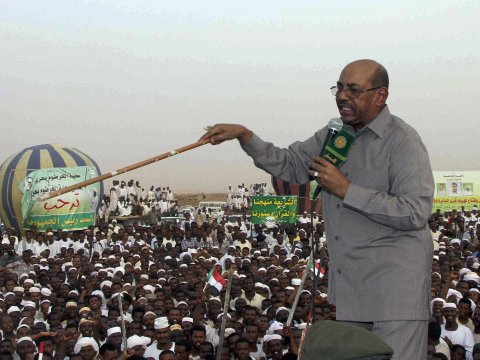
A 30-page internal document obtained and published by researcher, activist, Smith College English professor and Enough Project senior fellow Eric Reeves gives a partial answer to these questions, in one country at least. The minutes of a high-level meeting among security officials in Sudan offers a glimpse into how the sausage is made within one notoriously opaque and deeply problematic Middle Eastern regime. 

(On his website, Reeves claims the source of the document is unimpeachable and is firmly standing behind its authenticity. One Sudanese expert contacted by Business Insider said he believes the document is real, although another expressed skepticism about its veracity.)

The document captures the positions of major regime players on various important strategic issues, giving an idea of whose opinion counts — and whose doesn’t. And it places some obscure and shadowy regime figures at the center of the decision-making process, including operatives whose names likely wouldn’t be known to a majority of people inside Sudan itself.

Read more
King of vintage Cameron Silver’s book now available in Beirut

  BEIRUT: What Cameron Silver, fashion historian and philanthropist, does not know about fashion is not worth knowing. Named one of Time magazine’s 25 Most Influential Names and Faces in Fashion in 2002, Silver is regarded as one of the top vintage experts in the world. Silver was in Beirut last week to sign the […]

Read more
Lebanon: Rising Violence Targets Syrian Refugees

  (Beirut) – The authorities in Lebanon are failing to take adequate steps to prevent and to prosecute increasing violence by private citizens against Syrians following the outbreak of clashes in Arsal in August 2014 between the Lebanese Army and extremist groups the Islamic State and Jabhat al-Nusra and the subsequent executions of three Lebanese […]

Read more
US Intelligence Underestimated ‘Jihadist Nonsense’ in Middle East: Obama

  U.S. President Barack Obama said that he had underestimated the Islamic State. He also said that the United States had overestimated the capabilities of the Iraqi army as well. Obama was interviewed on CBS’ "60 Minutes" where he expressed his views about the present U.S. mission in the Middle East.While the interview is going […]

Read more
If negotiating with IS can save some lives, why don’t we do it?

  By: Robert Fisk He’s offered to do a deal with Isis. No, not David Cameron. Not Obama, of course. I’m talking about Walid Jumblatt, the Lebanese Druze leader. He’s demanding that the Lebanese government swap Islamist prisoners for 21 soldiers and policemen held by Isis and Jabhat al-Nusra. In case you had forgotten – […]

Read more
Clooney and Alamuddin cap weekend nuptials with civil ceremony

  VENICE: U.S. actor George Clooney and Lebanese-born human rights lawyer Amal Alamuddin formalized their marriage in a civil ceremony in Venice on Monday, capping star-studded weekend nuptials. The two, who married at a lavish party on Saturday night, spent about 10 minutes inside the lagoon city’s 14th century city hall for a civil service […]

Read more
Youths Storm al-Jazeera Office in Beirut, Demand Apology to Army

A group of youths stormed on Sunday evening al-Jazeera television office in Beirut protesting against what was issued by it about the army. The youths declared protesting in the television’s building until an apology is presented by al-Jazeera. LBCI stated: “A group of youths under the title Omega Team protested in al-Jazeera television office in […]

Read more
Le liban que jai aime

Le liban que jai aime

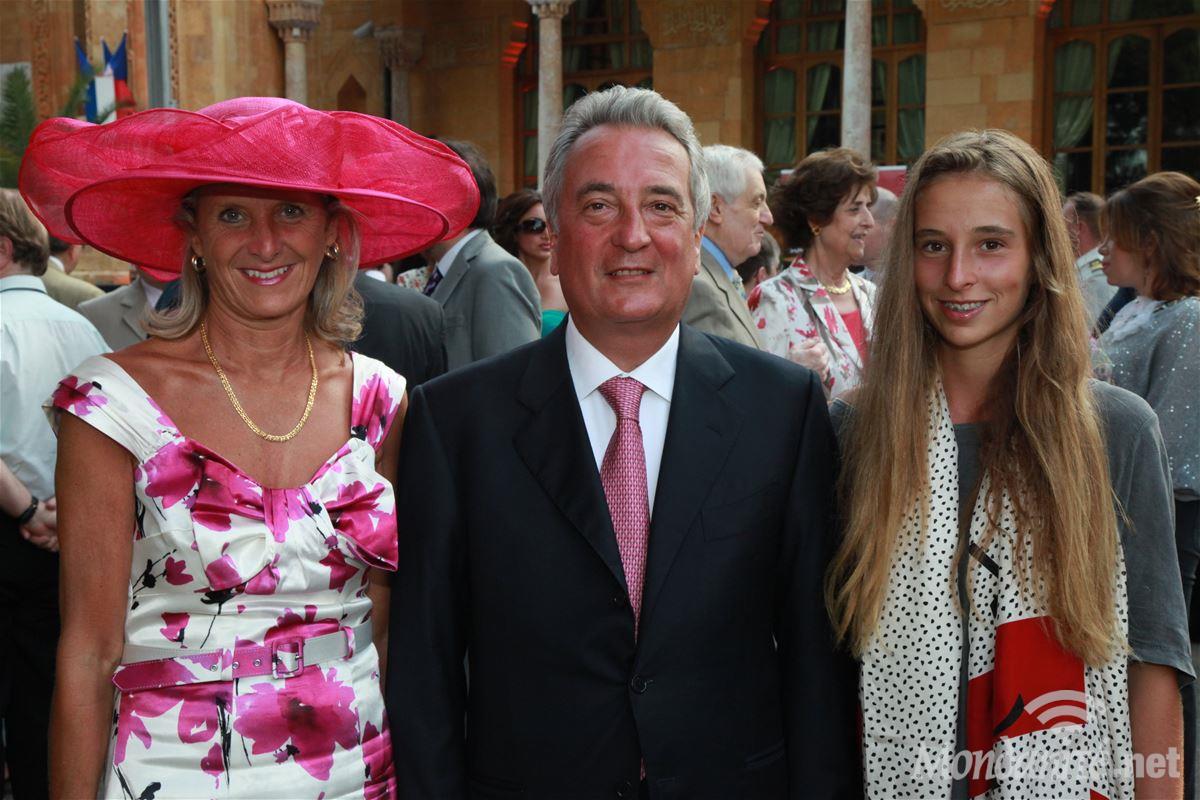
Allegra MORABITO
Fille de l’ambassadeur d’Italie au Liban

Sheba Morabito, the Ambassador of Italy and Allegra Morabito

Et derrière cette chaleur, ses tensions politiques, ses roquettes, ses maladies, ses virus, sa pollution, son embouteillage omniprésent, ses ouvriers qui te sifflent chaque deux mètres en criant « kifik ya helweh », son langage incompréhensible, sa distance qui sépare un endroit de l’autre, son manque de propreté, sa corruption, ses promesses jamais respectées, sa propagande, sa censure, sa discrimination, ses accidents de voitures, ses lois ignorées, ses odeurs variées, ses chansons qui ne cessent de répéter « habibi » et « hayeteh », sa température qui passe de 10 degrés à 30 degrés d’un jour à l’autre, l’absence d’un président, ses ruines oubliées, je sais que le Liban va me manquer.

Je sais que devant chaque plat de pâtes, je penserai au taboulé et au fattouche, au kebbé et à la man’oucheh, à la labné et au hommos, à la limonade et au jellab, au taouk et au kafta, à la fraîcheur des fruits et des légumes, à l’achta et au kneffeh, aux pistaches et aux noisettes.
Je sais que ses lumières et ses feux d’artifice quotidiens, sa vivacité et sa gaieté, ses night-clubs et ses restaurants me manqueront.
Je sais que les grosses lèvres et les seins qui semblent toucher le sol de certaines Libanaises, le botox excessif et les nez invisibles, retroussés, alimenteront mes moments de tristesse.
Je sais que le mélange de langues dans chaque phrase accompagnée d’un « Hi ! Ça va ? Chou, tu as fait quoi hier, hayeteh ? », les insultes qui occupent 60 % des phrases n’accompagneront plus mes conversations. Et, bizarrement, après quatre ans ici, se convaincre d’arrêter d’utiliser « ya3ne », « enno », « an jad », « walaw », « hayeteh »… chaque deux mots sera un combat pour moi.

Read more
Why Is The Middle East Failing? Because There Are Too Many Young Men, And No Women

  Events in Afghanistan and the Middle East have awakened the Western world to the existence of an existential threat. We are not confronting a specific grievance that could be remedied by negotiation.  We are not faced simply with rogue regimes and insurgent groups that can be dealt with through sanctions and reciprocal menaces. The […]

Read more