BEIRUT – President Michel Suleiman condemned the “cowardly” assassination of former Finance Minister Mohammad Chatah and called for further solidarity among the Lebanese. “This cowardly act, whatever the messages it carries are, will only make the Lebanese more determined to protect their country and preserve it as a space for peace, stability and dialogue in […]
Your Excellency, We are taking this exceptional step to address you and other regional and global leaders because these are exceptionally dangerous times for our country. Not only is Lebanon’s internal and external security being seriously threatened, but the very unity of our state is in real jeopardy. It is our obligation to […]
khazen.org condemns the terrorists attacks in Beirut targeting Minister Chatah. We pray for the victims & hope lebanese unite for peace, liberty and security.
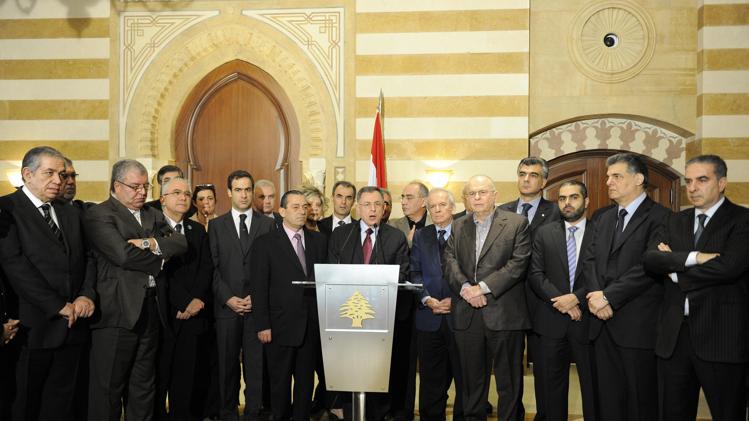
Lebanon’s former prime minister Fouad Siniora (C), accompanied with members of the "March 14" coalition, speaks as he condemns and announces the death of the Former Lebanese minister Mohamad Chatah in Beirut December 27, 2013. Former Lebanese minister Mohamad Chatah, who opposed Syrian President Bashar al-Assad, was killed in a massive bomb blast which one of his political allies blamed on Lebanon’s Shi’ite Hezbollah militia. REUTERS/Hussam Shebaro (LEBANON – Tags: POLITICS CIVIL UNREST)
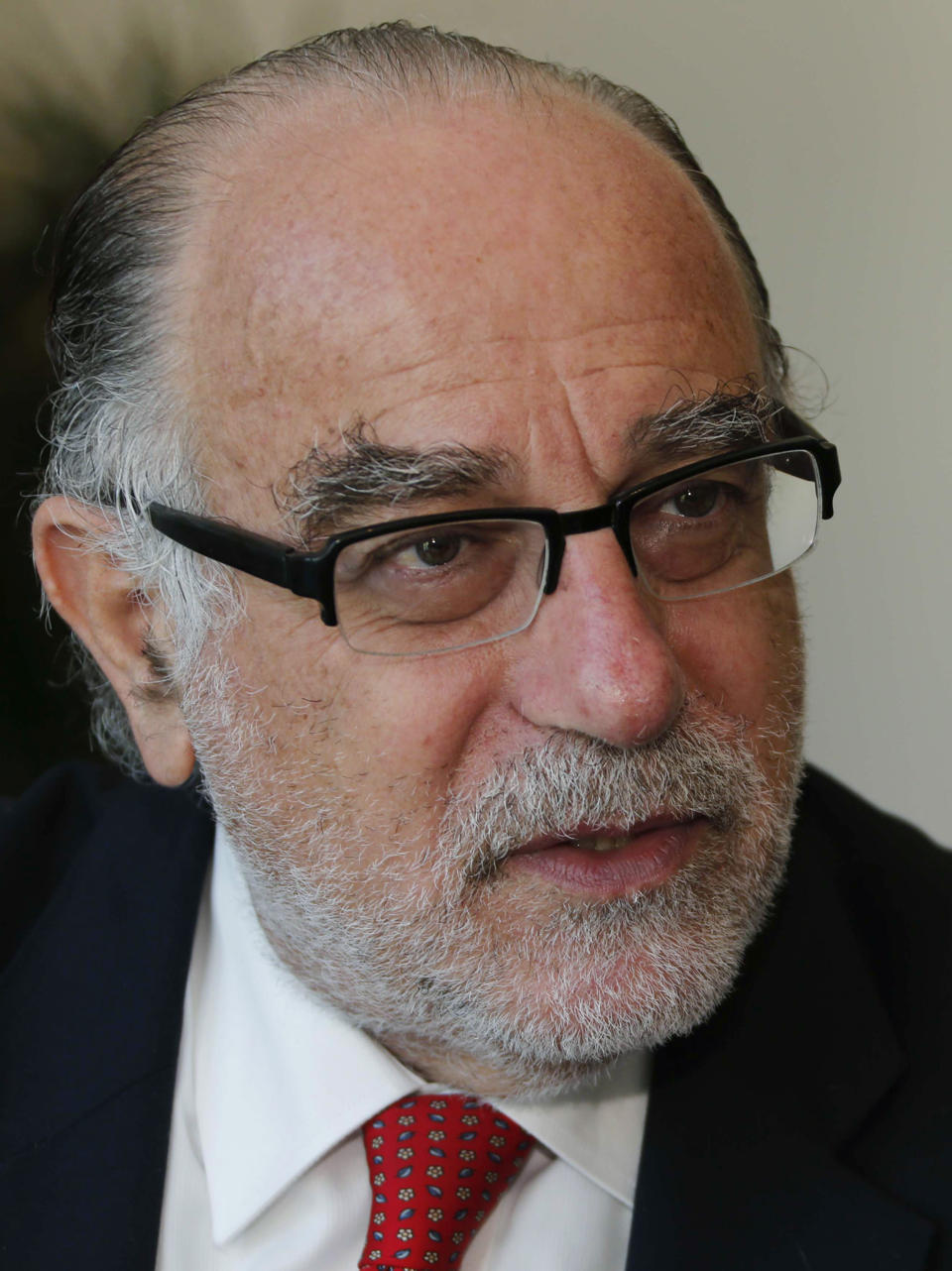
In this photo taken on Oct. 1, 2013, Mohammed Chatah, a former finance minister and a senior aide to former Prime Minister Saad Hariri, speaks during an interview in Beirut, Lebanon. A powerful car bomb tore through a business district in the center of the Lebanese capital Friday, Dec. 27, killing Chatah, a prominent pro-Western politician and at least five other people in an assassination certain to hike sectarian tensions already soaring because of the civil war in neighboring Syria. (AP Photo/Ahmad Omar)
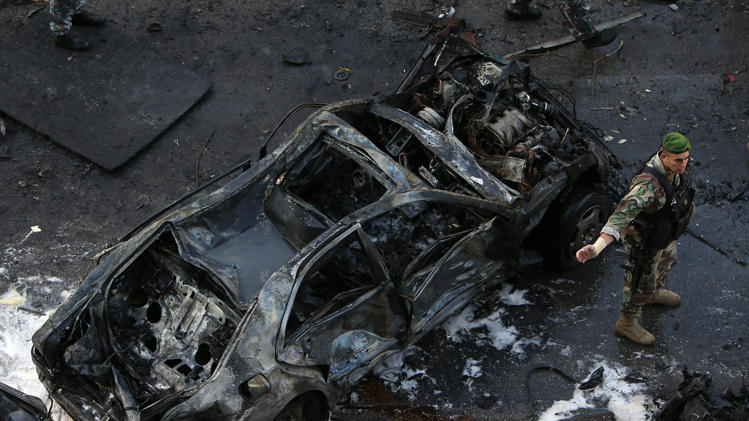
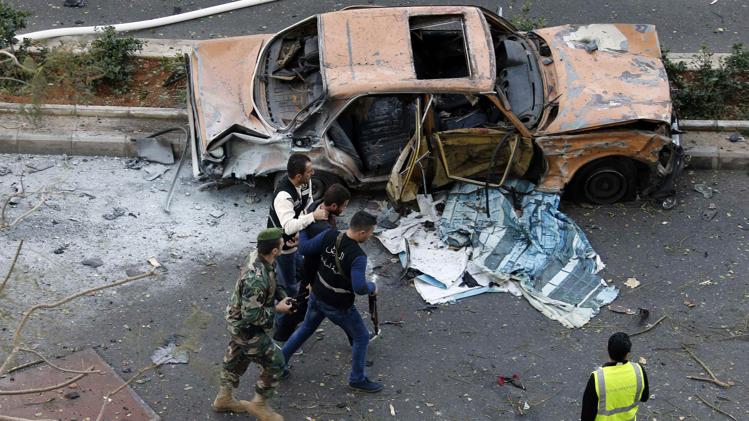
A Lebanese Army soldier stands next to a destroyed car at the scene of an explosion in central Beirut, Lebanon, Friday, Dec. 27, 2013. The state news agency said a bombing in central Beirut has killed several people, including Mohammed Chatah, a senior aide to former Lebanese Prime Minister Saad Hariri. (AP Photo/Hussein Malla)
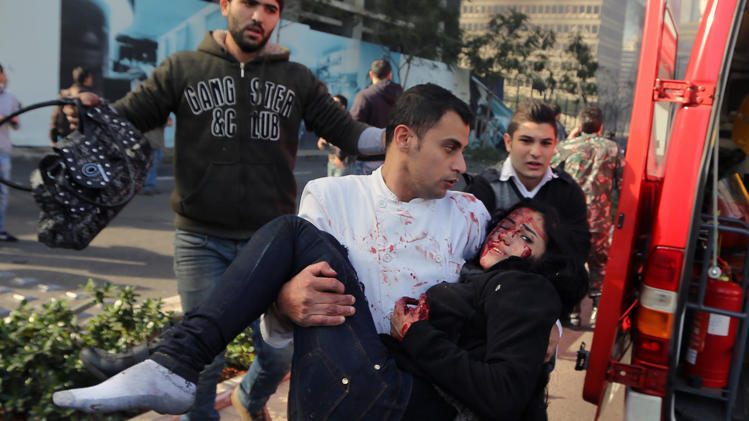
A Lebanese man carries an injured woman at the scene of an explosion in Beirut, Lebanon, Friday, Dec. 27, 2013. A strong explosion has shaken the Lebanese capital, sending black smoke billowing from the center of Beirut. The blast went off a few hundred meters (yards) from the government headquarters and parliament building. (AP Photo/Bilal Hussein)
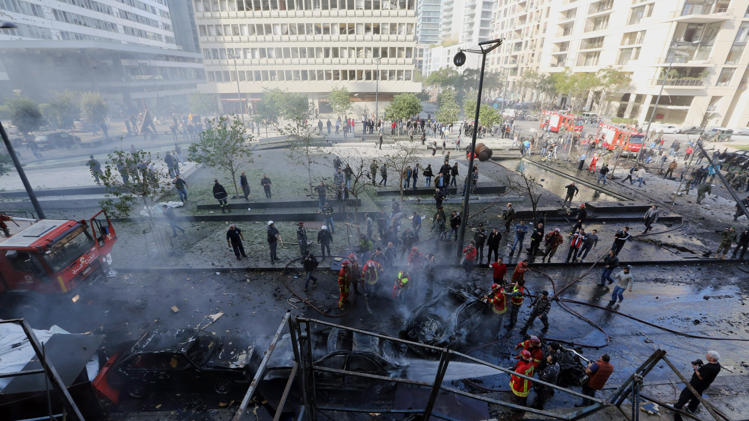
Lebanese firefighters extinguish burned vehicles at the scene of an explosion in Beirut, Lebanon, Friday, Dec. 27, 2013. A strong explosion has shaken the Lebanese capital, sending black smoke billowing from the center of Beirut. The blast went off a few hundred meters (yards) from the government headquarters and parliament building. (AP Photo/Bilal Hussein)
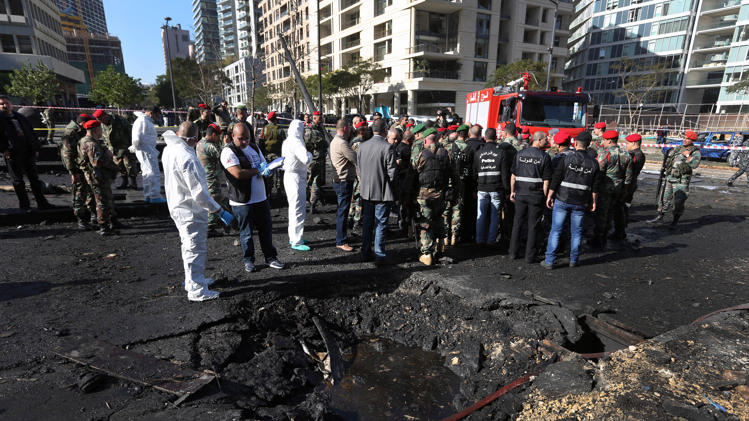
Lebanese army investigators in white coveralls stand next to a blast crater at the scene of an explosion in Beirut, Lebanon, Friday, Dec. 27, 2013. A powerful car bomb tore through a business district in the center of the Lebanese capital Friday, killing Mohammed Chatah, a prominent pro-Western politician and at least five other people in an assassination certain to hike sectarian tensions already soaring because of the civil war in neighboring Syria. (AP Photo/Bilal Hussein)

Workers clean up broken glass in front of a Christmas tree in the entrance of a business center at the scene of an explosion, in central Beirut, Lebanon, Friday, Dec. 27, 2013. The powerful car bomb tore through a business district in the center of the Lebanese capital Friday, killing a prominent pro-Western politician and several other people in an assassination certain to hike sectarian tensions already soaring because of the civil war in neighboring Syria. (AP Photo/Hussein Malla)
Workers clean up broken glass in front of a Christmas tree in the entrance of a business center at the scene of an explosion, in central Beirut, Lebanon, Friday, Dec. 27, 2013. The powerful car bomb tore through a business district in the center of the Lebanese capital Friday, killing a prominent pro-Western politician and several other people in an assassination certain to hike sectarian tensions already soaring because of the civil war in neighboring Syria. (AP Photo/Hussein Malla)
Workers clean up broken glass in front of a Christmas tree in the entrance of a business center at the scene of an explosion, in central Beirut, Lebanon, Friday, Dec. 27, 2013. The powerful car bomb tore through a business district in the center of the Lebanese capital Friday, killing a prominent pro-Western politician and several other people in an assassination certain to hike sectarian tensions already soaring because of the civil war in neighboring Syria. (AP Photo/Hussein Malla)
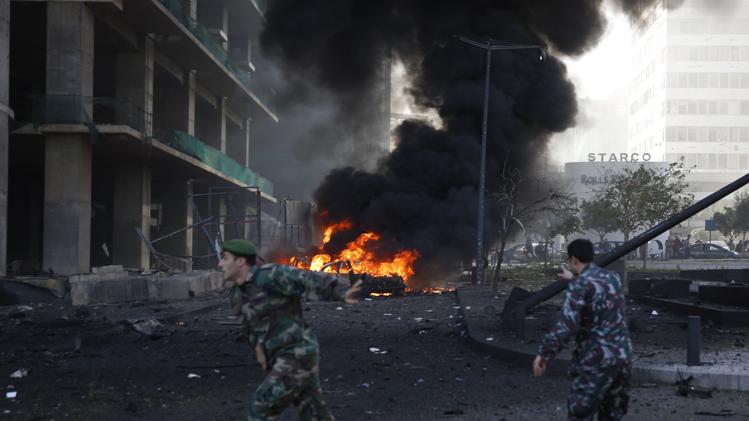
REFILE – CORRECTING TRANSLITERATION OF THE NAME MOHAMAD CHATAH A Lebanese army soldier gestures as he runs near the site of the explosion in Beirut’s downtown area December 27, 2013. Former Lebanese minister Mohamad Chatah was killed in the explosion that targeted his convoy in Beirut on Friday, three security sources told Reuters. REUTERS/Steve Crisp (LEBANON – Tags: POLITICS CIVIL UNREST MILITARY)
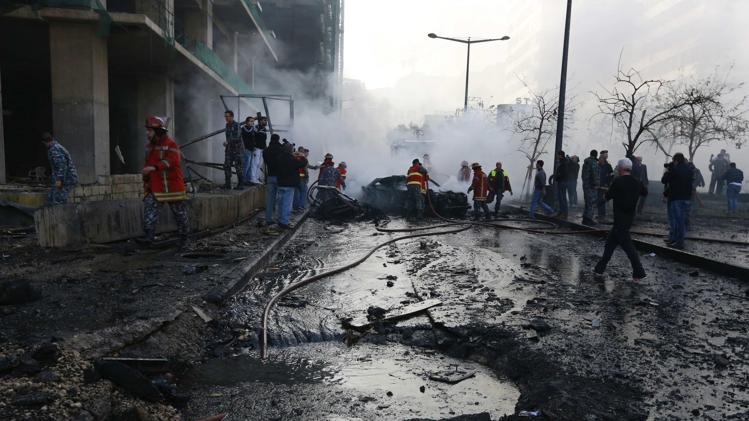
REFILE – CORRECTING TRANSLITERATION OF THE NAME MOHAMAD CHATAH A view of a crater that was caused by an explosion in Beirut’s downtown area December 27, 2013. Former Lebanese minister Mohamad Chatah, who opposed Syrian President Bashar al-Assad, was killed in an explosion that targeted his convoy in Beirut on Friday along with at least four other people, security sources said. REUTERS/ Jamal Saidi (LEBANON – Tags: CIVIL UNREST POLITICS)
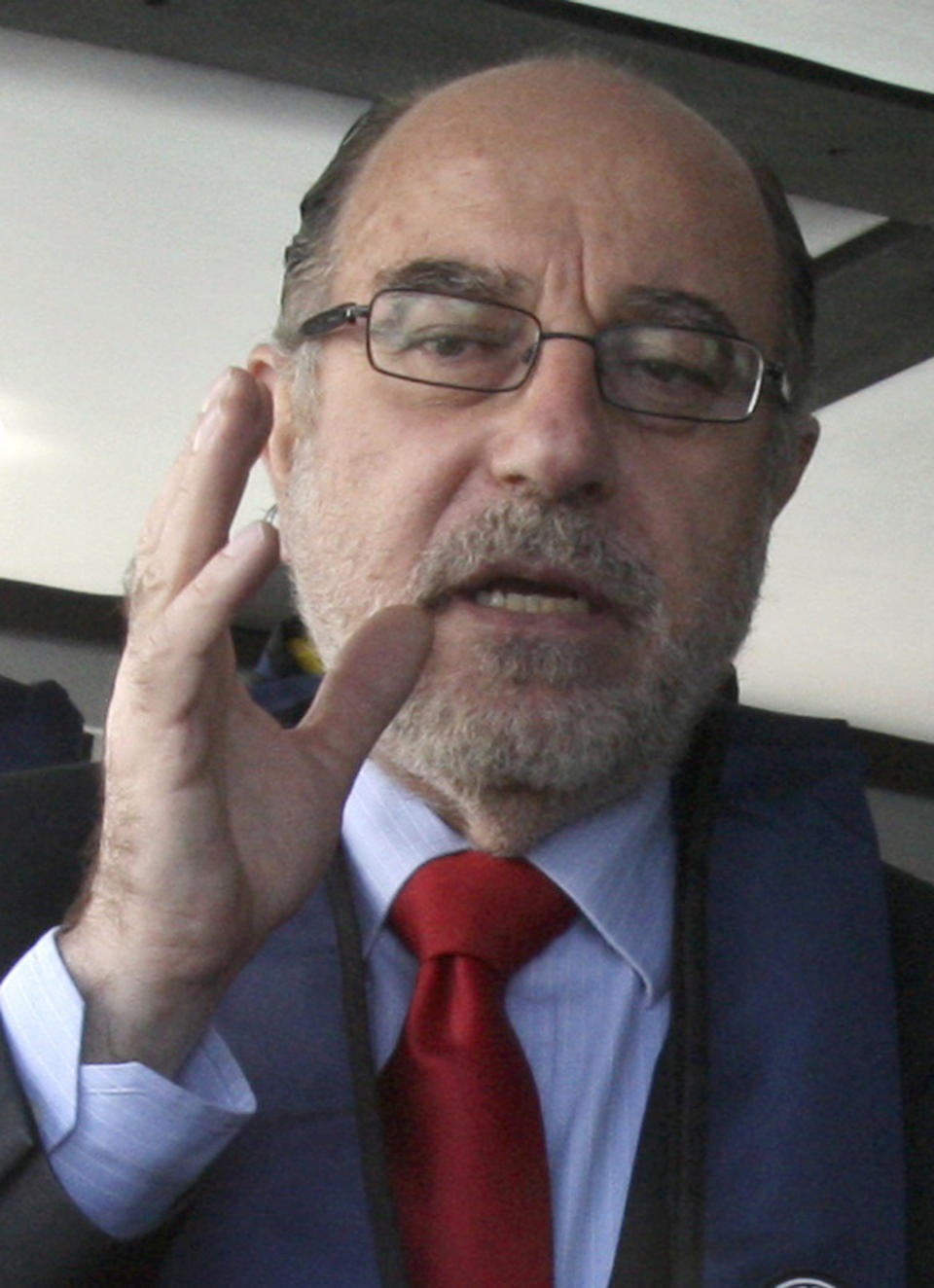
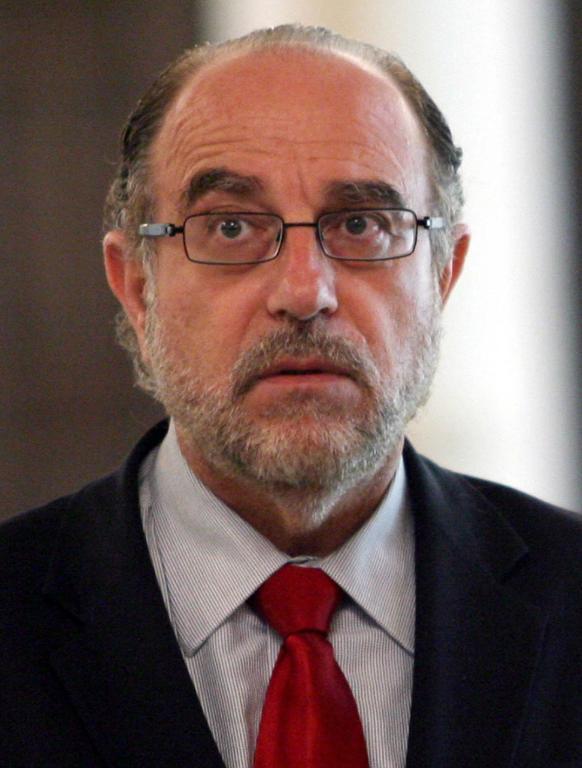
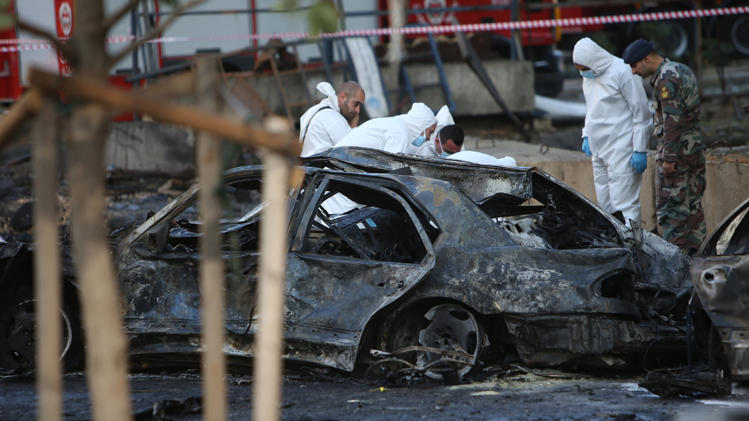
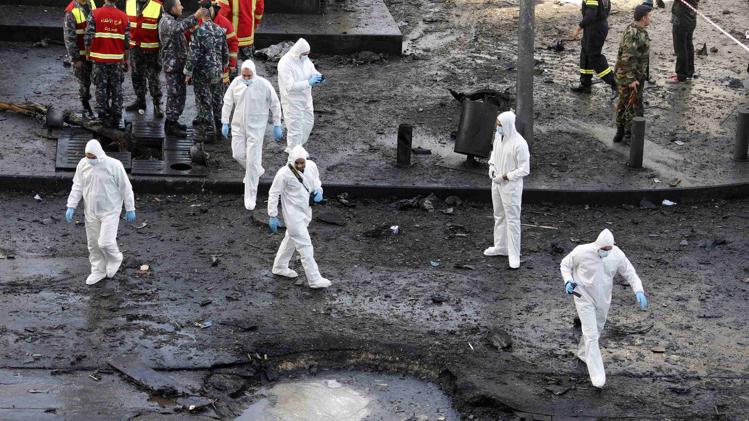
Lebanese army investigators in white coveralls inspect the scene of an explosion in central Beirut, Lebanon, Friday, Dec. 27, 2013. The state news agency said a bombing in central Beirut killed several people, including Mohammed Chatah, a senior aide to former Lebanese Prime Minister Saad Hariri. (AP Photo/Hussein Malla)
CNN) — Mohamad Chatah, a former Lebanese finance minister and ambassador to the United States, died Friday when a car bomb struck his convoy in downtown Beirut, Lebanon’s National News Agency reported.
The blast killed five others and left 71 wounded, Lebanon’s health ministry said. Cars were burned beyond recognition as a wall of flames and thick black smoke shot up from the blast site.
Chatah’s bodyguard, Mohammed Badr, was among those killed, the news agency said.
No one has claimed responsibility for the attack.
Chatah’s last tweet, posted about an hour before his death, talked about Hezbollah, the Lebanese-based Shiite militant group with which Chatah was at odds.
"#Hezbollah is pressing hard to be granted similar powers in security & foreign policy matters that Syria exercised in Lebanon for 15 yrs," Chatah tweeted.
That group decried the attack in a statement aired on Hezbollah TV, saying the it "only benefits the enemies of Lebanon."
The group called on "all the security and judicial agencies to be on high alert to expose the perpetrators and bring them to justice."
Chatah was known as a staunch critic of Syrian President Bashar al-Assad, whom he accused of meddling in Lebanon’s internal affairs. Hezbollah has sent fighters to help al-Assad’s forces in the Syrian civil war.
"A united and peaceful Syria ruled by Assad is simply not possible anymore. It has been like that for some time," Chatah wrote in his last blog post. "The status quo ante cannot be restored. Iran and Hezbollah realize this more than anyone else." http://mohamadchatah.blogspot.com/
This year marked the start of teenagers adopting other social networks instead of Facebook as their parents signed up for Zuckerberg’s site in droves. In a European Union-funded study on social media, the Department of Anthropology at University College London is running nine simultaneous 15-month ethnographic studies in seven countries to find out how teens were […]
U.S. federal authorities have arrested a Virginia-based businessman for allegedly trying to ship dozens of weapons and high-tech devices to Lebanon, according to the U.S. network ABC News. Sam Rafic Ghanem, owner of an international shipping company with offices in the Washington suburbs, was arrested Saturday after an FBI sting, ABC News said. […]
Pope Francis used the first Christmas address of his papacy on Wednesday to make a broad call for global peace and an end to violence in Syria and parts of Africa, urging atheists and followers of other religions to join together in this common cause. On a windy Christmas Day, Francis spoke from the central […]
Pope Francis lauded Jesus’ humble beginning as a poor and vulnerable baby as he celebrated his first Christmas Eve Mass as pontiff Tuesday in St. Peter’s Basilica. “You are immense, and you made yourself small; you are rich, and you made yourself poor; you are all-powerful and you made yourself vulnerable,” Francis said of Jesus […]

For the horoscopes of 2015 – 2016 please Click Here
Below 2014 Horoscopes:
Everyone’s luck is going to change in 2014 – 2015 . Oh yes, it’s true. How do we know? Because the planet of good luck, Jupiter will change signs, moving from Cancer to Leo. As of mid-year, everyone is going to have the positive Jupiter vibes in a new part of their chart. Read on to find out where Jupiter is blessing you now and will be boosting your luck as of July 16.
ARIES
BEIRUT: The Lebanese Army and the Internal Security Forces said over the weekend they boosted security measures in the country ahead of the Holiday season particularly around places of worship and shopping centers. In a statement, the General Directorate said Saturday military units expanded their deployment in the north, Mount Lebanon, Beirut, the […]
Maronite Patriarch Beshara al-Rahi dubbed Lebanese politicians on Sunday as “disabled” people for failing to agree on a new government and an electoral draft-law. “Aren’t the real disabled those who obstruct the formation of the cabinet over the impairment of their interests?” al-Rahi asked in his sermon during a mass he celebrated in […]
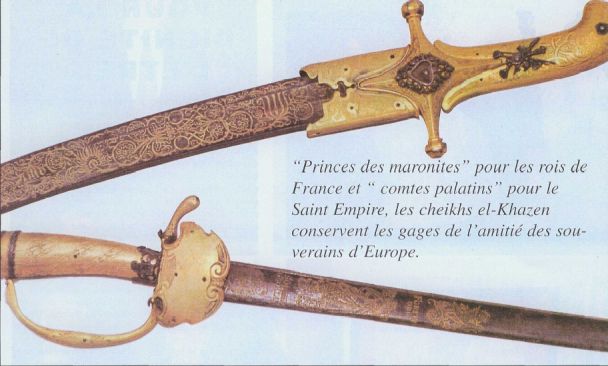
Population Movements to Keserwan - The Khazens and The Maans
ما جاء عن الثورة في المقاطعة الكسروانية
ثورة أهالي كسروان على المشايخ الخوازنة وأسبابها
Origins of the "Prince of Maronite" Title
Growing diversity: the Khazin sheiks and the clergy in the first decades of the 18th century
Historical Members:
Barbar Beik El Khazen [English]
Patriach Toubia Kaiss El Khazen(Biography & Life Part1 Part2) (Arabic)
Patriach Youssef Dargham El Khazen (Cont'd)
Cheikh Bishara Jafal El Khazen
Patriarch Youssef Raji El Khazen
The Martyrs Cheikh Philippe & Cheikh Farid El Khazen
Cheikh Nawfal El Khazen (Consul De France)
Cheikh Hossun El Khazen (Consul De France)
Cheikh Abou-Nawfal El Khazen (Consul De France)
Cheikh Francis Abee Nader & his son Yousef
Cheikh Abou-Kanso El Khazen (Consul De France)
Cheikh Abou Nader El Khazen
Cheikh Chafic El Khazen
Cheikh Keserwan El Khazen
Cheikh Serhal El Khazen [English]
Cheikh Rafiq El Khazen [English]
Cheikh Hanna El Khazen
Cheikha Arzi El Khazen
Marie El Khazen