Maronite Patriarch Beshara al-Rahi dubbed Lebanese politicians on Sunday as “disabled” people for failing to agree on a new government and an electoral draft-law. “Aren’t the real disabled those who obstruct the formation of the cabinet over the impairment of their interests?” al-Rahi asked in his sermon during a mass he celebrated in […]
Chris Leadbeater: Tragic Lebanon – and why one day I’d love to go back
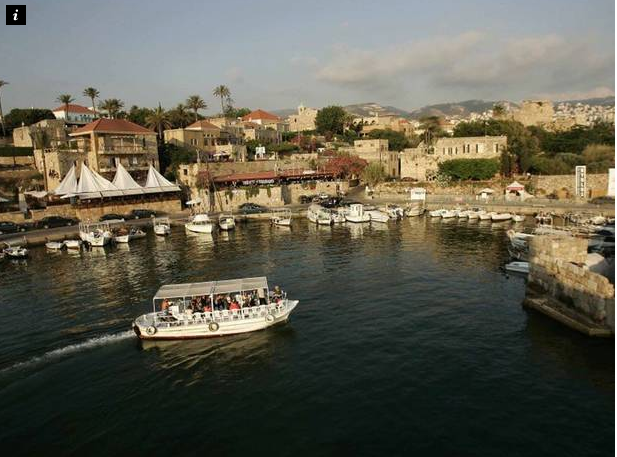

A little more than two years ago, on a warm October morning, I sat down for a coffee in a city on the edge of the Mediterranean. The café was distinctly modern, all arty decor, flatscreen TVs, Wi-Fi and – Ink Café Resto – clipped 21st-century name. But there was plenty about the scene outside – the horn-honking of cars in traffic; the lyrical rumble of voices talking in Arabic; the name of the street, Rue Cairo – to denote a place of real heritage and depth.
So, I stayed for half an hour, stirred my latte, watched Rihanna flit through another video and pondered that here was a metropolis with a future where once it barely had a present.
There will be few, if any, tourists thinking along the same lines anywhere in Beirut at the moment. The bomb blasts that struck the city’s Iranian Embassy last month, killing 23 and injuring more than 160, has seen to that – a worrying throwback to the 1980s, when explosions were regular events in the Lebanese capital as the country was eviscerated by civil war.
Christianity helps women rise out of poverty, economist finds
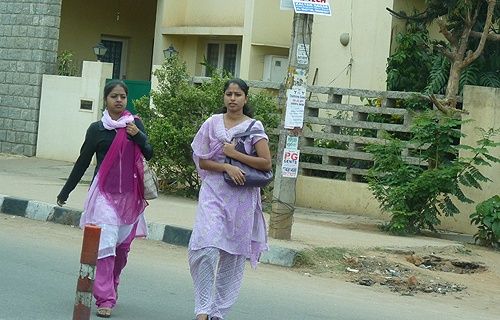
.- A researcher at Washington D.C.’s Georgetown University has found that impoverished women in India are more likely to improve their economic circumstances after converting to Christianity.“Conversion actually helps launch women on a virtuous circle. A woman feels better, she’s part of an active faith community, she works more, she earns more money: the extra money she earns and saves encourages her to earn more and save more and plan and invest in the future,” said Rebecca Samuel Shah, research fellow at Georgetown’s Berkley Center for Religion, Peace, and World Affairs.
Shah presented her initial findings of a pilot study looking at “patterns and directions where conversion had an impact” on Dalit women in Bangalore, India at a conference on “Christianity and Freedom” held in Rome on Dec. 13-14. Shah and her team studied 300 women who lived in a Dalit slum community over the course of 3 years. When they began their research, they did not know that 23 percent of the women being interviewed were actually converts to Christianity. Dalits are considered the “outcasts” of or “pariahs” of society in India.
‘Who am I to judge?’: The pope’s most powerful phrase in 2013
Pope Francis — also known as Time’s Person of the Year and Twitter’s #bestpopeever — has done a lot of talking since he was installed on the throne of St. Peter in March, tackling everything from luxury cars to income inequality in a series of interviews, sermons and written exhortations. But for veteran Vatican […]
The 100 Most Important People In History
It was only a matter of time before the tech world tried to rewrite history.
Stony Brook University computer science professor Steven Skiena and Google software engineer Charles B. Ward take on this ambitious task in a book published this fall: "Who’s Bigger: Where Historical Figures Really Rank."
Just as Google ranks web pages, the researchers created an algorithm that ranks historical figures by Wikipedia PageRank, article length, and readership, as well as achievement and celebrity.
Their conclusions have not come without controversy. The top 100 significant figures are overwhelming white and male. For example, Nelson Mandela, who helped end Apartheid in South Africa, ranked only 356. And just three women broke the top 100.
Cass Sunstein of "The New Republic" wrote a sprawling analysis of their findings. She questions not only if we can measure historical significance, but whether we should and certainly why the authors relied solely on the English-language version of Wikipedia. On that note, perhaps we could call these the most important figures in Western history.
Suleiman Contacts Hollande, Urges Lebanese Diligence to Combat Terrorism
President Michel Suleiman contacted on Tuesday French President Francois Hollande to stress Lebanon’s commitment to fighting terrorism, most notably in light of Tuesday’s blast in the Bekaa region of Baalbek, reported the National News Agency. Suleiman urged the Lebanese people “to exercise diligence against the repeated attempts to spread violence and terrorism to […]
Tea Party House Members Visit Beirut
A congressional delegation consisting of Reps. Louie Gohmert, Michele Bachmann and Steve King has arrived in Beirut, Lebanon, according to Lebanese paper The Daily Star. The Star reports that the three arrived from Cairo on Monday and were greeted at the airport by U.S. Ambassador to Lebanon David Hale. Gohmert, Bachmann and King are […]
IBM: In 5 Years, Buying Local Will Beat Buying Online
In five years, doctors will use your DNA to keep you well. Cities will be smarter and use social feedback to make residents part of decision-making processes, and retailers will leverage the power of mobile devices to upgrade in-store buying to the point where it will be a better experience than buying online. Or […]
The 10 Highest-Paid College Presidents

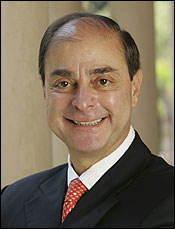
Joseph Aoun – Northeastern University President
Here are the 10 highest paid college presidents:
- Robert J. Zimmer (University of Chicago) — $3,358,723
- Joseph E. Aoun (Northeastern University) — $3,121,864
- Dennis J. Murray (Marist College) — $2,688,148
- Lee C. Bollinger (Columbia University) — $2,327,344
- Lawrence S. Bacow (Tufts University) — $2,223,752
- Amy Gutmann (University of Pennsylvania) — $2,091,764
- Anthony J. Catanese (Florida Institute of Technology) — $1,884,008
- Esther L. Barazzone (Chatham University) — $1,812,132
- Shirley Ann Jackson (Rensselaer Polytechnic Institute) — $1,752,642
- Richard C. Levin (Yale University) — $1,652,543
Christmas Tree Lit in Tripoli
A ceremony was held Sunday to light a huge Christmas tree in the northern city of Tripoli, in the presence of several religious, political and social figures. “This city will preserve its name, image and history, despite all problems,” said Tripoli’s Maronite Archbishop Georges Abu Jaoude. For his part, March 14 General Secretariat Coordinator […]
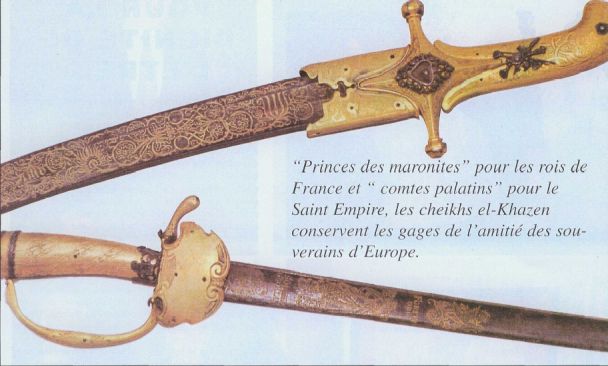
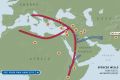
Population Movements to Keserwan - The Khazens and The Maans
ما جاء عن الثورة في المقاطعة الكسروانية
ثورة أهالي كسروان على المشايخ الخوازنة وأسبابها
Origins of the "Prince of Maronite" Title
Growing diversity: the Khazin sheiks and the clergy in the first decades of the 18th century
Historical Members:
Barbar Beik El Khazen [English]
Patriach Toubia Kaiss El Khazen(Biography & Life Part1 Part2) (Arabic)
Patriach Youssef Dargham El Khazen (Cont'd)
Cheikh Bishara Jafal El Khazen
Patriarch Youssef Raji El Khazen
The Martyrs Cheikh Philippe & Cheikh Farid El Khazen
Cheikh Nawfal El Khazen (Consul De France)
Cheikh Hossun El Khazen (Consul De France)
Cheikh Abou-Nawfal El Khazen (Consul De France)
Cheikh Francis Abee Nader & his son Yousef
Cheikh Abou-Kanso El Khazen (Consul De France)
Cheikh Abou Nader El Khazen
Cheikh Chafic El Khazen
Cheikh Keserwan El Khazen
Cheikh Serhal El Khazen [English]
Cheikh Rafiq El Khazen [English]
Cheikh Hanna El Khazen
Cheikha Arzi El Khazen
Marie El Khazen