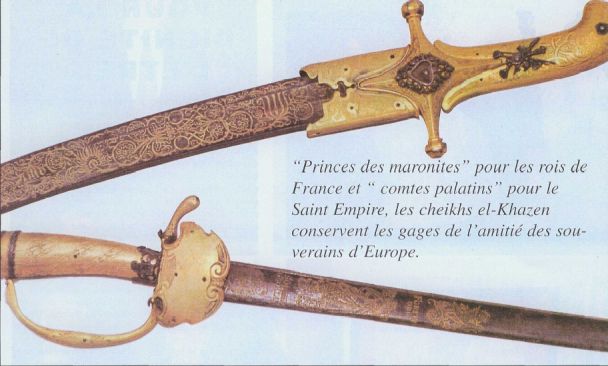
Khazen

DOWN ON STARTUPS


As startup prices soared in the runup to last year’s Facebook IPO, entrepreneurs, investors, and tech observers sometimes griped about lofty valuations.

Just mention Foursquare, say, or LivingSocial, and they’d go off.

These are tech companies that snagged a lot of press and tens (or hundreds) of millions of dollars before solidifying their business models. Investors say they’re worth tons of money—but in the end, that’s a gamble, and the companies may actually be worth nothing.

After a few years of massive hype in the startup sector, absurd-sounding valuations are starting to correct themselves. Startups are confronting the prospect of raising "down rounds" from investors—or rounds of financing that value the companies at less than the previous round.

LivingSocial, for example, was once valued at $5.7 billion; it’s now worth a quarter of that, or less, depending on whom you ask.

But more often, down rounds happen at a far earlier stage, a result of too-lofty valuations assigned in initial financings. 

What happens when companies that were once worth billions of dollars suddenly find themselves worth much, much less? And why were they ever valued that high in the first place?
 

Read more
Contacts intensify to reach law consensus

BEIRUT: Lebanese leaders intensified contacts Wednesday in a bid to achieve consensus over a new electoral law, as a source close to Speaker Nabih Berri said he would not call Parliament to vote on the controversial Orthodox proposal. Separately, British Foreign Secretary William Hague said during talks with Prime Minister Najib Mikati at the Grand […]

Read more
Syria rebels poised to strike Hezbollah

  The Free Syrian Army is poised to launch a military campaign against Hezbollah in Lebanon after a top commander on Wednesday formally confirmed a 48-hour ultimatum for the Shiite group to stop “firing” on rebel positions in the Homs province. "As soon as the ultimatum ends, we will start responding to [Hezbollah] sources of […]

Read more
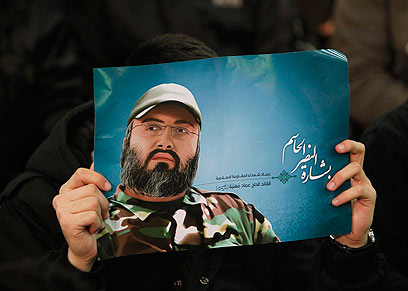
Lebanese probe: How Mughniyeh was assassinated


Tne newwspaper Al-Akhbar has led a journalistic investigation into the 2008 assassination of top Hezbollah commander Imad Mughniyeh. The report, which ends with the somber tears of his mother, has turned up new details regarding the operation in Damascus that left the senior commander of the Shiite group dead.

After the Second Lebanon War, Mughniyeh was charged with rehabilitating Hezbollah’s fighting capabilities and weaponry. "Damascus was the main station for the task, which meant that (he) had to intensify his travel to and from Syria," the online newspaper claimed.

"At the time, Mughniyeh, much like many operatives… treated Syria as one of the safest places. There was a presumption that Israel would not target Syria through direct operations," the paper explained, claiming there was an "implicit laxity" which de-facto created the possibility for his imminent assassination.


Read more
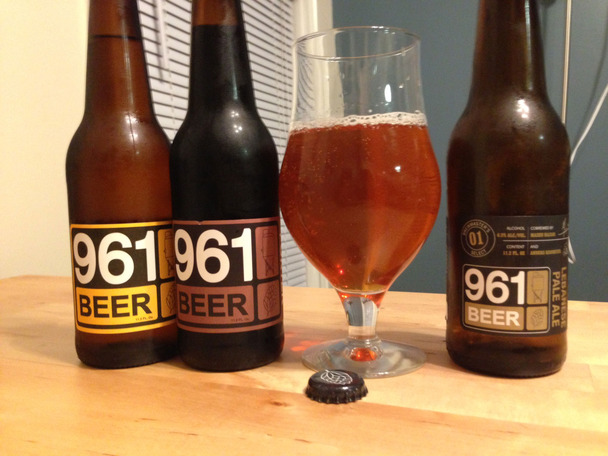
Review: 961 Beer Lebanese Pale Ale


No two brewers are alike. It sounds like the beginning of a bad joke, but the three brewers who wandered into my life last week were an MIT fermentation scientist (Mystic’s Bryan Greenhagen), the founder of American craft brewing (Boston Beer’s Jim Koch), and a former investment banker turned airline mogul who started the first microbrewery in the Middle East (Mazen Hajjar of 961 Beer).

It’s doubtful any other career path would unite these three, but I found myself having similar conversations with each brewer as I plotted out stories for the week and reflected on larger truths in the way that only a couple of beers can inspire. Extreme beer was a major topic with two of the brewers; all three agreed that they prefer to brew the kinds of beer they like to drink themselves. And there’s serious industrious talent and business chops in anyone crazy enough to start their own brewery.

Read more
Electricity barge docks at Beirut Port

  BEIRUT: The first of two Turkish electricity-generating ships aimed at helping resolve Lebanon’s endemic power shortages anchored at Beirut Port Monday, a port official told The Daily Star. “The ship docked at Beirut Port this morning [Monday],” the official said. Karadeniz Powership Fatmagul Sultan, which departed from Istanbul on Feb. 8, entered Lebanese territorial waters […]

Read more
What’s next for the Orthodox proposal?

  Although parliament’s joint committees approved the so-called Orthodox electoral proposal today, Speaker Nabih Berri gave them an extra week to study other draft laws, and it is unclear if the endorsed proposal has enough votes to become law.   In theory, the proposal should now go to the full parliament for an up or […]

Read more
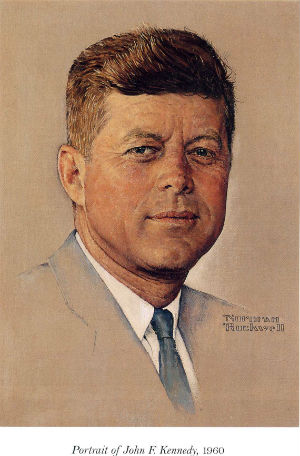
Ten surprising things you didn’t know about the American Presidents

LOS ANGELES, CA (Catholic Online) – There’s a lot of trivia to choose from when studying the presidents, so admittedly, this list is subjective. Still, some of the staff at Catholic Online got together. Here’s the list we came up with.

10. Martin Van Buren – As a child, Van Buren spoke Dutch. His parents were native speakers of the language and he was raised speaking Dutch. The fact isn’t surprising, considering the history of the time, for the United States was still a new country, widely populated with immigrants from Europe. Today however, a president who was raised speaking a language other than English would probably have to assert his American credentials, given the unfortunate politics of today.

9. James Polk’s election promise was not to be reelected. Polk was a powerful president, whose legacy lasts to this day. Most notably, Polk led the US to the war which took from Mexico the entire region that is now the Southwestern United States. Polk said during his first campaign that he would serve only one term. He kept that promise, which was astounding, even for his time. Polk died three weeks after leaving office, dying of cholera.

8. Benjamin Harrison was afraid of electricity. So scared in fact, that although he had electricity installed in the White House, he and his wife refused to touch the switches for fear of electrocution. He is also the first president to have his voice preserved in recording.

Read more