Like all long-suffering fans of the New York Mets, I am on Cloud Nine courtesy of Johan Santana, whose recent no-hitter — in the team’s 8,020th game, during its 51st season — was the first in Mets history. My enthusiasm did not ebb, not by a fraction of a quark, when Hugo Chávez […]
Electricite du Liban’s general manager Kamal al-Hayek held the company’s contract workers responsible for the blackout that plunged Lebanon into darkness on Monday. The factories are not undergoing any “maintenance or repair as there are no decisions being taken, and no meetings held but only problems moving from a floor to another” at the […]
Hassan is a Syrian living in Dahiyeh who runs a retail shop. Ever since the kidnapping of a busload of Lebanese pilgrims in Syria on May 22, Hassan says he is being threatened and intimidated into paying extortion money to men he described as “the thugs of Dahiyeh” in retribution for the pilgrims’ disappearance […]
بعد الانجيل المقدس، ألقى البطريرك الراعي عظة بعنوان "طوبى للعيون التي تنظر ما انتم تنظرون"، قال فيها: "طوب الرب يسوع ويطوب كل من يرى جمالات الله متجلية في الانسان والعائلة والمجتمع والطبيعة، ويراها عندما يرتفع في الصلاة بعقله وقلبه الى الله. ذلك أن الصلاة مشاهدة تزرع السلام والفرح في باطن الانسان. هذا ما اختبرته […]
A program launched by the government has so far completely failed to improve conditions for farmers. Earlier this year, the government launched the national program for the collection of Lebanese olive oil, which aims to purchase oil produce for the Lebanese army from willing farmers. The initiative, which was adopted under the supervision of the Agriculture […]
Saudi Crown Prince Nayef bin Abdul Aziz’s funeral will be held on Sunday with the participation of a number of Lebanese officials. Prime Minister Najib Miqati is expected to arrive in the kingdom on Sunday to take part in the service. Former Premier Saad Hariri will also attend, as will Grand Mufti Sheikh Mohammed Rashid Qabbani. The […]
The Maronite bishops synod backed on Saturday the Baabda Declaration made following the national dialogue held last week, saying it guarantees security stability in Lebanon. Following a six-day synod held under Patriarch Beshara al-Rahi in Bkirki, the bishops said in a statement they have high hopes on the all-party talks held under President Michel Suleiman. They […]
Maalouf became the first Lebanese inducted as an one of the academy’s "immortals" — the 40 lifelong members tasked as guardians of the French language. "I bring with me everything that my two homelands have given me: my background, my languages, my convictions, my doubts and, more than anything perhaps, my dreams of harmony, […]
Preparations for Pope Benedict XVI’s trip to Lebanon in September are going ahead despite the escalating conflict in neighboring Syria, the Vatican said on Thursday. "There is no uncertainty about the preparations," Benedict’s spokesman Federico Lombardi said at a press conference. "The Holy See is doing everything to make sure the trip takes place as […]
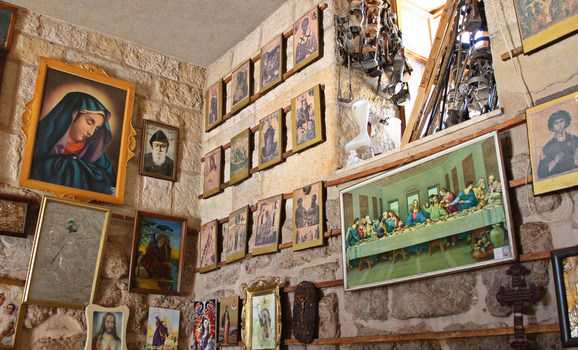
.- An ultimatum from the Syrian armed opposition’s military chief caused over 1,000 Christians to flee the west Syrian town of Qusayr, adding to fears that believers may be forced out of Syria.
“The Christian communities fear being targeted, destroyed or driven out,” said Neville Kyrke-Smith, Aid to the Church in Need’s U.K. director. “We all need to stand in prayer and solidarity now.”
Kyrke-Smith, who returned from Lebanon on June 11, told CNA that the report of Christian flight echoes the concerns he heard from bishops, priests, and religious communities concerned about Christians’ fate in neighboring Syria.
“The message time and again was ‘please do not forget the Christians of the Middle East,’” he reported.
Syrian opposition military chief Abdel Salam Harba had given an ultimatum for Christians to leave Qusayr, a town near Homs, by June 8. Some mosques in the city repeated the message in announcements from their minarets, Fides news agency reports.
Only 1,000 Christians remained in the town, which was home to 10,000 Christians before the conflict began between the Syrian government and opposition forces.
The reasons for the latest ultimatum are unclear. Some sources say it helps avoid more Christian suffering, while others say it reveals “a continuity focused on discrimination and repression.” Others say Christians’ open loyalty to the state is the reason they are driven away.
Some sources told Fides that Islamic Salafist extremists groups in the ranks of the armed opposition consider Christians to be “infidels” and are ready to start a “sectarian war.”
The extremists reportedly confiscate Christians’ goods and conduct executions.


Population Movements to Keserwan - The Khazens and The Maans
ما جاء عن الثورة في المقاطعة الكسروانية
ثورة أهالي كسروان على المشايخ الخوازنة وأسبابها
Origins of the "Prince of Maronite" Title
Growing diversity: the Khazin sheiks and the clergy in the first decades of the 18th century
Historical Members:
Barbar Beik El Khazen [English]
Patriach Toubia Kaiss El Khazen(Biography & Life Part1 Part2) (Arabic)
Patriach Youssef Dargham El Khazen (Cont'd)
Cheikh Bishara Jafal El Khazen
Patriarch Youssef Raji El Khazen
The Martyrs Cheikh Philippe & Cheikh Farid El Khazen
Cheikh Nawfal El Khazen (Consul De France)
Cheikh Hossun El Khazen (Consul De France)
Cheikh Abou-Nawfal El Khazen (Consul De France)
Cheikh Francis Abee Nader & his son Yousef
Cheikh Abou-Kanso El Khazen (Consul De France)
Cheikh Abou Nader El Khazen
Cheikh Chafic El Khazen
Cheikh Keserwan El Khazen
Cheikh Serhal El Khazen [English]
Cheikh Rafiq El Khazen [English]
Cheikh Hanna El Khazen
Cheikha Arzi El Khazen
Marie El Khazen