WorldNetdaily
Appearing the other night on the Catholic network EWTN, I was asked by Raymond Arroyo what should be done about Muslim students at Catholic University demanding that the school provide them with prayer rooms, from which crucifixes and all other Catholic symbols that they found offensive had been removed.
After a nanosecond I replied, "Kick ’em out!"
Let them go to George Washington, the university on the other side of town.
Indeed, had Muslim students shown so little loyalty to a school that welcomed them, and of whose Catholicism they were aware when they entered, expulsion would have been justified.
Looking further into the matter, that was a rush to judgment.
For it seems that not a single Muslim student at CUA had gone to the District of Columbia Office of Human Rights to file a complaint.
That complaint was the work of John Banzhaf, a professor at GW, perennial litigant and longtime contender for the title of National Pest.
In provocative language, Banzhaf told Fox News, "It shouldn’t be too difficult to set aside a small room where Muslims can pray without having to stare up and be looked down upon by a cross of Jesus.
"They do have to pray five times a day, and to be sitting there trying to do Muslim prayers with a big cross looking down or a picture or Jesus or a picture of the pope is not very conducive to their religion."
Banzhaf claimed Muslim students had been offended by a suggestion that they meditate in campus chapels "and at the cathedral that looms over the entire campus – the Basilica of the National Shrine of the Immaculate Conception."
Yet it is Banzhaf who appears to be the one with a real problem with Jesus, the shrine and Catholicism, not the Muslim students whose numbers at CUA have doubled in five years.
Moreover, Muslims, while disbelieving that Jesus is the Son of God, regard him as the greatest of the prophets before Muhammad, and they revere Mary, the mother of Jesus.
By Keith A. Fournier, Catholic Online
Newt Gingrich’s poll numbers are beginning to climb. His performance in the Presidential debates demonstrates that he is competent, consistent, calm and convincing. He is clearly Pro-Life, defends the primacy of marriage and the family and society founded upon it and is a passionate defender of authentic freedom. He shows calm in the chaotic displays called debates and stands out. In an age filled with crisis, such calm and competence are refreshing.
WASHINGTON,DC (Catholic Online) – I have followed the political career of former Speaker of the House of Representatives Newt Gingrich for a long time. There are few Americans unaware of his role as the architect and "idea man" behind the historic "Contract with America".
His leadership helped to bring the Republicans to victory in the House of Representatives in 1994. As the Speaker of the House he provided leadership which led to a balanced budget amendment and a period of fiscal stability. He was named an "exceptional leader" by Time Magazine in 1995 for this contribution.
Speaker Gingrich is also an accomplished scholar. He is a history Professor with an earned Doctorate. He is a very intelligent man with a grasp of public policy issues like few others in public service. Over the years I have followed his career, I have been impressed with his willingness to propose fresh solutions for ever challenging public needs.
For example, his proposals in the early 2,000’s for person, family and free market based health care reforms, are just now being given the due consideration they deserve. His genuine concern for those who are in need of medical care is one of the areas where he has not received the recognition he deserves.
Maronite Patriarch Beshara al-Rahi hoped on Tuesday that peace would be achieved in Iraq, voicing Lebanon’s solidarity with the Iraqi people. He said after holding talks in Iraq with its Vice President Tariq al-Hashimi and Syriac Catholic Patriarch Ignatius Joseph III Younan: "We look forward to collaborating with our Muslim brothers throughout the Islamic […]
Maronite Patriarch Mar Bechara el Rai headed to Iraq on Monday at the invitation of Syrian Catholic Patriarch of Antioch Mar Ignatius Joseph III Younan. He will celebrate a mass at Saydet Al-Najat church and discuss with local Iraqi officials the situation of Christians in Iraq and in the region. He is […]
In an attempt to boost the voting for Jeita Grotto as one of the new seven wonders, Sheikh Farid Haykal El Khazen asked the local authorities to collaborate further with our embassies outside Lebanon and with prominent business men to promote Jeita Grotto to a larger crowd and get more votes. Sheikh […]
By Carol Hymowitz
(Updates with Rometty’s background from fifth paragraph.)
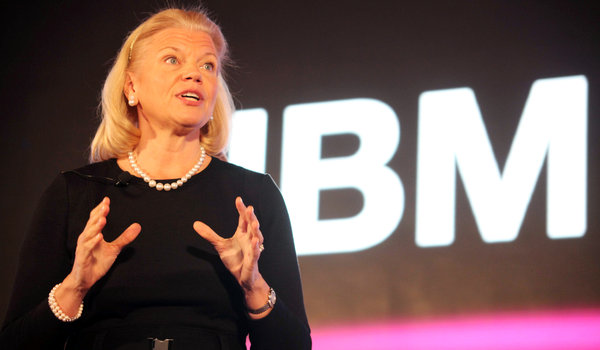
Oct. 25 (Bloomberg) — International Business Machines Corp. said Virginia “Ginni” Rometty will succeed Sam Palmisano as chief executive officer, becoming the first female CEO in the company’s 100-year history.
Rometty, IBM’s head of sales and marketing, will take the president and CEO posts effective Jan. 1, the Armonk, New York- based company said in a statement today. Palmisano, who’s been CEO since 2002, will remain chairman.
Rometty, 54, takes the reins after IBM celebrated its centennial and as steady profit growth pushed the shares this year to the highest level since the company went public in 1915. Her experience in sales, services and acquisitions fits with the strategic direction set by Palmisano, who said last year the company will add $20 billion to revenue between 2010 and 2015 by expanding in markets such as cloud computing and analytics.
“She is more than a superb operational executive,” Palmisano said in the statement. “With every leadership role, she has strengthened our ability to integrate IBM’s capabilities for our clients.”
The 30-year IBM veteran caught Palmisano’s attention in 2002 when she helped integrate the $3.9 billion acquisition of PwC Consulting, IBM’s largest deal ever at the time.
Rometty, then a general manager of the consulting unit, is credited with helping to retain PwC’s principal consultants, who didn’t always mesh with IBM’s cost-cutting culture. When Palmisano wanted to cut travel budgets, making consultants stay at Holiday Inns, she helped them fight — and win, said Ric Andersen, a former PwC consultant who joined IBM with the acquisition.
Sales Promotion
Palmisano promoted her to senior vice president of the group in 2005, and she boosted profit at the unit 42 percent in her first two years on the job. During her three decades at IBM, she became known as a polished executive who can close a sale, expanding relationships with companies from State Farm Insurance Co. to Prudential Financial Inc.
“She’s an engaging woman — great with customers,” said Fred Amoroso, who was her boss in the financial-services consulting division during the 1990s. “Customers just love Ginni.”
Amid the recession, Palmisano put her in charge of running the company’s almost $100 billion in sales. Last year, she added marketing and strategy to her responsibilities.
Patriarch Rai arrived in Rome on an official visit after his long trip to the United States of America. The Maronite Patriarch was welcomed by Lebanese Ambassador to the Vatican Georges Khoury. His visit to Italy is presumed to last one week. To read the homily of Patriarch Bechara Boutros el Rai […]
By Tom Gallagher, NEW YORK CITY — Patriarch Bechara Peter Rai, head of the Lebanon-based Maronite Catholic Church, held up Lebanon’s government as a model for emerging Arab democracies because Lebanon separates church and state, Rai said at an Oct. 20 news conference.
"In Lebanon, Christians and Muslims made a conviviality, a ‘National Pact,’" Rai said. "They incorporated it into the Introduction of the Constitution, where it is stated there is no legitimacy for any authority that contradicts the conviviality."
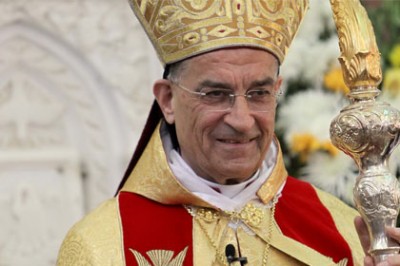
That "National Pact" was turned into a formula for securing equal participation in government and civil service for Muslims and Christians, he said.
"Thanks to this National Pact, Lebanon became a secular country that separates religion from the state and is governed on the basis of a consensual parliamentary democracy guaranteeing civil liberties and basic human rights, in particular freedom of opinion, speech, religion and conscience, where dialogue and consensus prevail," he said.
"Lebanon is more than a country. It is a message of cooperation to both East and West, and an example of dialogue between Christians and Muslims."
"Moreover, the church in Lebanon is considered a guarantee for the Christian presence for that part of the world," he added.
A PDF copy of his prepared remarks are here.
Rai was elected to lead the Maronite church, the largest Catholic patriarchal church with 13 million members, in March. He is on a tour of Maronite church communities in the United States and met with reporters Oct. 20 in the offices of the Catholic Near East Welfare Association in New York City.
On the topic of the Arab Spring, Rai was hopeful but cautious and denounced violence, especially against Christians. Rai said that Christians were in that part of the world 600 years before the arrival of Islam.
"The so-called ‘Arab Spring’ sweeping the Middle East holds much promise, yet we must be vigilant," Rai said. "The church abhors the use of violence to meet any goal. Violence can never by justified.
With barely 3 weeks left until the voting ends, Lebanese President Michel Sleiman paid a visit to Jeita Grotto today in an attempt to encourage Lebanese to vote more and make out of this beautiful grotto one of the new 7 wonders of the world. Suleiman said: “God gave us this gift […]
Steve Jobs’ impact on your life cannot be underestimated. His innovations have likely touched nearly every aspect — computers, movies, music and mobile. As a communications coach, I learned from Jobs that a presentation can, indeed, inspire. For entrepreneurs, Jobs’ greatest legacy is the set of principles that drove his success.
Over the years, I’ve become a student of sorts of Jobs’ career and life. Here’s my take on the rules and values underpinning his success. Any of us can adopt them to unleash our "inner Steve Jobs."
1. Do what you love. Jobs once said, "People with passion can change the world for the better." Asked about the advice he would offer would-be entrepreneurs, he said, "I’d get a job as a busboy or something until I figured out what I was really passionate about." That’s how much it meant to him. Passion is everything.
2. Put a dent in the universe. Jobs believed in the power of vision. He once asked then-Pepsi President, John Sculley, "Do you want to spend your life selling sugar water or do you want to change the world?" Don’t lose sight of the big vision.
3. Make connections. Jobs once said creativity is connecting things. He meant that people with a broad set of life experiences can often see things that others miss. He took calligraphy classes that didn’t have any practical use in his life — until he built the Macintosh. Jobs traveled to India and Asia. He studied design and hospitality. Don’t live in a bubble. Connect ideas from different fields.
4. Say no to 1,000 things. Jobs was as proud of what Apple chose not to do as he was of what Apple did. When he returned in Apple in 1997, he took a company with 350 products and reduced them to 10 products in a two-year period. Why? So he could put the "A-Team" on each product. What are you saying "no" to?
5. Create insanely different experiences. Jobs also sought innovation in the customer-service experience. When he first came up with the concept for the Apple Stores, he said they would be different because instead of just moving boxes, the stores would enrich lives. Everything about the experience you have when you walk into an Apple store is intended to enrich your life and to create an emotional connection between you and the Apple brand. What are you doing to enrich the lives of your customers?

Population Movements to Keserwan - The Khazens and The Maans
ما جاء عن الثورة في المقاطعة الكسروانية
ثورة أهالي كسروان على المشايخ الخوازنة وأسبابها
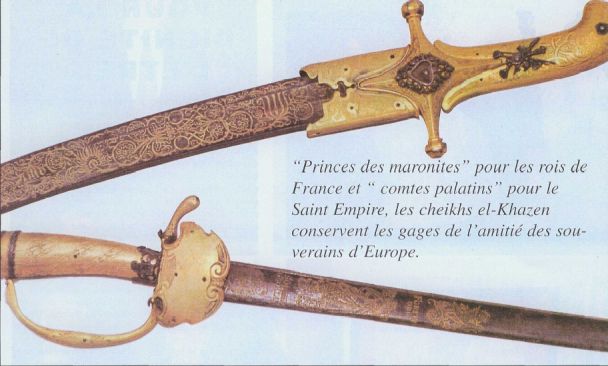
Origins of the "Prince of Maronite" Title
Growing diversity: the Khazin sheiks and the clergy in the first decades of the 18th century
Historical Members:
Barbar Beik El Khazen [English]
Patriach Toubia Kaiss El Khazen(Biography & Life Part1 Part2) (Arabic)
Patriach Youssef Dargham El Khazen (Cont'd)
Cheikh Bishara Jafal El Khazen
Patriarch Youssef Raji El Khazen
The Martyrs Cheikh Philippe & Cheikh Farid El Khazen
Cheikh Nawfal El Khazen (Consul De France)
Cheikh Hossun El Khazen (Consul De France)
Cheikh Abou-Nawfal El Khazen (Consul De France)
Cheikh Francis Abee Nader & his son Yousef
Cheikh Abou-Kanso El Khazen (Consul De France)
Cheikh Abou Nader El Khazen
Cheikh Chafic El Khazen
Cheikh Keserwan El Khazen
Cheikh Serhal El Khazen [English]
Cheikh Rafiq El Khazen [English]
Cheikh Hanna El Khazen
Cheikha Arzi El Khazen
Marie El Khazen