Khazen

Hit the slopes in Lebanon – Faraya Mzar – Cedars ski

Minty Clinch, As the Lebanese ski mostly at weekends, the agenda makes a lot of sense. From Sunday to Thursday, visitors have the slopes to themselves. On Fridays and Saturdays, they can watch the locals flaunt their cutting-edge designer clothes on the slopes. Frequent direct flights from Abu Dhabi take just two-and-a-half hours, and Beirut’s city-centre airport makes for short transfers, so Lebanon is a highly practical alternative to a short break in the Alps.

Although it’s a tiny country, Lebanon punches way above its weight in many areas, not least the spectacular Roman ruins at Baalbek, the ancient port at Byblos and the impressive grottos at Jeita. Geographically, it has parallel mountain ranges with the fertile Bekaa Valley – home to what it claims are the world’s oldest vineyards – in between. The Cedars and Mzaar, the two resorts with international appeal, and half a dozen local hills are scattered along the western coastal range overlooking the Mediterranean.

The French introduced skiing in Cedars, in the north of the country towards the Syrian border, during the mandate years in the last century. From the mid-1920s, they rode up the mountain on donkeys, accompanied by villagers carrying their skis. During the Second World War, British soldiers on leave from North Africa headed to Beirut by train, rented leather boots and long hickory skis and hitch-hiked the 130 kilometres to Cedars to flounder up and down the hillside as best they could.

The base station is at 2,000m and the pioneering chairlifts which were installed in 1953 are still running today, backed up in 2005 by some triple chairs that only operate when there are enough customers to justify the expenditure on electricity. The iconic cedar trees, the emblem on the national flag, are conspicuously absent in the large bowl that makes up the ski zone. I’d imagined from old photographs that I’d be weaving my way among them in knee-deep powder. Wrong on both counts.


here is a small plantation of mini cedars at the bottom of the resort next to a longish street of stalls selling cedar memorabilia. The trees are supposedly protected, but their slow growth combined with an increasing commercial imperative don’t stack up too well for the future. In a bad snow year, with no skiing until the beginning of February and rapid melt down by the end of it, the powder was also conspicuously absent.
Read more
Lebanon’s international theatre of war

Alexander Henley, The Guardian

World leaders are queuing up to affirm their commitment to Lebanese unity, but all have picked their sides and placed their bets.

"We focus our efforts on helping Lebanon maintain its unity," Turkish prime minister Recep Tayyip Erdoğan proclaimed generously  in Beirut last week. He is quite clear that Turkey does not favour any sect or party over another.

Bravo, we need more like him, you might say, except that we do in fact have too many like him. Erdoğan’s visit is highly reminiscent of that by President Ahmadinejad  of Iran last month.

Ahmadinejad also trotted out the familiar refrain of unity, reconciliation and peace in Lebanon, The Iranian president visited the Shia south and addressed a crowd of Hezbollah supporters, whereas the Turkish premier travelled to the Sunni Akkar region in the north for a pro-government rally with the prime minister, Saad Hariri. Saad Hariri’s "March 14" coalition came to power with a campaign for "the truth" about his father’s murder. The Hezbollah-led opposition, however, has cast doubt on the UN investigation’s legitimacy with accusations of false witness.

Foreign powers have been competing to show the most "support for reconciliation" in Lebanon. Syria and Saudi Arabia, the main Arab sponsors of Hezbollah and March 14 respectively, have made much of ongoing but mysterious "efforts:  to defuse the situation.

Erdoğan made a point of his participation in the "Saudi-Syrian initiative" on Wednesday, and on Thursday the Iranian ambassador to Lebanon made a statement that "Iran is in constant contact and consultation" with Saudi Arabia, Syria and Turkey. Western leaders have been singing to the same tune: everybody wants peace. But everybody wants peace on their own terms. It is only because so many world powers have seized upon this dispute that the two sides have become intractable

Read more
Rebuilding Beirut

In the aftermath of Lebanon’s 15-year civil war, developers are turning the capital into a version of Dubai. But there’s a lot of history at stake.

Newsweek:


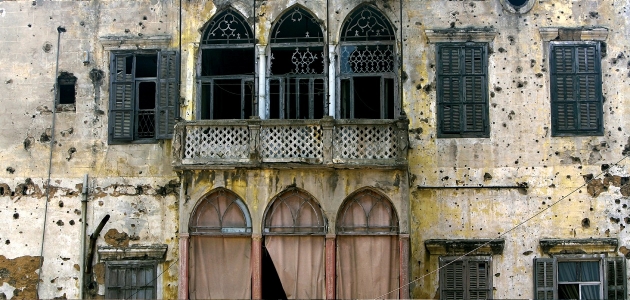
On a recent Saturday night in the Gemmayze district of Beirut, hundreds filled the streets, holding candles and waving signs to protest the destruction of the historic French colonial and Ottoman-era buildings that give this city its character. OUR HISTORY IS NOT FOR SALE read one. Another said BEIRUT IS NOT DUBAI.

It certainly looks like it’s trying to be. Once known as the “Paris of the Middle East,” the city is now becoming an eyesore as it attempts to mimic the development of other regional business hubs. Cranes and jackhammers have become as integral to Beirut’s urban landscape as the Ottoman and French architecture that once dotted the streets. A recent United Nations Development Program report said that Beirut will add 300,000 new buildings in the next decade, leaving the already-crowded city with virtually no public spaces. The country’s 15-year civil war, from 1975 to 1990, turned the capital into rubble, and now developers are rebuilding it with an eye toward dollars instead of toward repairing the religious rifts that caused the war in the first place.

The building boom is destroying not only the historic beauty of this Middle Eastern capital but also its social traditions. The old downtown area, now known as Solidere after the development company founded in 1994 by then–prime minister Rafik Hariri to rebuild the center, used to be the heart of Beirut, where all religious groups and social classes lived side by side—a rare haven of tolerance in a country divided by religious differences. During the war, many Christians who lived in the area fled downtown out of fear, leaving their homes and belongings behind to be seized by Shiite Muslims from the harder-hit south, who squatted there.

With the downtown area turned to rubble, Solidere, a public-private partnership, moved in to begin the hard work of reconstruction. Critics, and there are many, say Solidere demolished the city center to erase all memory of the conflict and to build the Beirut of Hariri’s dreams, a modern cultural and economic hub that mimics the style of buildings found in the old city, but lacks the soul. Solidere’s projects include Beirut Souks, a luxury retail center that opened in 2009 where well-to-do shoppers can browse for Cartier and Dolce & Gabbana, and Saifi Village, a residential and arts district in the city center. Supporters of Solidere’s efforts insist the capital was so devastated that the public sector could not have rebuilt it alone. Solidere says it worked hard to reposition Beirut on the world stage and restore the downtown area as a place of peace and mutual respect. It succeeded on one front, says Angus Gavin, the company’s head of urban development: businesses have once again been arriving to set up shop, from American Express Bank to bustling restaurants.

Yet the Solidere project priced out most of the Lebanese who used to live and work there. As mixed-income housing gave way to luxury buildings targeting rich Gulf Arab investors and expatriates, the 150,000 people who once lived downtown were forced to move farther out. “Beirut is no longer for the Lebanese,” became a common refrain. “Solidere has become a victim of its own success,” admits Gavin. “But you have to remember that in the beginning it was by no means clear that anyone would want to come back.”

Someone did—just not the poor craftsmen, butchers, and workers who used to inhabit the old city. “We have lost the melting pot,” says Assem Salam, a prominent local architect, who helped found the Association for Protecting Natural Sites and Old Buildings in Lebanon in 1960. “Now the city is divided.”

He should know. Salam’s 1840s Ottoman house sits in Beirut’s Zuqaq al-Blatt district, a short walk from Solidere. During the war, shells hit his roof three times, leaving a hole through which he can see the sky. All around him historic buildings are demolished regularly to make way for towers, while he sits in his garden and watches the world go by. “Oh, yes, I have preserved my house,” he says sadly. “But what is the use of preserving my house if the community around it is not preserved?”

Read more
record for the world’s biggest glass of wine

  Engineers Richa and Zakhria and creator Farah pose with Guinness World Records official Smith in front of a wine glass in Beirut Lebanon set  a record for the world’s biggest glass of wine. Organizers of a wine festival in Beirut poured around one hundred bottles of Lebanese wine into the giant glass, 2.4 meters high […]

Read more
Farid Elias el Khazen interview

مؤكداً أن التيار مستمر على مواقفه… الخازن: لا انسحاب لوزراء التكتل من الحكومة وكلام جعجع موقف سياسي وليس مبادرة 

فيرونيك خباز

Alkalimaonline

أكد عضو "تكتل التغيير والإصلاح" النائب فريد الخازن أن  ليس هناك من خطاب تصعيدي إنما موقف إتخذه رئيس "التكتل" العماد ميشال عون، منذ سنوات، بعد تشكيل شعبة المعلومات بشكل غير قانوني، مؤكدا انه هذا الأمر إعترف به الجميع وأولهم وزير الداخلية زياد بارود.

الخازن، وفي حديث إلى موقع "لاكلمة أون لاين"، لفت إلى أن الحملة على فرع المعلومات لا تتزامن مع موضوع المحكمة، كما يقال، إنما كان مطروحا منذ سنوات حول تجاوزاته وعدم قانونيته.

وإعتبر أن المشكلة هي من يحاسب هذا الجهاز الذي نشأ بطريقة غير شرعية وغير قانونية، وتوسع بشكل كبير جداً، مؤكداً أن ذلك الموضوع ليس بجديد ولايقصد به التصعيد، إنما هو كلام جدي ومسؤول ويجب اخذه بعين الاعتبار بهدف تصحيح الخطأ ووضع حد لتجاوزاته.

وأشار الخازن إلى أن مهمة أي نائب في المجلس محاسبة الحكومة والمسؤولين، سائلاً:" لماذا نشأ هذا الجهاز ولماذا توسع وأعطيت إليه كل الامكانات

ومن يحاسبه والى من يتبع ومن المسؤول عنه حسب التراتبية العسكرية والادارية.

Read more
Entrepreneur? You Need to Be in Beirut November 12-14

<>Posted on Sep 2010 Ahmad F Al-Shagra, Imagine a group of highly motivated Arab developers, business managers, startup enthusiasts, marketing gurus, graphic artists and more in a 54 hour event that builds communities, companies and projects. That’s what Beirut is hosting and this is why you need to be there…
 

First let us tell you about the event. It’s going to be a 3 day event in Beirut that will allow creative people with backgrounds in Business, Development, and Design to form teams to come up with ideas (Day1), develop a mockup (Day2), then design and present a prototype (Day3) all within 3 days.


The guys behind YallaStartup Weekend are the real deal, Sami Shalabi of Zingku (currently working for Google), Habib Haddad of Yamli and Elie Khoury co-founder of Woopra. So not only are they cool, but they know what MENA Entrepreneurs need. Them and others will be providing help to teams throughout the creation process.

Read more
Beirut citizens march at night to save city’s history

Beirut – Around 150 Lebanese men and women marched late Saturday in Beirut’s downtown area to pay homage to the memory of the old buildings and houses that used to represent Beirut’s heritage and protest against further destruction.

‘We are walking today holding candles hopefully to shine light on the damage being done to Beirut’s old heritage,’ said Alfred Cochrane, one of the participants. His family owns several Ottoman-era mansions in Beirut.

The march took place in the old neighborhood of Gemmazyeh, where old houses are being destroyed to make way for modern buildings.

According to the organizers ‘every one of those houses which are being destroyed has a story to tell.’

‘By demolishing those old houses they are destroying our memories,’ Cochrane said.

The Association for Protecting Natural Sites and Old Buildings in Lebanon, APSAD, is waging a campaign to create awareness about the city’s fading architectural heritage, which is being destroyed and replaced by Dubai-style skyscrapers.


Read more
Beirut, Lebanon: Middle East luxury special

By Lisa Grainger
Published: 10:58AM BST 02 Sep 2010


‘Beirut still has a frisson fizzing through it, its air filled with a heady mix of gunpowder and jasmine, its streets a living collision of history and glamour’ Photo: CORBIS


It is 3am and through my double-glazed windows I can hear men shouting above the sound of revving car engines. My hotel room overlooks Martyrs’ Square.

15 years ago, this area, Downtown, was a no-man’s-land inhabited only by snipers, it is now the hip centre of the new, peaceful "Paris of the Middle East", heartland of one of the most glamorous, party-loving, hedonistic populations in the world. The sounds that woke me weren’t of soldiers – just rich boys in their Ferrari toys, showing off outside the White nightclub, where they go to flex their platinum cards and shake their designer booty before racing off to the next venue, the next party. I’m in the New Beirut.

Breakfasting the following morning on the landscaped rooftop of Le Gray hotel with its Scottish owner, Gordon Campbell Gray, the scene is utterly serene. Water trickles over a glass-walled infinity pool. Guests shaded by taupe canvas umbrellas dip into fruit platters, flatbread still warm from the oven, herby Lebanese honey and thick, fragrant coffee. Church bells ring out from nearby Orthodox cathedrals, and then the muezzins’ call to prayer fills the air from the minarets.

Read more
What Lebanon Can Teach the U.S. About Religious Tolerance

David Samel from huffington post, 


 In Beirut, a recent event, under-reported in the United States, provides a dramatic contrast with the New York controversy over Park51, an Islamic cultural center planned for lower Manhattan. According to Ha’aretz, Lebanon’s largest Jewish synagogue has been saved from the wrecking ball and beautifully restored to its past glory.

The Magen Avraham synagogue had fallen into disrepair during the Lebanese Civil War of the 1970’s and 1980’s. Located in the city center, the synagogue was in danger of being demolished in favor of urban renewal. However, Beirut’s tiny Jewish population decided to save and renovate the structure, and received the approval not only of the Lebanese government but specifically of Hezbollah. The Islamic party, announcing its support, proclaimed: "We respect divine religions, including the Jewish religion."

Read more
What Lebanon Can Teach the U.S. About Religious Tolerance

David Samel from huffington post, 


 In Beirut, a recent event, under-reported in the United States, provides a dramatic contrast with the New York controversy over Park51, an Islamic cultural center planned for lower Manhattan. According to Ha’aretz, Lebanon’s largest Jewish synagogue has been saved from the wrecking ball and beautifully restored to its past glory.

The Magen Avraham synagogue had fallen into disrepair during the Lebanese Civil War of the 1970’s and 1980’s. Located in the city center, the synagogue was in danger of being demolished in favor of urban renewal. However, Beirut’s tiny Jewish population decided to save and renovate the structure, and received the approval not only of the Lebanese government but specifically of Hezbollah. The Islamic party, announcing its support, proclaimed: "We respect divine religions, including the Jewish religion."

Read more




