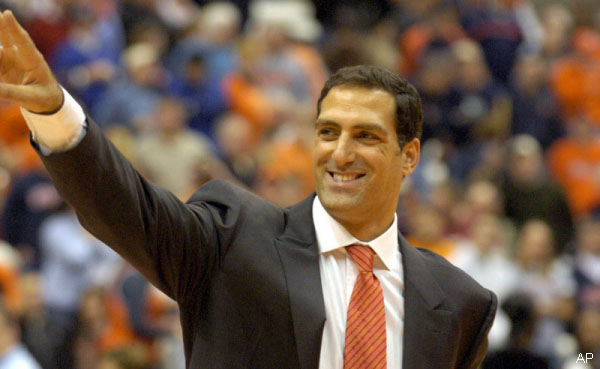
Forget LeBron: The real king of South Beach is Rony Seikalym And you thought this was the Summer of LeBron? More like Summer of Seikaly.

By The Daily Star

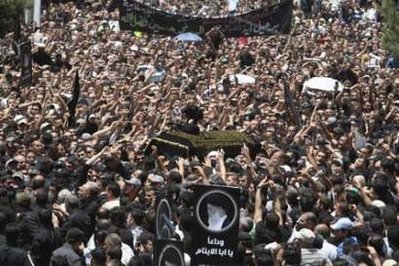
Grand Ayatollah Mohammed Hussein Fadlallah, Lebanon’s most influential Shiite Muslim leader who died in Beirut this past weekend, was a marja, or a source of emulation for Shiites, during his lifetime – just about the highest achievement a human being can attain in this world.
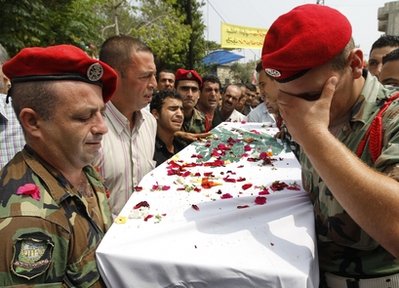
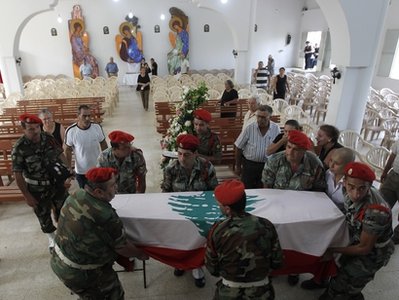
It would be doing Fadlallah a disservice only or mainly to see him as a gifted Shiite religious figure. His great achievement, I believe, was to provide a living example of the combination of the best qualities that any Arab or Muslim could aspire to in this era of great mediocrity, corruption, materialism, mindless violence and abuse of power throughout much of the Arab world. For more pictures of Fadlallah funerail and article controversy of Octavia Nasr (Cnn journalist ex-LBC employee) please click Read More
Pope Welcomes Beatification of Lebanese Priest
VATICAN CITY, JUNE 27, 2010 (Zenit.org).- After praying the Angelus today with the crowds gathered in St. Peter’s Square, Benedict XVI welcomed the beatification in Lebanon of Stephan Nehmé, a religious of the Lebanese Maronite Order. "I heartily rejoice with the Lebanese brothers and sisters," the Pope said, "and I entrust them with great affection to the protection of the new blessed." Archbishop Angelo Amato, the prefect of the Congregation for Saints’ Causes, presided at today’s beatification liturgy in Kfifan.
Stephen Nehmé (born Joseph) was known for his constant awareness of God’s presence in his life. He was born in March 1889 in the town of Lehfed, in the Jbeil district, as the youngest of seven children. In 1905, two years after his father’s death, Nehmé entered the novitiate of the Order of Maronites, in the Monastery of Sts. Cyprian and Justina in Kfifan. On Aug. 23, 1907, he made his monastic vows, taking the name Stephen after the patron saint of his birthplace. Father Nehmé died Aug. 30, 1938, at the age of 49, of natural causes and was buried in the monastery at Kfifan, where his body remains intact.
for more pictures please click read more:
Pope Welcomes Beatification of Lebanese Priest
VATICAN CITY, JUNE 27, 2010 (Zenit.org).- After praying the Angelus today with the crowds gathered in St. Peter’s Square, Benedict XVI welcomed the beatification in Lebanon of Stephan Nehmé, a religious of the Lebanese Maronite Order. "I heartily rejoice with the Lebanese brothers and sisters," the Pope said, "and I entrust them with great affection to the protection of the new blessed." Archbishop Angelo Amato, the prefect of the Congregation for Saints’ Causes, presided at today’s beatification liturgy in Kfifan.
Stephen Nehmé (born Joseph) was known for his constant awareness of God’s presence in his life. He was born in March 1889 in the town of Lehfed, in the Jbeil district, as the youngest of seven children. In 1905, two years after his father’s death, Nehmé entered the novitiate of the Order of Maronites, in the Monastery of Sts. Cyprian and Justina in Kfifan. On Aug. 23, 1907, he made his monastic vows, taking the name Stephen after the patron saint of his birthplace. Father Nehmé died Aug. 30, 1938, at the age of 49, of natural causes and was buried in the monastery at Kfifan, where his body remains intact.
for more pictures please click read more:
Pope Welcomes Beatification of Lebanese Priest
VATICAN CITY, JUNE 27, 2010 (Zenit.org).- After praying the Angelus today with the crowds gathered in St. Peter’s Square, Benedict XVI welcomed the beatification in Lebanon of Stephan Nehmé, a religious of the Lebanese Maronite Order. "I heartily rejoice with the Lebanese brothers and sisters," the Pope said, "and I entrust them with great affection to the protection of the new blessed." Archbishop Angelo Amato, the prefect of the Congregation for Saints’ Causes, presided at today’s beatification liturgy in Kfifan.
Stephen Nehmé (born Joseph) was known for his constant awareness of God’s presence in his life. He was born in March 1889 in the town of Lehfed, in the Jbeil district, as the youngest of seven children. In 1905, two years after his father’s death, Nehmé entered the novitiate of the Order of Maronites, in the Monastery of Sts. Cyprian and Justina in Kfifan. On Aug. 23, 1907, he made his monastic vows, taking the name Stephen after the patron saint of his birthplace. Father Nehmé died Aug. 30, 1938, at the age of 49, of natural causes and was buried in the monastery at Kfifan, where his body remains intact.
for more pictures please click read more:
Pope Welcomes Beatification of Lebanese Priest
VATICAN CITY, JUNE 27, 2010 (Zenit.org).- After praying the Angelus today with the crowds gathered in St. Peter’s Square, Benedict XVI welcomed the beatification in Lebanon of Stephan Nehmé, a religious of the Lebanese Maronite Order. "I heartily rejoice with the Lebanese brothers and sisters," the Pope said, "and I entrust them with great affection to the protection of the new blessed." Archbishop Angelo Amato, the prefect of the Congregation for Saints’ Causes, presided at today’s beatification liturgy in Kfifan.
Stephen Nehmé (born Joseph) was known for his constant awareness of God’s presence in his life. He was born in March 1889 in the town of Lehfed, in the Jbeil district, as the youngest of seven children. In 1905, two years after his father’s death, Nehmé entered the novitiate of the Order of Maronites, in the Monastery of Sts. Cyprian and Justina in Kfifan. On Aug. 23, 1907, he made his monastic vows, taking the name Stephen after the patron saint of his birthplace. Father Nehmé died Aug. 30, 1938, at the age of 49, of natural causes and was buried in the monastery at Kfifan, where his body remains intact.
for more pictures please click read more:
VoIP Broadcasting in Lebanon Banned Again
By Juliana Kenny
TMCnet Web Editor
VoIP Broadcasting in Lebanon Banned Again
By Juliana Kenny
TMCnet Web Editor
From khazen.org: we will always stand by our Patriarch His Beatitude Mar Nassrallah Boutros Sfeir , the voice of reason, love and unity. His stands throughout history has proven to be stands of long-term peace, security and long-term coexistence for all communities in Lebanon. We will not tolerate any disrespectful statements towards our Patriarch or attacks from anyone. You can disagree politically, but the message and the goal is one SECURE, Lebanon full of economic growth that our Patriarch who represents the rock of the Maronite Church is seeking for.

News:
Beirut – The number of Christians in Lebanon and the Middle East is declining rapidly because of conflict, regional tensions as well as a persistent economic crisis that drives many to seek the future elsewhere. The issue is one of great concern for the Catholic Church, as Benedict XVI has said on several occasions, the latest during his visit to Cyprus, and an issue that Maronite Patriarch Nasrallah Sfeir raised during his meetings yesterday in France.
Cardinal Sfeir raised the matter during his meeting with French President Nicolas Sarkozy, who shares the view that the presence of Christians in the Middle East is a guarantee against intolerance.
“The emigration of young Lebanese must be stopped,” the patriarch said later during a press briefing with reporters. “They cannot be blamed for leaving in search of work. But whilst those who go to Arab countries can come back, it is harder for those who go to Australia or Canada.”
By G.G. LaBELLE For The Associated Press

Lebanon has been conquered and colonized many times over in the last three millennia. Among the famous invaders: Alexander the Great, Babylonian king Nebuchadnezzar and the Muslim warrior Saladin.
Others include Persians, Romans, Egyptians, Christian Crusaders, Ottoman Turks, the French and English in World War I and, more recently, Israelis. Lebanon’s rival Christians and Muslims also upset the peace, most notably in the 1975-90 civil war.
Many invaders left monuments and other remnants of their civilizations that can be visited in day trips from Lebanon’s urbane capital, Beirut. You can go east to the Roman ruins at Baalbek, north to the Crusader-era Citadel of Raymond de Saint-Gilles that looms over the city of Tripoli, south to the much fought-over Beaufort fortress, or northeast to the towering Cedars of Lebanon, and be back in Beirut in time for dinner. Lebanon is a tiny country — 135 miles long and about 50 miles wide — and all of these sites are within 60 miles of Beirut.
The National Museum in Beirut is a good place to get a picture of the parade of conquerors who’ve marched in and out. Artifacts run from prehistoric stone tools to statuary, coins, jewelry and mosaics from the bronze and iron ages, the Greek and Roman eras, and Byzantine and Arab rule.
Jabail-Byblos, 22 miles north of Beirut on the Mediterranean coast, offers an example of how archaeological sites in Lebanon often contain layers of history as one conqueror supplanted another. Here you will find a variety of ruins from the Persian, Phoenician, Greek, Roman and Crusader eras. The sarcophagus of a king, Ahiram, who died around 1000 B.C., has an inscription in Phoenician linear script, the father of alphabets. But there are also Byzantine-era mosaics from 2,000 years later.
Another example is Beaufort Castle, 47 miles southeast of Beirut, which sits atop a cliff about 2,000 feet above sea level in southern Lebanon, commanding a view into both Israel and Syria. The Crusader king Fulk seized the fortification in 1139, Saladin took it back for the Muslims in 1189, and the Israeli army captured it from Palestinian guerrillas in 1982
Khazen History


Historical Feature:
Churches and Monasteries of the Khazen family

St. Anthony of Padua Church in Ballouneh
Mar Abda Church in Bakaatit Kanaan
Saint Michael Church in Bkaatouta
Saint Therese Church in Qolayaat
Saint Simeon Stylites (مار سمعان العامودي) Church In Ajaltoun
Virgin Mary Church (سيدة المعونات) in Sheilé
Assumption of Mary Church in Ballouneh
1 - The sword of the Maronite Prince
2 - LES KHAZEN CONSULS DE FRANCE
3 - LES MARONITES & LES KHAZEN
4 - LES MAAN & LES KHAZEN
5 - ORIGINE DE LA FAMILLE
Population Movements to Keserwan - The Khazens and The Maans
ما جاء عن الثورة في المقاطعة الكسروانية
ثورة أهالي كسروان على المشايخ الخوازنة وأسبابها
Origins of the "Prince of Maronite" Title
Growing diversity: the Khazin sheiks and the clergy in the first decades of the 18th century
Historical Members:
Barbar Beik El Khazen [English]
Patriach Toubia Kaiss El Khazen(Biography & Life Part1 Part2) (Arabic)
Patriach Youssef Dargham El Khazen (Cont'd)
Cheikh Bishara Jafal El Khazen
Patriarch Youssef Raji El Khazen
The Martyrs Cheikh Philippe & Cheikh Farid El Khazen
Cheikh Nawfal El Khazen (Consul De France)
Cheikh Hossun El Khazen (Consul De France)
Cheikh Abou-Nawfal El Khazen (Consul De France)
Cheikh Francis Abee Nader & his son Yousef
Cheikh Abou-Kanso El Khazen (Consul De France)
Cheikh Abou Nader El Khazen
Cheikh Chafic El Khazen
Cheikh Keserwan El Khazen
Cheikh Serhal El Khazen [English]
Cheikh Rafiq El Khazen [English]
Cheikh Hanna El Khazen
Cheikha Arzi El Khazen
Marie El Khazen
Theme: Illdy.