Prepared for Members and Committees of Congress
Jeremy M. Sharp
Specialist in Middle Eastern Affairs
Despite its weak military and lackluster economy, Syria remains relevant in Middle Eastern
geopolitics. The Asad regime has its hands in each of the four major active or potential zones of
conflict in the region (Lebanon, Israel-Palestine, Iraq, and Iran). In the Levant, Syrian leaders aim
to dominate the internal politics of Lebanon, and have been accused of involvement in the
assassination of four parliamentarians and former Prime Minister Rafik Hariri. The Asad regime
has resisted U.S. and French attempts to bolster the pro-Western government of Prime Minister
Fouad Siniora, believing that it can weather the storm of U.S. pressure over time. Syria also plays
a key role in the Middle East peace process, acting at times as a “spoiler” by sponsoring
Palestinian militants and facilitating the rearmament of Hezbollah. At other times, it has
participated in substantive negotiations with Israel, most recently in 1999-2000. A September 6
Israeli air strike against an alleged nascent Syrian nuclear facility heightened an already tense
atmosphere between the two countries, though most experts believe that neither side desires a
new war. Regarding Iraq, the Iraqi refugee crisis has affected Syria far more than Syria has
influenced internal Iraqi politics since the fall of Saddam Hussein. There now may be close to 1.4
million Iraqis inside Syria, many of whom face the dim prospect of remaining in permanent exile.
Finally, Syria’s longstanding relationship with the Iranian clerical regime is of great concern to
U.S. strategists. As Syria grew more estranged from the United States throughout this decade,
Syrian-Iranian relations improved, and some analysts have called on U.S. policymakers to woo
Syrian leaders away from Iran. Others believe that the Administration should go even further in
pressuring the Syrian government and should consider implementing even harsher economic
sanctions against it.
Read more
Lebanon’s Christians could be ‘swing vote’ in parliamentary elections
By Brooke Anderson, JEZZINE, Lebanon (CNS) — Sitting at an outdoor cafe on a mild spring afternoon, overlooking the town square of Jezzine, Samaan Dahir felt optimistic about Lebanon’s June 7 parliamentary elections. "The resistance needs to win," said Dahir, referring to the so-called March 8 coalition led by Hezbollah, the Shiite political party credited for liberating South Lebanon from 18 years of Israeli occupation and subsequently helping to rebuild the war-torn region. "Let’s give the opposition a chance and see the how they implement their reform programs. I’m definitely for March 8. I’m for change." Dahir, a Maronite Catholic from Jezzine, is optimistic about the election and is happy that the campaign appears to be giving more of a voice to Christians than in previous years.
The incumbent pro-Western March 14 coalition is composed by the Mustaqbal (Future) movement, made up mainly of Sunnis, but also various Christian groups (Lebanese Forces, Kataeb, Liberal Party, Quornet Chehwane, indpendants) and PSP . The opposition, is composed by Hezbollah,the Free Patriotic Movement of Maronite Catholic Michel Aoun, a retired army general, AMAL, MARADA, Tadamon and Democratic Party led by Arslan and other independants and smaller parties.
Paul Salem, director of the Carnegie Middle East Center in Beirut, compared the importance of Lebanon’s Christian voters to a swing state in a U.S. election."It’s an unintended consequence of the process," said Salem. "It doesn’t mean Ohio is the most important state or Christians in Lebanon are more important."
Read more
Cheikh Philippe El Khazen
In memory of Cheikh Philippe El Khazen – March 6th 1996
LE CORPS MEDICAL LlBANAIS EN DEUIL
LE PROFESSEUR
PHILIPPE EL-KHAZEN N’EST PLUS
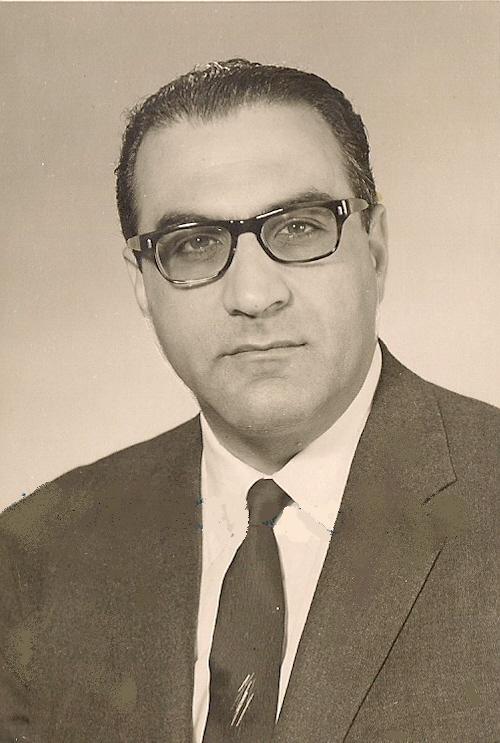
La disparition soudaine de Philippe El-Khazen, professeur honoraire a la Faculté de Médecine de l’U.S.J., chevalier de l’Ordre du Cèdre et de la Légion d’honneur, a jeté la consternation dans les milieux médicaux, politiques et sociaux de la capitale.
Cet homme foncièrement bon et qui avait le culte de l’amitié, a succombé a une attaque cardiaque implacable.
Agrégé des facultés françaises en pathologie après des études médicales a la Faculté de Médecine de Beyrouth, il devait enseigner la pathologie avant de devenir médecin-chef de I’H6pital Libanais (Geitaoui) fonde par son père Ie Dr Hanna El-Khazen, Homme de grand bien, il n’a jamais hésité a faire profiter de sa science médicale un malade indigent.
Député au Kesrouan sous le mandat du président Chamoun, il déploya une activité remarquable au profit de sa région.
Foncièrement probe, il fut toujours un homme du dialogue profondément attaché au Liban.
Vice-président de la Ligue maronite, il accepta la vice-présidence Ie l’Union Démocrate Chrétienne Libanaise, membre de l’Union Démocrate Chrétienne Mondiale. Plusieurs membres de cette union furent ses hôtes de leur visite au Liban.
On doit au professeur Philippe El-Khazen des ouvrages et des articles de science médicale.
Ghosta, sa localité natale et le Kesrouan lui ont fait d’imposantes obsèques au milieu d’une foule émue.
Read more
Lebanon spy cases highlight Mideast espionage
By SAM F. GHATTAS, Associated Press Writer Sam F. Ghattas, Associated Press Writer – BEIRUT – The Middle East’s espionage wars are heating up after Lebanon’s arrest of more than a dozen alleged Israeli spies, and dire warnings from Jerusalem that Arab groups are trying to use the Internet to infiltrate the Jewish state.
Officials in Beirut say they struck a strategic blow against Israel with the recent arrests of 15 people — 13 Lebanese and two Palestinians — who they contend were gathering intelligence on Hezbollah positions, leaders’ movements and infrastructure targets. Iranian-backed Hezbollah militants and Israeli forces fought an inconclusive war in 2006 along the Lebanese-Israeli border and both sides have since been preparing for the possibility of another.
Although Israel and its Arab neighbors have for years spied on each other, the recent announcements have highlighted the secret war of espionage and the depth of the infiltration. Lebanese officials say the spies arrested there included a math teacher and housewife, and that they were equipped with sophisticated electronics.
Lebanon holds elections June 7 but the recent arrest announcements did not seem intended to influence the vote.
Read more
FACTBOX: Facts on Lebanon’s economy
Reuters) – The economy of Lebanon, which is set to hold a parliamentary election on June 7, has shown what the International Monetary Fund (IMF) has described as "remarkable resilience" in the face of the global credit crisis.
Following are some of the economy’s main features:
GROWTH
The economy grew by more than 8 percent in 2008 according to the International Monetary Fund (IMF), despite a first half marred by the worst bout of internal fighting since the 1975-90 civil war and the onset of the global financial crisis. Policymakers are projecting growth of 4 percent or more in 2009.
Read more
Biden presents military aid to Lebanon

BEIRUT, Lebanon, May 22 (UPI) — U.S. Vice President Joe Biden visited Beirut Friday in what U.S. officials said was a show of support for Lebanese independence prior to legislative elections. While in Lebanon, Biden was expected to announce U.S. military aid for Lebanese forces. He is scheduled to meet with President Michel Suleiman, pro-Western Prime Minister Fouad Siniora and Parliament Speaker Nabih Berri, who is aligned with the Hezbollah bloc, the British broadcaster said.
In a ceremony at Rafic Hariri International Airport in Beirut, Biden presented tons of military equipment. "Mr. minister, general, it’s a delight to be back in Lebanon, and thank you for the warm welcome," Biden said in opening his remarks. A transcript of his remarks did not identify who he was addrssing. "General, we’re going to leave some of this behind," Biden continued, "but you cannot take my plane. Air Force Two I get to keep, and the helicopters I get to keep. Other than that, the rest is going to be yours." "I’m also here to assure you … the United States of America considers itself a partner in your effort to defend your sovereignty — the sovereignty of the Lebanese state and the security of all the people of Lebanon," Biden said.
Read more
Social Theories: Vygotsky & Bandura- Paul Kerbage
النظريات الإجتماعية عند فيجوتسكي وباندورا

من المعروف أن علم النفس ،كعلم قائم بذاته، هو علم حديث. وعلى الرغم من حداثته فقد استطاع أن يطال باهتماماته معظم مناحي الحياة، إن لم نقل جميعها على الإطلاق.
ومضى قدماً في دراسة الخصائص النفسية لأوجه النشاط المختلفة التي يمارسها الإنسان وأثرها في سلوكه، ومحاولته الوصول إلى أدق القنوات التي تربط الفرد بالآخرين خلال مراحل حياته.
فقد كان من نتائج التقدم السريع للعلم والتقنية في عصرنا، ونشوء ضروب جديدة من النشاط الإنساني، أن وقف علم النفس أمام زيادة كبيرة في حجم اهتماماته تكافئ ما استجد من قطاعات إنتاجية وخدمية وسواها وما سُخر في سبيلها من أدوات ووسائل وآلات. وكان عليه أن ينهض بمسؤولياته ويواكب، بل ويسهم، في تهيئة أسباب التطور اللاحق وتحسين شروطه وأدواته. ومن خلال هذا المسعى ظهرت فروع علم النفس وتشعبت استجابة لمتطلبات العصر وأهداف المجتمعات وحاجات الأفراد المتزايدة.
Read more
I will join a Party When…
Written by Malek el Khazen
Currently there are no true parties in Lebanon. In fact the most powerful and influential “parties” are all controlled by one man in Lebanon. Notice how many years their leaders are holding the top positions. And the funny phenomenon is that these positions seem to be property of the current leader instead of being the property of the party. Hence all these top positions are inherited from one generation to the other by family connections or closest advisor to the current leader. Is it possible that every member in the same party share 100% the same position then its leader. This seems to be the case in Lebanon. Every member of the same party has the exact same position. If you are one of the reader that do not accept that a country is governed by the same President or Prime Minister for decades and you are currently part of a party why would you accept that a party is govern by the same leadership branch for decades?
The big themes and strategy within one party should be the same. But tactics or different views for a specific law I do not see harm to voice difference. Sometimes difference is good! Let us take an example all of the members of the Democratic Party or Republican Party in the senate in USA never vote for a law the same way. Of course usually you find the majority of the party vote this way or vote that way. But they are always some members from both parties that cross the aisle towards the other party for some specific and sometimes even critical laws. You can find some cases in Lebanon with some few lawmakers but they are very few and this phenomenon is not very much welcome by the current leadership of the party.
Read more