La capitale du Liban renaît! L’antique cité méditerranéenne se reconstruit avec une énergie bouleversante. Allez-y vite, pour découvrir ses nouveaux quartiers créatifs, son art de vivre raffiné. Et son incroyable goût de la fête.
C’est le rendez-vous des vrais amoureux du Proche-Orient

T. Hage/Office du tourisme du Liban
On flâne entre églises chrétiennes et mosquées…
Dans la cacophonie des Klaxon et l’air lourd, c’est ainsi qu’apparaît Beyrouth, la belle, la meurtrie, qui revit après trois décennies d’histoire tragique. On l’apprivoise à pied, pour acclimater son regard au mélange d’Orient et d’Occident qui l’avait rendue célèbre, et qui perdure. Rendez-vous sur la place des Martyrs, coeur de l’ancien Vieux Beyrouth, aujourd’hui reconstruit pierre par pierre. Sur les places, l’église maronite (catholique) côtoie l’orthodoxe et la mosquée. Et il est question de rouvrir bientôt la synagogue ! Si la politique n’y avait pas causé tant de fracas, le Liban serait un modèle d’intégration communautaire. En marchant, on glisse de ce qui fut la partie musulmane à la partie catholique sans presque s’en apercevoir. Bien sûr, la ville a changé. A la place des anciens souks, des commerces ouvrent partout. Dans la partie orientale de la ville, les marchés voisinent avec les boutiques de luxe, les bazars poussent au pied des grands hôtels. Et Beyrouth – qui compterait près de 2 millions d’habitants – se repeuple. Ça s’agite, ça vibre, ça chante – tant les accents sont mélodieux – l’arabe, l’anglais (appris dès la maternelle) et, chez 1 personne sur 2, le français. Aucune cité orientale ne donne une telle impression d’être à la fois ailleurs et chez soi.
Bank of Lebanon Sees Growth at 6% This Year
By CHIP CUMMINS
BEIRUT — Lebanon’s central bank governor said economic growth in the country could exceed 6% this year if parliamentary elections next month go off smoothly.
The central bank has so far been forecasting "a very realistic" growth rate of 4% this year, down from last year’s 8%, said Riad Salamé, governor of the Bank of Lebanon. The International Monetary Fund estimates growth this year of 3%. But in an interview Thursday, Mr. Salamé said the bank is now expecting a strong pickup in consumption later in the year.
"If you have a democratic election in June, you will see higher growth than 4% in 2009," he said. The summer months account for about 65% of Lebanon’s economic activity, he said: "It’s essential that this period be peaceful."
PICTURES In Jordan, pope stresses Christian-Muslim harmony
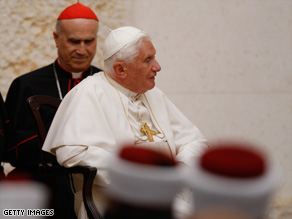
AMMAN, Jordan (CNN) — On the second day of his visit to the Middle East, Pope Benedict XVI stressed the need for harmony and unity between Christians and Muslims.
"Muslims and Christians, precisely because of the burden of our common history, so often marked by misunderstanding, must today strive to be known and recognized as worshippers of God, faithful to prayer, eager to uphold and lift by the Almighty decrees," the pontiff said in an address at the King Hussein Bin Talal mosque in the Jordanian capital, Amman.
Often, "it is the ideological manipulation of religion, sometimes for political ends, that is a real catalyst for tension and division" between faiths, the pope said.
Pope Benedict also spoke about Iraq’s Christians, asking the international community to "do everything possible to ensure that the ancient Christian community of that noble land has a fundamental right to peaceful coexistence with their fellow citizens."  Watch how Jordanians feel about the pope’s visit »
Vatican-Israel Relations
| Author: |
Toni Johnson, Staff Writer
|
|---|
,
Introduction
The relationship between Catholics and Jews is marred by centuries of troubles, including doctrinal polemics, Crusade-era massacres, and forced exiles of Jews. The Vatican moved to improve relations with Jews in 1965, although it did not formally recognize Israel until 1993. Today experts say relations between the Vatican and Israel have never been better. Still, trouble spots remain. Lingering Jewish bitterness over the Vatican’s posture during the Holocaust, the uncertain legal status of church property in Israel, and outstanding concerns about Christian religious sites in the Holy Land continue to be diplomatic sticking points.
Catholic-Jewish Relations
In 1965, the Second Vatican Council adopted the "Declaration on the Relation of the Church to Non-Christian Religions," called Nostra Aetate (in our time). The declaration addresses the church’s relationship with all non-Catholics and, in particular, affirms the deep connection between Christianity and Judaism, rejecting anti-Semitism "any time and by anyone." In 2005, Eugene Fisher, associate director of the U.S. Conference of Catholic Bishops’ (USCCB) Secretariat for Ecumenical and Interreligious Affairs, said the declaration marked "the end of one long era in the history of Catholic-Jewish relations."
Persecutions in early christianity- By Paul Kerbage
الإضطهادات في الكنيسة الأولى

إنّ تاريخ المسيحيّة لحافل بالإضطهادات، فقد عان أتباع هذه الدّيانة ولا يزال، يعاني شتّى أنواع التّعذيب أو الإعتداء أحياناً بالجسد وأحياناً بالممتلكات أو بالقتل. ذلك هو جوهر المسيحيّة، التّضحية والفداء في سبيل اللّه. فالمسيح تألّم لأجلنا ذوداً عن خطايانا. لقد حمل لواء هذه الرّسالة المسيحيّين الأوائل منهم القدّيسين الّذين ،لتثبيت ونشر الرّسالة المسيحيّة دفعوا حياتهم ثمنا" لها.إضطهدهم اليهود على عهد الرّومان وهؤلاء بدورهم مارسوا أبشع أنواع التّعذيب
بحقّهم ليبلغ أوجّ هذا الإضطهاد على عهد نيرون.
الإضطهاد اليهودي للمسيحيّين:
تخبرنا الأناجيل أنّ الرّسل وحتّى يسوع المسيح نفسه تعرّض للإضطهاد على يد القادة اليهود. فيسوع والمسيحيّين الأوائل ولدوا وترعرعوا في كنف الدّيانة اليهوديّة، فقد اعتبرهم الفريسيّون منشقّين عن تعاليم موسى. فالإضطهادات والملاحقات إستمرّت بحقّ تلاميذ يسوع حتّى بعد صلبه وقيامته فالقدّيسين بطرس ويوحنّا قد تمّ سجنهما من قبل قادة اليهود ثمّ إخلاء سبيلهما. ومرّة تمّ سجن الرّسل من قبل رئيس الكهنة (أعمال 5 :1717) وأتباعه من الصدّوقيّون.ومرّة" ثانية وبعد أن أخرج الملاك الرّسل من السّجن، تمّ إعادة إعتقالهم وإستجوابهم أمام المجلس أو السنهدرين، ولكن واحدا" من الفرّيسيّين إسمه غمالائيل يحظى باحترام الشّعب، استطاع إقناع أعضاء المجلس بإخلاء سبيلهم بعد جلدهم.
Hezbollah slams Hariri death probe
All jazeera.net Hassan Nasrallah, the leader of Hezbollah, has criticised the international investigation into the 2005 asssassination of Rafiq al-Hariri, Lebanon’s former prime minister. Nasrallah said on Friday that a decision by a UN-backed court to free Lebanese officers held over the murder does not mean the tribunal is "honest" and instead "is proof that…their detention was political." He also called on Lebanon to widen its investigation into the assassination to include the possibility of Israeli involvement.
"Whoever says that Israel did not have the motive or interest in killing al-Hariri would be killing al-Hariri a second time," he said.
Le Syriaque: pour les maronites, pour tout le monde- by Soha Kerbage

Est-il possible de connaître et de savoir une langue considerée morte telle que la langue Syriaque? Est-il possible d’apprendre cette langue, langue de nos ancêtres, langue des maronites?
Nombreux sont ceux qui rêvent decouvrir cette langue par le souci de conserver leur heritage et leur identité culturelle, spirituelle et religieuse.
“La langue Syriaque est la langue officielle et liturgique de plusieurs groupes ethno-religieux”tels que les Maronites, les Syriaques catholiques et les Syriaques orthodoxes.
Le Syriaque est une langue semitique parlée au Proche-Orient et qui fait partie du “patrimoine araméen”:l’araméen christianisé.
Le Syriaque designe des variantes d’araméen qui se sont répandues au debut de l’ere chrétienne.
Le Syriaque s’ecrit de droite à gauche, son alphabet est derivé de l’alphabet phenicien et se compose de 22 lettres.
PICTURES Suspects in Lebanese Premier’s Death Released
By ROBERT F. WORTH BEIRUT, Lebanon — A judge ordered the release of four high-ranking Lebanese security officials on Wednesday, all being held here in connection with the 2005 killing of former Prime Minister Rafik Hariri. The decision was seen here as a blow to the political movement led by Mr. Hariri’s son.
The judge, Daniel Fransen, said there was not enough evidence to keep holding the four men, who have been detained without charge since September 2005 and are widely believed to have had some knowledge of the killing or involvement in it. They were the only suspects in the custody of the international tribunal based in The Hague that was formed under United Nations auspices after Mr. Hariri’s death in a powerful car bombing on Feb. 14, 2005.
The announcement was met with wild volleys of celebratory gunfire from the generals’ supporters in Beirut and in the southern suburb that is the stronghold of Hezbollah, Mr. Hariri’s political adversary.
“Some Lebanese are not relieved by this decision,” said Saad Hariri, the former prime minister’s son, grim-faced during a news conference here after the decision. But he added that he welcomed any decision from the tribunal in The Hague. He also said releasing the generals would disprove recurring accusations that the tribunal was politicized in favor of Mr. Hariri’s allies.
new order emerges in Lebanon
Then, Hariri’s armed men were round up and disarmed in a matter of minutes by the well-trained Hezbollah fighters. "We have seen the Sunnis in the field, huh!" he said, adding, "They didn’t last for more than 15 minutes!” Jumblatt quickly apologized – but the damage was already done.
Shortly afterwards, when landing in Beirut, US Secretary of State Hillary Clinton did not meet the Druze warlord – who had often played host to her predecessor Condoleezza Rice, and been received previously at the Oval Office by George W Bush.
Jumblatt is a symbol of a loud anti-Syrian and anti-Hezbollah stance in Lebanon. The fact that he has lost faith in his own allies – who have bankrolled him for years – and was snubbed by Clinton, are testimony to how much things have changed in Lebanon. This is the same man after all who called for regime change in Damascus, and betted on American and Israeli forces to disarm Hezbollah in 2006.

Lebanon the ‘worst partner’ in EU, says Commission
BEIRUT: The annual Progress Report of the European Neighborhood Policy (ENP) issued by European Commission in Beirut on Friday indicated that Lebanon has showed "very limited" progress during 2008. "This is a missed opportunity for Lebanon," said the head of the Politics Department at European Commission in Lebanon during a meeting with reporters.
Michael Miller explained that Lebanon was at the "bottom of the scale" in terms of asking for the help of the EU.
"It’s a pity that Lebanon is one of our worst partners," he said, adding that while Morocco filed 44 project proposals since the partnership with the EU was established in 2007, Lebanon has so far submitted four proposals only.
The document, which covers the period between January and December 2008 shows that the slowdown in development was caused by the recent state of political turmoil that the country faced since the 2005 parliamentary elections. The report cites the summer 2006 war with Israel, the delay in electing a president, and the May 2008 street conflicts between opposition fighters and gunmen from the March 14 Forces.




Population Movements to Keserwan - The Khazens and The Maans
ما جاء عن الثورة في المقاطعة الكسروانية
ثورة أهالي كسروان على المشايخ الخوازنة وأسبابها
Origins of the "Prince of Maronite" Title
Growing diversity: the Khazin sheiks and the clergy in the first decades of the 18th century
Historical Members:
Barbar Beik El Khazen [English]
Patriach Toubia Kaiss El Khazen(Biography & Life Part1 Part2) (Arabic)
Patriach Youssef Dargham El Khazen (Cont'd)
Cheikh Bishara Jafal El Khazen
Patriarch Youssef Raji El Khazen
The Martyrs Cheikh Philippe & Cheikh Farid El Khazen
Cheikh Nawfal El Khazen (Consul De France)
Cheikh Hossun El Khazen (Consul De France)
Cheikh Abou-Nawfal El Khazen (Consul De France)
Cheikh Francis Abee Nader & his son Yousef
Cheikh Abou-Kanso El Khazen (Consul De France)
Cheikh Abou Nader El Khazen
Cheikh Chafic El Khazen
Cheikh Keserwan El Khazen
Cheikh Serhal El Khazen [English]
Cheikh Rafiq El Khazen [English]
Cheikh Hanna El Khazen
Cheikha Arzi El Khazen
Marie El Khazen