By Daniel Bases, NEW YORK, March 2 (Reuters) – Lebanon’s bank deposit base should grow by at least 7 percent this year despite a possible decline in remittances, central bank governor Riad Salameh forecast on Monday. The governor told reporters in New York that, even if in a "worst case scenario" remittances were to drop […]
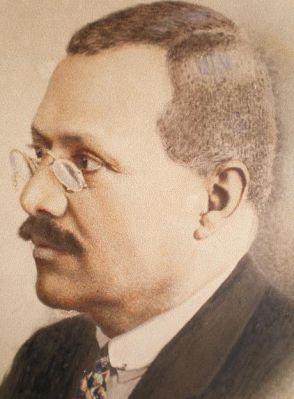
Cheikh Hanna El Khazen was a famous doctor, born in 1877 that has spent his life improving Lebanese medical connections around the world, hold various top medical and mportant positions in the Lebanese government. He was the second person receiving a medical doctorate from the French Medical Faculty in Beirut. He has has helped and treated the poor at his own expenses. He was very highly regarded in Lebanon and throughout the world. Please click read more to read a unique article that was posted in the magazine "7 Jours de Beyrouth" on the 10th October of 1958.
(Reuters) – A special United Nations tribunal set up to try suspects in the 2005 killing of Lebanon’s former Prime Minister Rafik al-Hariri began work in The Hague on Sunday. Here are some questions and answers about the tribunal:
HOW WAS IT SET UP? A suicide truck bomber killed Hariri and 22 others in Beirut on February 14, 2005. Anti-Syrian Lebanese politicians said Syria was behind the attack, a charge Damascus denies. An outcry over the killing forced Syria to withdraw its troops from Lebanon. The Lebanese government, led by an anti-Syrian alliance, asked the United Nations to investigate the crime, along with 20 other political attacks that may have been connected. The U.N. Security Council established the tribunal in 2007.
WHO ARE THE SUSPECTS? No indictments have been issued. The Lebanese authorities hold four generals in connection with the Hariri killing. A Lebanese judge freed three other detainees on bail last week. Detlev Mehlis, the first U.N. investigator, implicated senior Syrian officials whose names appeared in a draft report but were removed in the final version. Reports by Mehlis’s successors, Serge Brammertz and Daniel Bellamare, who is now the prosecutor, have refrained from naming top suspects. "We will go wherever the evidence leads us," Bellemare wrote in an open letter to the Lebanese people last week.
WHAT HAPPENS NEXT? Investigations will continue. Bellemare has 60 days to ask Lebanon to transfer people, such as the four generals, and evidence to The Hague. In theory, the tribunal is above politics, so indictments could come at any time. However, the court might decide to wait until after Lebanon’s June 7 parliamentary election to avoid sparking instability.
WHAT ABOUT SUSPECTS NOT IN CUSTODY? If indictments are issued, suspects can surrender voluntarily, the tribunal can ask the Security Council to press states to hand them over, or it can try them in absentia. Syria has said it will not hand over any of its nationals to the court, but will try them and execute them itself if they are proven guilty. The tribunal is unlikely to accept this or to share its evidence with the Syrian authorities. Lebanon has cooperated fully with the tribunal, but an election win for Syria’s Lebanese allies might alter its stance. Pro-Syrian groups such as Hezbollah say they back the tribunal, but fear it could be used politically against them and Syria.
HOW LONG WILL IT ALL TAKE? The tribunal’s registrar, Robin Vincent, said last week he expected the court to complete its work in three to five years. It will employ seven international and four Lebanese judges, and will apply Lebanese law, excluding penalties such as death and forced labor. Life imprisonment will be the maximum sentence.
WHAT ARE THE DIPLOMATIC IMPLICATIONS?The United States, other Western countries and anti-Syrian Lebanese politicians initially viewed the tribunal as a potent weapon against Damascus. Syria displayed corresponding anxiety. But as investigations proceeded at a deliberate pace, the tribunal has appeared more independent and less politicized. U.S. President Barack Obama is exploring a possible detente with Syria, raising fears among anti-Syrian Lebanese politicians that the tribunal might lose its teeth as part of a deal with Damascus. However, Obama marked the anniversary of Hariri’s assassination by reaffirming U.S. support for the tribunal in bringing justice to those behind "this horrific crime."
|
By Natalia Antelava
Roumieh Central Prison, Beirut |

Magdi has spent 15 years on death row, waiting for his execution in an airless, overcrowded prison cell. The jail where his life is supposed to end is wrapped in miles of barbed wire, surrounded by checkpoints and perched on top of the mountain that overlooks the Mediterranean. Roumieh Prison is Lebanon’ s biggest high-security jail, notorious for bloody riots and terrible conditions, and home to some of the country’s most dangerous criminals. But Magdi, a thin, greying man, says he never committed the murder he was charged with, and that the trial that put him on death row was rushed and unfair. Over the years, he says, he has written countless letters to the authorities begging them to review his case, but he never received a reply. Then one February afternoon in 2009, he suddenly had a chance to tell his story face to face, to some of the country’s most senior officials. "I was so nervous," Magdi recalls. "Just imagine – the prosecutor general, the minister of the interior, high ranking generals – they were all right here." Magdi, along with his fellow inmates, was on the stage while the officials were the guests of honour at the opening of the Twelve Angry Lebanese, a theatre play of a kind the Arab world has never seen before.
Role reversal For two hours, seated just inches away from the improvised stage, the representatives of Lebanon’s government listened as inmates questioned the country’s judicial system, talked about prison conditions and told personal tales through their adaptation of Twelve Angry Men, a play by Reginald Rose in which a jury of 12 men meets to decide the fate of a boy who is accused of murder. The performance was, the prisoners recall, a mind-boggling role reversal. For Zeina Daccache, a young Lebanese actress and director with a passion for drama therapy, it was also a real triumph. "The problem was that no-one believed in the project, in fact everyone thought I was crazy," she said. Lebanese prisons are closed to the public and the media, and Zeina Daccache’s proposal of drama therapy was turned down twice. But eight months after being rejected she secured funding from the EU she managed to gain access to the jail. Prison authorities agreed to turn a former prayer room into an improvised theatre, and soon the 200 prisoners who applied to take part in the project began attending daily drama therapy sessions. Within months of workshops and play sessions the group shrank to 45 inmates with whom Zeina began working on the actual play. "I picked Twelve Angry Men because it’s the perfect play for this situation. It gives the inmates a chance to reverse roles, to be the jury, which is therapy in itself," she says. The group was diverse. The crimes of the inmates ranged from drug dealing to rape and murder. The sentences varied from a few years to life, and death row.
A United Nations special prosecutor has pledged to find the truth behind the assassination of former Lebanese Prime Minister Rafik Hariri. Daniel Bellemare issued a statement Friday saying his team will do everything possible to ensure that justice is served. Bellemare is the chief prosecutor of a special U.N. tribunal that will begin trying the case in The Hague, Netherlands, on Sunday. The special court is tasked with investigating the massive truck bombing that killed Mr. Hariri and 22 others in Beirut on February 14, 2005. Its mandate can be expanded to related crimes only under strict conditions and within a set timeframe. U.S. President Barack Obama called Lebanese President Michel Suleiman on Thursday to express his support for the tribunal.
The rights group Amnesty International on Friday said the tribunal is a positive step, but its focus is too narrow to gain public confidence. Amnesty said other measures are needed to "address the grave human rights abuses of the past, as well as those that continue in the present."On Thursday, Lebanon’s justice minister said he is confident the tribunal will determine who killed Mr. Hariri. Ibrahim Najjar also said Lebanon will fully cooperate with the special court.On Wednesday, a Lebanese judge ordered the release on bail of three suspects held in connection with the assassination. The judge did not give any reasons for releasing the three civilians. In a separate ruling on Friday, the same judge, Saqr Saqr, denied an appeal to release four other suspects, all former top security officials and Lebanese generals.
Beirut, lebanon – The unusual sound of a hip-hop beat and a funky bass line thudded out of a sandwich shop in a trendy Beirut neighborhood last summer. As one patron bobbed his head and a teenager with slicked-back hair flipped another piece of flatbread onto the sandwich shop’s stove, a gravelly voice began rapping earnestly in Arabic. "Who is that?" a passing foreigner asked. "What’s he saying?" "It’s the rapper RGB," said the man in broken English. The song, he explained, was about the situation in Lebanon – the violence, the corruption, and the poverty. RGB is one of several Beirut rappers whose discs are passed around among a visible segment of Lebanese youth. Unlike most of the flashy pop music that Lebanon exports to the rest of the Arab world – think singers like Haifa Wahabi and Nancy Ajram – these rappers’ music usually comes with a social message. Their core fans in Beirut have adopted hip hop, from its music to its style of dress and graffiti, as their chosen mode of expression.
In Lebanon, foreign music is nothing new. The country’s huge number of emigrants – far more people of Lebanese descent live outside the country than within – means that music from all over the world finds its way to Beirut, from salsa to samba, jazz, punk, and heavy metal. But unlike much of Beirut’s music scene that draws heavily on foreign influences, rappers like RGB are fiercely Lebanese in everything they do. They talk about personal experiences in which they see the same kinds of injustice, violence, and lack of forums for addressing social problems that were the impetus for early African-American rap groups with a political message, such as Public Enemy.
"It’s black music, in my opinion," RGB said in an October interview posted to YouTube. "But I feel like it doesn’t have to be specifically just for blacks…. It has messages, stories of using your smarts, and a people victimized. It has power." "I take hip hop like it’s a big school and I’m learning from it," he added. Rayess Bek, who is something like the father of Arabic-language Lebanese rap, helped start the trend of hip hop as social commentary. "I lived the war…. I’ve been taken advantage of…. I’m speaking in silence," he sang a few years ago over a beat every bit as ominous as the shell-shocked landscapes of some Beirut quarters. A newer music video features him rapping against the backdrop of buildings destroyed by Israeli bombs in 2006.
وليد أبي مرشد
أفضل ما كشفته سجالات المسؤولين اللبنانيين الأخيرة حول عمليات التنصت على المخابرات الهاتفية الاعتراف الرسمي بوجودها… وأسوأ ما أوحته أنها صارت جزءا لا يتجزأ من أمن لبنان الداخلي – وحتى الخارجي أيضا.
غني عن التذكير بأن لبنان ليس الدولة الوحيدة في العالم التي تحصي أنفاس العباد عبر نظام تنصت مركزي. والخلافات التي كشفتها سجالات الحوار الأخيرة توحي بأن مشكلته قد تعود إلى كون النظام اللبناني جديدا على مهنة التنصت بحيث فضح، بنفسه، تلبّكه في ممارسة هذه المهمة.
ولكن، رغم أن نظام التنصت في لبنان لا يزال رحوما مقارنة بأنظمة بعض جيرانه، ورغم أن الضرورات الأمنية تبرره إلى حد بعيد… يبقى الربط بين الأمن والتنصت غريبا في نظام ديمقراطي كغرابة الربط بين العدالة والتعذيب في دول الأنظمة الشمولية (ودولة جورج بوش البائدة في واشنطن).
من الطبيعي الافتراض بأن بلدا مثل لبنان، حدوده مستباحة، وأبوابه مشرعة لكل فصيل مسلح هلّ عليه من كل حدب وصوب، وساحته متخمة بالخلافات السياسية الحادة، بحاجة إلى توسل كل الأساليب المتاحة لحفظ أمنه من أخطار الداخل والخارج… شريطة ألا يستتبع ذلك التفريط في الحريات العامة وتجاوز حقوق المواطنين بوسائل قد تمهد لكبتها لاحقا… إذا سمحت بذلك الظروف السياسية. قد يبدو هذا التخوف مبالغا فيه. ولكن دواعي إثارته تمليها أي قراءة متأنية بين سطور السجالات التي كشفت، من جهة، عن معدات متطورة للتنصت كانت موجودة في قصر الرئاسة في بعبدا في عهد الرئيس السابق أميل لحود لا يعرف اليوم بعهدة من أصبحت، وأبرزت، من جهة ثانية، تسليم جميع المتحاورين بحق السلطة المركزية في التنصت لحفظ أمن لبنان… وكأن الوسائل الأخرى لضبط الأمن القومي لم تعد ضرورية في عصر الهاتف الأرضي والجوال.
إذا كان هذا هو مفهوم ضبط الأمن في لبنان فأضعف الإيمان تحديد الخط الفاصل بين التنصت «لضرورات أمنية» والتنصت الآخر الذي اصطلح المتحاورون على تسميته بالتنصت «غير الشرعي»، أي، بتعبير أوضح، تعدي بعض الجهات غير الشرعية والحزبية على خصوصيات المواطنين وحقهم الطبيعي في المحافظة على سرية شؤونهم العادية، سواء أكانت فردية أم مالية أم مصرفية أم تجارية.
لافت أن سجالات التنصت في بيروت لم تعط هذا الجانب من ممارساته حقه من الاهتمام بشكل يكفل طمأنة اللبنانيين على مستقبل حرياتهم الشخصية. وربما كان لتوقيت جلسات السجالات قبل أسابيع معدودة من بدء أعمال المحكمة الدولية دورا في تركيزها على جريمة العصر في لبنان، أي اغتيال رئيس الحكومة الراحل رفيق الحريري.
Neemtallah ABI NASR Naturalization
استمعت بارتياح الى معالي وزير الداخلية والبلديات زياد بارود شارحاً عما تقوم به وزارة الداخلية من دراسة لملفات استعادة الجنسية التي يستفيد منها أكثر من سبعة آلاف عائلة بموجب القانون 68/67 كما استمعتُ إليه متحدثاً عن التدقيق في ملفات المجنّسين تنفيذاً لقرار مجلس شورى الدولة القاضي بنزع الجنسية من الذين حصلوا عليها بدون وجهِ حق .
إنني أجدِّدُ التنويه بجديَّة الوزير بارود ، لكنَّني أسألُ نفسي لماذا تأخرت الحكومات اللبنانية في إنجاز هذه المعاملات بعد أن مضى خمسين عاماً على ورودها أي منذ 29 أيلول 1958 ، وماذا فعل أولئكَ الذين استمعوا بالأمس الى الوزير وقد كانوا قبله في سدَّةِ المسؤولية وتبوَّأوا وزارات هامة قبل الطائف وبعده بما فيها وزارة الداخلية ؟
ولعلّهُ من المفيد أن نذكِّرَ أن المطالبة بتنفيذ هذه المعاملات بدأت في العام 1996 حينَ وجَّهتُ يومها بصفتي أميناً عاماً للرابطة المارونية كتاباً لوزير الداخلية ميشال المر أسأله عن السبب في عدم تنفيذ بيانات اختيار الجنسية هذه ، ولكنني لم أتلقَّ منهُ بالطبع أيّ جواب ، فالسلطة التي كانت قائمة آنذاك كانت مهتمَة بتجنيس الغرباء وليس باستعادة المغتربين الى وطنهم .
لم أيأس بل رحتُ أوجِّهُ الرسائل الواحدة تلوَ الأخرى الى وزير الخارجية والمغتربين ليسأل هو بدوره وزارة الداخلية عن سبب التأخير في بتِّ هذه المعاملات دون أن يتلقَّى أي جواب لا من الوزير ميشال المر ولا من مدير الأحوال الشخصية آنذاك السيد غسان شحاده .
ممَّا اضطرني في العام 2003 الى توجيه سؤالٍ الى الحكومة بواسطة رئيس مجلس النواب، وعندما تلقيتُ جواباً من الحكومة غير مقنعٍ طلبت تحويل السؤال الى استجواب ، وعندما أُقفلتْ كل الأبواب وتعطّل المجلس، تقدّمتُ في العام 2008 بشكوى أمام هيئة التفتيش المركزي مُطالباً بإجراء التحقيق اللازم حول سبب عدم تسجيل هذه المعاملات وتحديد المسؤولية ، فصدرَ عن الهيئة بتاريخ 17/7/2008 قرار بالإجماع قضى بوجوب الإستعجال في البتِّ بملف معاملات اختيار الجنسية .
test
قراءة سياسية لوقائع الاحداث ودعوة صريحة الى اصلاح القضاء والادارة
النائب فريد الخازن لـ
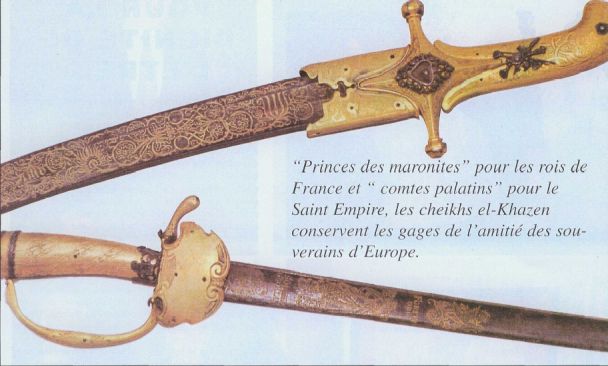
Population Movements to Keserwan - The Khazens and The Maans
ما جاء عن الثورة في المقاطعة الكسروانية
ثورة أهالي كسروان على المشايخ الخوازنة وأسبابها
Origins of the "Prince of Maronite" Title
Growing diversity: the Khazin sheiks and the clergy in the first decades of the 18th century
Historical Members:
Barbar Beik El Khazen [English]
Patriach Toubia Kaiss El Khazen(Biography & Life Part1 Part2) (Arabic)
Patriach Youssef Dargham El Khazen (Cont'd)
Cheikh Bishara Jafal El Khazen
Patriarch Youssef Raji El Khazen
The Martyrs Cheikh Philippe & Cheikh Farid El Khazen
Cheikh Nawfal El Khazen (Consul De France)
Cheikh Hossun El Khazen (Consul De France)
Cheikh Abou-Nawfal El Khazen (Consul De France)
Cheikh Francis Abee Nader & his son Yousef
Cheikh Abou-Kanso El Khazen (Consul De France)
Cheikh Abou Nader El Khazen
Cheikh Chafic El Khazen
Cheikh Keserwan El Khazen
Cheikh Serhal El Khazen [English]
Cheikh Rafiq El Khazen [English]
Cheikh Hanna El Khazen
Cheikha Arzi El Khazen
Marie El Khazen