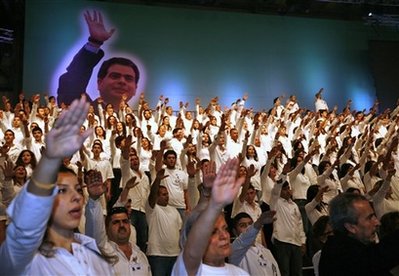
By Hussein Abdallah, BEIRUT: Former President Amin Gemayel called on Sunday for the disarming of Hizbullah and Palestinian factions inside and outside refugee camps. The Phalange Party leader issued the call during a speech at a memorial service to mark two years since the assassination of his son, MP and Industry Minister Gemayel. "The state cannot allow any illegal military presence on any of its territories … not the weapons of Palestinian factions … not the weapons of Hizbullah," he told the party faithful and senior members of the March 14 Forces of which the Phalange is a part. " The time has come for all these arms to be handed over to the state." He added that "illegitimate" arms in Lebanon have exposed the country to the threat of Israeli attack and reflected negatively on the economic situation.
"We can build our economy through Paris I, II, and III and not through Zelzal 1, 2, and 3," he said, referring respectively to international donor conferences to support Lebanon and some of the missiles believed to be in Hizbullah’s arsenal. The memorial service was held in Karantina, a northern suburb of Beirut, and included the swearing in of 4,200 new Phalange members. Gemayel also said that talks on a national defense strategy should focus on finding ways to maintain peace in Lebanon. "We need a strategy for peace and not war," he said. "Lebanon’s peace is its only defense." However, Parliament Speaker Nabih Berri called Sunday for preserving Lebanon by preserving the resistance. "Resistance should remain in the heart of the South, which will always be in the heart of Lebanon," he said. Speaking during a ceremony for his Amal Movement’s Al-Resala Scouts, the speaker addressed the security situation inside Palestinian refugee camps.
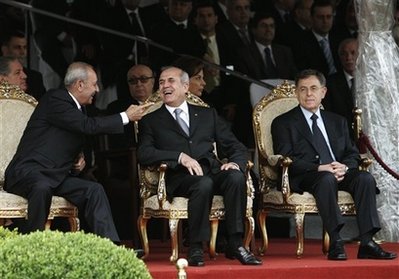
"The camps, which were always a target for Israel, are becoming a target for terrorism," he said, urging Palestinian factions to develop a unified stance against extremism. Berri’s remarks came as Palestinian groups at Sidon’s Ain al-Hilweh camp were considering ways to arrange the handover of a fugitive to the Lebanese Army. Separately, President Michel Sleiman begins a two-day visit to Iran on Monday at the invitation of Iranian counterpart, Mahmoud Ahmadinejad. "The president will discuss everything: political and economic issues, bilateral relations, the situation in the Middle East, the peace process," a government official told AFP Sunday on condition of anonymity. Talks will also cover Lebanon’s efforts to forge a national defense strategy – where Hizbullah’s arsenal remains a thorny issue – the official said. Iran is a staunch supporter of the Hizbullah, which is also backed by Syria, but Tehran has denies Western and Israeli charges that it provides military assistance to Hizbullah. Last May, the Shiite group and some of its allies staged a brief takeover of mainly Sunni parts of west Beirut, amid deadly clashes which brought the country to the brink of civil war and left at least 68 people dead.
 BEIRUT (AFP)
 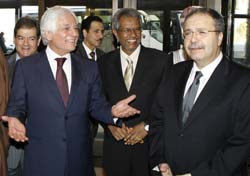 By Nicholas Kimbrell, BEIRUT: Although Syrian-Lebanese relations appear to be improving, they have been complicated by the sparring between the Syrian government and members of Lebanon’s ruling March 14 alliance over allegations about the funding of a militant Islamist group, analysts told The Daily Star Monday. Prior to President Michel Sleiman’s landmark visit to Syria in mid-August, the two countries had agreed to establish diplomatic relations. In October, Foreign Minister Fawzi Salloukh met with his Syrian counterpart Walid Moallem in Damascus to cement the formalization of ties. Interior Minster Ziyad Baroud traveled to Damascus last week, returning with a bilateral security agreement, and Information Minster Tarek Mitri was received in Damascus Sunday for a joint meeting of the Arab Information Committee. Speaking from Damascus, Mitri called the Syrian-Lebanese relationship "strong," adding that the relationship was based on "mutual respect and common interests."
  Malek el Khazen, November 2008 – Let us ask ourselves this first question: How did the Republicans fail? or did the Republicans really fail? Let me rephrase this question to what was different that made the Democrats win? The answer seems easy and yes it is logical, and the same process was applied in France, in Zimbabwe and many other countries during election within these last 2 years. What has made the difference in all of these elections are what we will call in this article the silent citizens but not so silent anymore. They are the new registered voters. There is also another variable that all of these candidates were successful enough in convincing their citizens on the ASSUMPTION of CHANGE, HOPE, TRUST and EXPERIENCE.
 ومقاربة الملفات في السياسة الاميركية في حال فوز باراك اوباما في الانتخابات الرئاسية الاميركية، معتبرا ان الامور ستظهر بعد استكمال الادارة بأشخاصها وملفاتها.
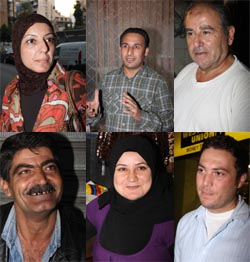 Written by Ray Hanania, Various sources estimate that there are between 3.5 and 4.5 million Arabs in America, with Christians a slight majority over Muslims. There are 7.5 million Muslims in America, but only about 22 percent are Arab and the largest segment are African American and Asian. There is little diversity in terms of their national Arab origins. The vast majority of Arab American officeholders are of Lebanese heritage. There are many reasons for this. The Lebanese were among the first to settle in the U.S. in large numbers. They are almost all Christian, allowing them to assimilate more easily into American society. Although there is a theoretical separation of church and state in America, oftentimes the fastest way to elective office is through church-supported political organizations. But other Arab nationalities are slowly winning office as more and more seek office. The common denominator seems to be that those succeeding in elections are trading-off ties to their home countries of origin with more local activism and community involvement. Some of the better known officeholders include U.S. Senator John Sununu (Palestinian origins and Lebanese heritage), and Congressmen Darrell Issa (California) and Ray LaHood (Illinois), all Republican. Arab Americans are represented in both parties, but the majorities tend to swing back and forth depending on the candidate and the issues in the Middle East. In 2000, for example, Arab Americans overwhelmingly voted Republican to support George W. Bush. In the election contest between Republican John McCain and Democrat Barack Obama, there seems to be a split with a majority of Christian Arabs supporting McCain and a majority of Muslims supporting Obama. Arab American voters share the same concerns as other Americans, from education to jobs to improving the economy. But they also have a special interest in American foreign policy towards the Middle East, and on that criteria, they share an overwhelming disappointment. They often base their choices in national elections, such as for president, on which candidate is "the lesser of two evils." Yet, when Americans across the country flock to the polls on Tuesday, Nov. 4, Arab Americans will be standing with them side-by-side in line to vote. There are more than 13 other Arab Americans who held office including four former U.S. Senators (all Lebanese), and nine congressmen including two women, Mary Rose Oakar, now national president of the American Arab Anti-Discrimination Committee (ADC), in Ohio’s 20th district, and Pat Danner of the 6th District in Missouri.
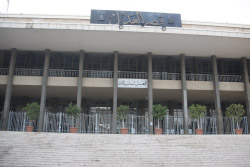 By Muhamad Mugraby, There is little doubt that Lebanon has no future as an independent and democratic political entity without the establishment of, and full respect for, the rule of law. The question is: Which rule of law? A rule of law on the legal tradition which Lebanon borrowed from Western Europe, which may be referred to as the "civil rule of law," or a rule of law based on Lebanon’s pre-statehood and original tradition of Islamic law, which could correctly be called the "Islamic rule of law?" The failure of the civil rule of law to take hold would make it inevitable for the Islamic rule of law to take over. Among the most elementary requirements for the civil rule of law which Lebanon had to observe is the development of a body of statutes sanctioned by a legitimate legislature, constitutionally established (i. e. a duly elected parliament). This task has been mostly fulfilled by borrowing and Arabizing text from French law. But so far many other necessary requirements have not been met, such as, by way of illustration: