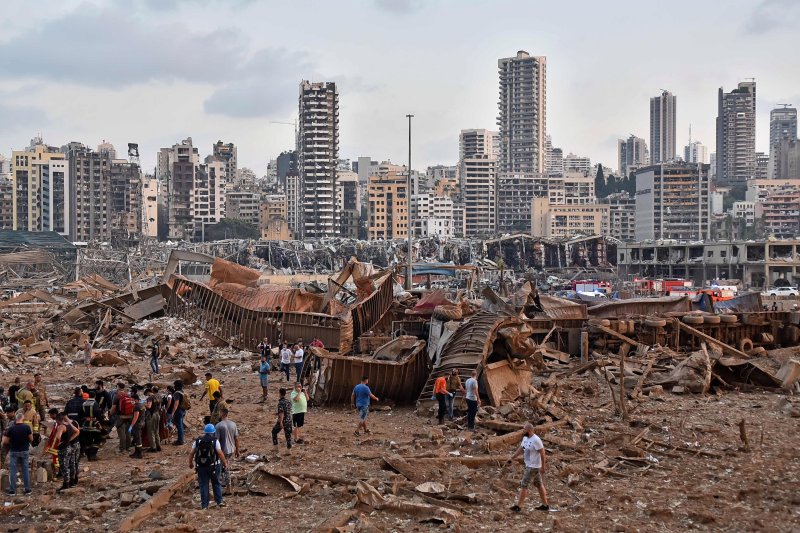
By Dario Sabaghi — al-monitor.com — The blast at Beirut Port on Aug. 4, 2020, not only left more than 215 dead and 6,000 injured, but also changed the skyline of Lebanon’s capital. For many Lebanese, the ruined grain silos are a memorial for the blast’s victims and a testament to the negligence of their political establishment. The forensic investigation was halted for the fifth time in February 2022. No one has yet been held accountable almost two years after the explosion of 552 tonnes of ammonium nitrate. On April 14, 2022, the Lebanese government approved plans to demolish the grain silos.
Lebanese Information Minister Ziad Makari told the local media that the government had appointed the Council for Development and Reconstruction to oversee the demolition process. He did not specify a time frame. Makari said that the government made the decision based on a report by Lebanon’s Khatib and Alami Engineering Company, which warned that the silos might collapse within months and that it would be too expensive to repair them. Culture Minister Mohamed Mortada told Reuters the government had decided to demolish the silos and build new ones based on a “purely economic assessment” of Lebanon’s food security needs, including wheat storage.