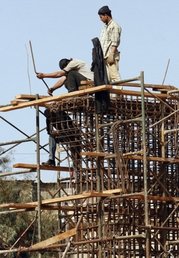
 BEIRUT (AFP) – The Ottoman-style mansions, with Venetian windows, arches and lavish gardens that once epitomised Beirut are being levelled one after the other as high-rises mushroom across the capital. "Now everyone is looking for towers, because they realise that above the tenth floor you can see the sea," says Mona Hallak, an architect and an activist with the Association for the Protection of Sites and Old Buildings. "In 20 years’ time, this won’t be the case because you will have lots of towers everywhere." As a result, landlords are rushing to take advantage of the high prices now being offered for the land on which their ancestral homes are sitting. The pattern is set: the home is demolished, its traditional garden destroyed and the land sold and developed. "Every time an old house goes, a green pocket goes and with it go trees that are often hundreds of years old," says Hallak.
"It’s not only the house. It’s the tree. It’s the bird that follows the tree. It’s the quality of life." The only law on the books that protects old homes in Lebanon dates back to 1933 when the country was under French mandate. It mainly protects buildings constructed before 1700 although younger buildings can be placed on the list of protected sites either by government directive or private initiative. "The law basically focuses on the protection of archaeology and antiquities," Culture Minister Tarek Mitri told AFP. A survey commissioned by the government in 1997 identified about 250 buildings in Beirut that cannot be demolished. "The list is outdated now," Mitri said. "Plus it was done hastily. Some buildings that should be on it aren’t." The list is of little consolation to activists like Hallak, who say the issue is more about preserving the country’s heritage than merely saving a building or a mansion. "It’s important to save an entire street, what we call a cluster… there is a social structure that is completely tied to these buildings," Hallak says.
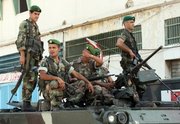 TRIPOLI, Lebanon (AFP) – Tension ran high in north Lebanon’s capital of
 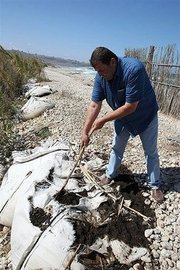 BEIRUT (AFP) – Two years after the worst oil spill in the east Mediterranean left thousands of tonnes of crude over three-quarters of Lebanon’s coast, the beaches are almost all clean but the troubles continue. In July 2006, in the midst of the month-long war between
 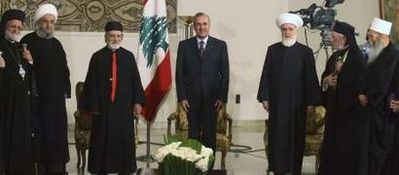 President General Michel Suleiman spoke at a meeting of Lebanon’s top 15 Christian and Muslim religious leaders, who convened at the
 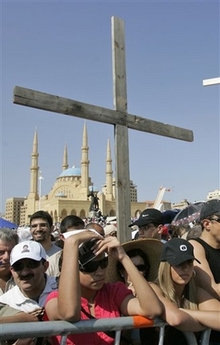 Daily Star – BEIRUT: Miraculous, perhaps. Tens of thousands of Lebanese gathered in Martyrs Square in Downtown Beirut on Sunday to witness the beatification of Yaaqoub Haddad, the late Capuchin priest who gained fame for his prolific work in founding an order of nuns, expanding the Capuchin school network and conceiving or establishing a number of religious and social institutions, some of which have gained iconic status in Lebanon. Haddad, who died more than 50 years ago, took a step toward sainthood in the first beatification ever to take place outside the Vatican – and people flocked to the capital to observe the ceremony.
 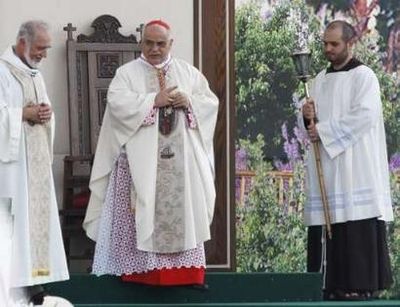 highest honors in the Christian tradition upon a Lebanese priest mere meters away from an Ottoman-era mosque in the heart of the capital. Indeed, while respectful or appreciative clapping often arose, the loudest rounds of applause came after "the nation" or the "Lebanese cedars" were mentioned in one context or another. A procession of the cross was held before Western Catholic – Latinized – renditions of Syriac and Arabic Christian chants held the massive gathering rapt. As Cardinal Martins read out a message from the pope, "hoping that this beatification will lift Father Yaaqoub of Ghazir as a happy servant of the Lord," a white veil cloaking a portrait of the late priest was lifted, symbolizing recognition of Haddad’s beatification.
 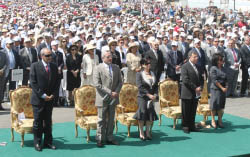 "The righteous will shine like the sun in the kingdom of their father," the Maronite patriarch said as he took the pulpit, evoking reverent silence through the assembled thousands. "The hope of so many Lebanese was realized today – that hope was the raising of Father Yaaqoub’s portrait above the altar of the Catholic Church." Sfeir then outlined how Haddad "passed through the narrow door leading to sainthood," attributing the priest’s ability to walk "the difficult road of a saintly life to three virtuous practices: surrender to the will of God, Christian modesty and the work of mercy." "Father Yaaqoub would say that ‘All God has given me belongs to Him and the poor of Lebanon," added Sfeir, in reference to his first point regarding the late pastor. "He built hospitals, schools and took care of the sick, yet he was a man of simple means – Father Yaaqoub put his trust in the grace of God." Sfeir, describing the four "pillars of modesty" that characterized Haddad’s life, again quoted the priest, saying: "Do not bestow virtue upon yourself that is not present within you; credit the Lord for that which is good in us; do not praise yourself in the presence of others; and do not count the shortcomings of those close to you in order to raise yourself."
 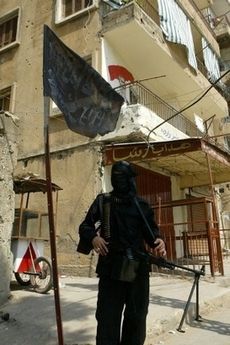 by Omar Ibrahim, TRIPOLI, Lebanon (AFP) – Four people were killed and at least 33 others wounded in north Lebanon on Sunday in clashes between armed opponents and supporters of the parliamentary majority, security officials said. After a lull of several hours, the two sides traded fire with Kalashnikov
  By Michael Bluhm, BEIRUT: Israel’s Wednesday offer of direct peace talks with Lebanon amounts to little more than a ploy in domestic Israeli politics and a sop to US interests in the region without any hope for success, a number of analysts told The Daily Star. Israeli Prime Minister Ehud Olmert has undertaken a flurry of diplomatic activity recently, with the disclosure last month of indirect Israeli-Syrian negotiations brokered by Turkey and the announcement on Tuesday of a six-month cease-fire with Hamas in Gaza, but his approval ratings have been at historic lows since Israel’s debacle in the summer 2006 war here. Olmert’s political epitaph may well have been written by the court testimony last month of an American businessman who said he loaded Olmert with cash-stuffed envelopes totaling more than $150,000 when the prime minister was mayor of Occupied Jerusalem. With Olmert’s political fortunes nearly bankrupt, Wednesday’s invitation for direct talks with Lebanon aims partly to deflect attention from his domestic difficulties, said political analyst Simon Haddad.
 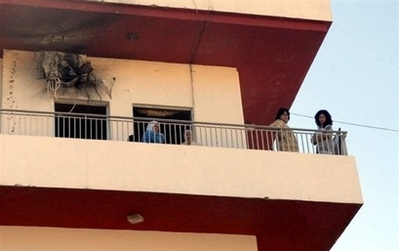 by Hassan Jarrah
 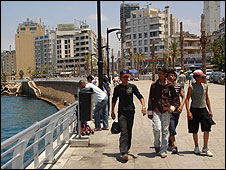 By Mike Sergeant, They call it the "miracle of Lebanon" – the ability of this country to bounce back after a devastating war or political crisis. Only last month, violence erupted on the streets of Beirut. Lebanon seemed to be bracing for another civil war. But within weeks of a peace deal being signed in Doha, a president has finally been elected and tourists are returning to the Lebanese capital. Once again, the evenings are filled with the sound of young people having fun and music blaring from Beirut’s numerous bars and cafes. In some countries, it would take years for confidence and optimism to return after such a period of intense uncertainty. Not here. The Lebanese take huge pride in their ability to be crying one minute, and laughing the next.
 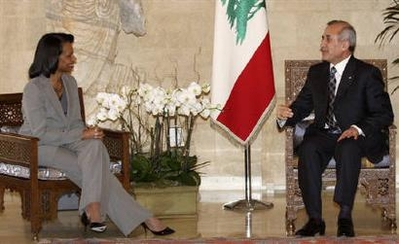 BEIRUT (AFP) – US Secretary of State Condoleezza Rice made an unannounced visit to Lebanon on Monday to bolster the troubled country’s new president, as rival politicians still struggle to form a new government. Rice said she made her lightning trip to "express the United States’ support for