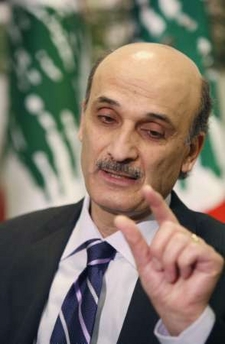
 EARTHtimes – Beirut – Three Iranians and a Lebanese man who reside in Beirut’s southern suburbs, a hotbed of Hezbollah militant activity, were arrested last week on charges of monitoring the residence of Lebanese Forces leader Samir Geagea, security sources said Friday. Geagea’s home is in Meerab, northeast of Beirut. The sources said the four men were spotted in a rented car near Geagea’s residence last week. Upon checking the plate number of the red-painted car it was found owned by a car rental company based in south Beirut and it had been rented to three Iranians and a Lebanese man. Police interrogated the four who claimed to have lost their way as they were on a trip along the "Jesus Trail" and ended up in Meerab. The four were set free, but due to contradictions in their testimonies, a judicial source said they might be interrogated again. The sources said the interrogators were wondering how two of the arrested claim they do not speak Arabic while they go to an Arab university, where courses are taught in Arabic.
Beirut – Lebanon’s Druze leader Walid Jumblatt Thursday warned ruling majority leaders to exercise extra caution when travelling to and from the Beirut airport, noting reports that Hezbollah was monitoring one of the runways. "I have received information through security channels that Hezbollah has a surveillance point with cameras in the Ouzai district which overlooks the runway 17 at Beirut international airport where most planes land," Jumblatt said. Jumblatt accused Hezbollah, a close ally of Syria, of preparing what he described as a "strategic operation " against leaders in the anti-Syrian ruling majority. The Druze leader warned all majority leaders to exercise "extra caution" in the coming weeks during their travel in and outside the country.
Hizbullah labeled the recent accustions of Progressive Socialist Party leader Walid Jumblatt against the group as "fiction," in a statement sent to The Daily Star on Friday. Hizbullah described Jumblatt’s charges of setting up cameras near Beirut’s Rafik Hariri International Airport aimed at conducting surveillance operations as "nightmares and police fiction stories." "Jumblatt’s accusations come in line with the US-led campaign against the resistance in Lebanon and other parts of the world," the statement from Hizbullah’s media office said. "Jumblatt is simply repeating the words of US President George W. Bush," it added. Hizbullah also criticized Jumblatt and Lebanese Forces leader Samir Geagea for predicting assassinations against politicians affiliated to the anti-Syrian March 14 Forces. "When we hear people like Jumblatt and Geagea predicting the occurrence of assassinations, it becomes much easier for us to know which parties are behind such suspicious scenarios," the statement said.
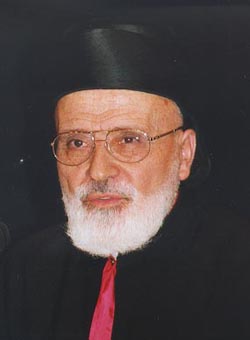 BKIRKI: Maronite Patriarch Nasrallah Sfeir lashed out on Thursday at some MPs refusal to perform their duty of electing of a new head of state, adding that this plunged Lebanon "deeper into political crisis." "This is due either to foreign or internal influences" Sfeir said after meeting with a delegation from the Journalists Union in Bkirki. "There is no way to find a solution but through being loyal to Lebanon first, and electing a president in accordance with the Constitution," he added. Sfeir said that during the first round of the presidential election, the two-thirds quorum should be used, but if in the second round there are two-thirds or a simple-majority of votes available, then the elections could be held.
 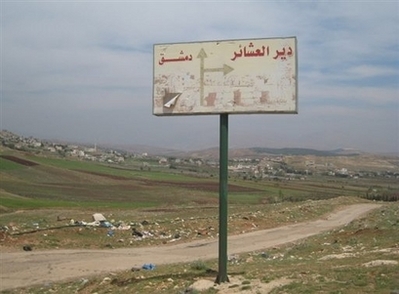 by Rita Daou, AYHA, Lebanon (AFP) – As night falls on remote villages in eastern Lebanon that border Syria streets and alleyways bustle into life as a small army of pick-up trucks, mules and cars are readied for action. Loaded up with whisky, bread, metal and other goods, drivers head for the dirt roads that zig-zag through nearby hillsides and valleys to deliver loads to fellow smugglers across the border before returning with staples such as heating oil, laundry detergent and vegetables.
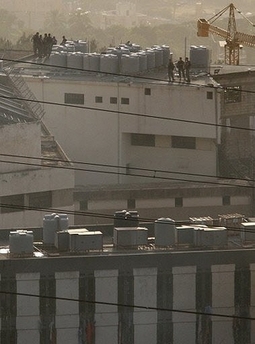 BEIRUT (AFP) – A mutiny at Lebanon’s largest prison in Rumieh during which prisoners took seven warders hostage ended peacefully early Friday, a security official told AFP. "The prisoners handed over the seven warders they were holding hostage and returned to their cells after having negotiated and handed over demands to the chief of internal security, Antoine Shakuri," the official said requesting anonymity.
 By Ferry Biedermann,
 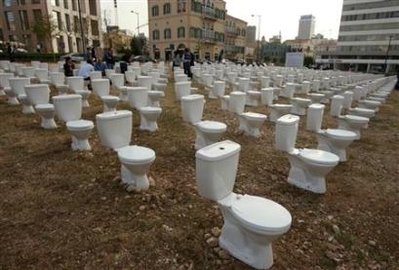 By Alistair Lyon, Special Correspondent, BEIRUT (Reuters) – Empty seats are proliferating in Beirut’s political theatre of the absurd, symptoms of a deep malaise that has crippled Lebanese government institutions, damaged the economy and fuelled fears of renewed civil war.



