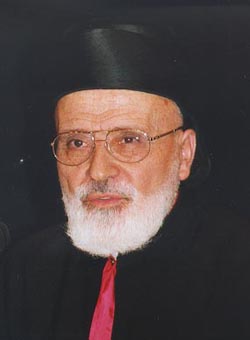
Daily Star. BKIRKI: Maronite Patriarch Nasrallah Butros Sfeir said on Monday that he hoped the 15-month-old deadlock in Lebanon would be resolved, "and the general mood of pessimism will soon evaporate." "We urge all local, regional and international groups to adopt a wise and calm attitude when dealing with Lebanese affairs," he told a delegation from the French Embassy headed by charge d’affaires Andre Parant. Parant, meanwhile, said France was determined to help Lebanon overcome the continuing standoff. "France will always stand by Lebanon," he said.
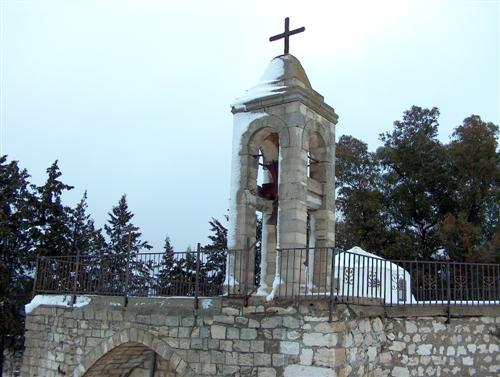
Sfeir said Sunday the persisting and widening divide had stripped Easter of its festive atmosphere. Sfeir made the remarks during his Easter sermon in Bkirki, the seat of the Maronite church north of Beirut. The patriarch also offered prayers for peace in Lebanon and the Middle East. Sfeir asked that "God remove this black cloud that lingers over us … and bring home the people who migrated to distant lands."
Speaking to a delegation from Caritas headed by Father Louis Samaha on Saturday, Sfeir said he hoped that Lebanon would return "to days of good, affluence and happiness." He added that he hoped the Lebanese diaspora would return to their homeland as one family of different religious affiliations living "in a nation of faith, love and peace." Sfeir said nearly one million Lebanese have left Lebanon since 1970, and Lebanon was left with only four million of its children, a number equivalent to a small street in Cairo or New York. "Yet people continue to migrate," he added, "and migration is not categorically negative, especially if the migration is to Arab countries in order to support one’s parents, but migration to Australia or Canada or the United States has slight hope of return to Lebanon." Meanwhile, the vice president of the Higher Shiite Council Sheikh Abdel-Amir Qabalan on Sunday spoke with Patriarch Nasrallah Sfeir and Mufti Sheikh Mohammad Rashid Qabbani about the need for Lebanon to be represented at the forthcoming Arab summit in Damascus.
Daily star. BKIRKI: Maronite Patriarch Nasrallah Butros Sfeir expressed pessimism over growing divisions among the Lebanese on Friday, a day after he compared Lebanon to the Palestinian territoriees. In a speech on Good Friday, Sfeir urged the Lebanese to "overcome disagreements and return to their conscience." "Rifts and divisions that have hit Lebanon do not lead to optimism," he said, adding that "persistent efforts [by some parties] to overtake the country’s main arteries are not comforting."
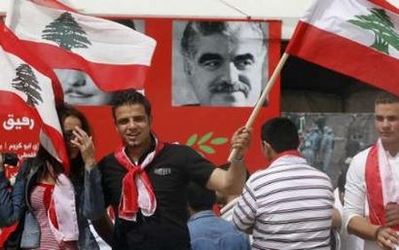 United Nations, Former Lebanese prime minister Rafik Hariri was assassinated by a criminal network that is linked to some other terrorist attacks in Lebanon, the chief investigator said Friday.\In his first report to the U.N. Security Council, Daniel Bellemare said the first priority of the investigating commission he heads is to gather more evidence about the "Hariri Network," its scope, the identity of all its participants, their role in other attacks and links with people outside the network.
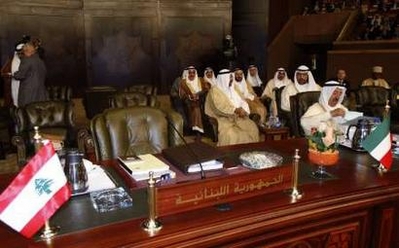 DAMASCUS (AFP) – Syrian President Bashar Al-Assad denied on Saturday meddling in Lebanon as he hosted an Arab summit boycotted by half of the region’s leaders, many of whom blame Damascus for the political crisis in Beirut. I would like to make a point with regards to Syrian interference in Lebanon. It is the contrary which is true because pressure has been exerted on Syria for over a year to interfere in Lebanon’s affairs" but we have refused to do so, Assad said.
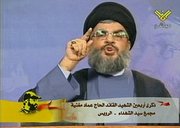 BEIRUT (Reuters) – Hezbollah said on Monday talks for a prisoner swap with Israel were continuing despite the killing of its top military commander in an assassination the Lebanese guerrilla group blamed on the Jewish state. Sayyed Hassan Nasrallah reiterated his pledge to take revenge for the February 12 assassination of Imad Moughniyah. "We shall pick the time, the place, the punishment and the means and method," Nasrallah said.
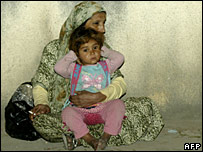 Clashes have broken out between Palestinian factions in a refugee camp in southern Lebanon. The fighting was between members of the Fatah faction and an Islamist group called Jund al-Sham. It took place in the densely populated Ain al-Hilwe refugee camp, which is located on the outskirts of the southern city of Sidon. Fighters launched rockets and exchanged gunfire in the middle of the camp, causing dozens of civilians to flee. Lebanese and Palestinian officials said one Fatah member was killed and four others wounded, the Associated Press news agency reported.