Khazen

Lebanese movie “Caramel” talks women, not war

By Yara Bayoumy BEIRUT (Reuters) – In a cinema industry traditionally dominated by the theme of war, "Caramel", a film by Lebanese director Nadine Labaki, shies away from conflict and instead brings to light social dilemmas faced by Lebanese women. "Caramel", or "Sukkar Banat" as the movie is titled in Arabic, revolves around the lives of five Lebanese women, each burdened with their own social and moral problems.

It is Labaki’s first feature-length movie and was shown during the Cannes Film Festival in May. It has been showing in Lebanon to packed theatres, unusual in a country where audiences tend to prefer Hollywood blockbusters to Arabic films. Most Lebanese films have tended to tackle themes revolving around the 1975-1990 civil war that destroyed much of the country’s social fabric — its social repercussions, sectarianism and post-war malaise. But "Caramel" chooses to focus on modern social themes. Its main setting is a beauty salon in Beirut, where women talk frankly about men, sex, marriage and happiness. Their conversations are interspersed with touching and comical scenes.

"Lebanon is not only burning buildings and people crying in the street. When you say Lebanon, especially to foreigners, that’s the first thing they think of," Labaki said on Thursday. "For me Lebanon is about other things … we live love stories like any other person in any country all over the world," Labaki, 33, told Reuters at a 1930s house in Beirut. "That’s why I wanted to talk about an issue that has no relation to the war and which shows a new picture of Lebanon, specifically that it’s a people with imagination, who love life, people with warmth, people with a sense of humour."

Read more
Lebanese troops seize homes of Islamist leaders

Relatives of Fatah Islam’s deputy commander Shehab al-Qaddour known as Abu Hureira, who was killed on July 31 in clashes with Lebanese security forces, hold his body, wrapped with a white shroud during his funeral in the northern port city of Tripoli, Lebanon Saturday, Sept. 1, 2007. The No. 2 commander of al-Qaida-inspired Islamic militants battling Lebanese troops in a Palestinian refugee camp in northern Lebanon for more than three months was buried on Saturday, a month after his death. (AP Photo)
NAHR AL-BARED, Lebanon (AFP)  sept 1- Lebanese troops have seized control of the homes of top Islamist militia leaders as they tighten the noose on fighters besieged in a refugee camp for more than three months. An army spokesman said the troops on Friday seized the homes of Shaker al-Absi and Abu Hureira, leaders of the Fatah al-Islam group holed up in the Nahr al-Bared refugee camp near the Mediterranean coast in northern Lebanon.

"The army continues to advance and close in on the last positions of the gunmen who are now in a small area," the spokesman said on Saturday."They are in underground shelters from where they sneak out every now and then to open sniper fire on the soldiers." Abssi is the leader of the Al Qaeda-inspired Sunni extremist group which has been locked in fierce fighting with the Lebanese army since May 20 after its militants attacked army targets in the north.

Read more
الخازن: الظروف ا&#1604

المركزية – أمل عضو كتلة "الاصلاح والتغيير" النائب الدكتور فريد الخازن ان "يكون خيار الحكومة، لاسيما خيار حكومة الوحدة الوطنية لا يزال قائماً، وقال في حديث اذاعي: "قد نكون الان نمر في نوع من الوقت الضائع، ووصلنا الى وضع لا نقول انه يستحيل ايجاد المبادرات لإنهاء الازمة، لكن المسألة تزداد تعقيدا". اضاف: "لا ارى اي جديد على […]

Read more
الخازن: انتخاب ر&#1574

اكد عضو تكتل التغيير والاصلاح النائب فريد الخازن انه في حال سعت الاكثرية الى انتخاب رئيس للجمهورية بالنصف زائد واحد ستفتح الباب امام المجهول مما يضع البلد على شفير الهاوية.
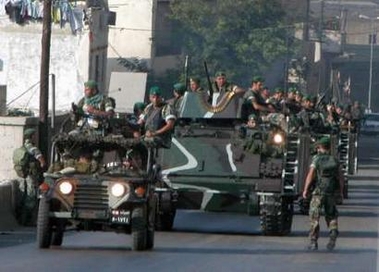
وقال الخازن في حديث لـ "وكالة اخبار لبنان" ان الموضوع ليس مقتصراً فقط على انتخاب الرئيس المقبل بل على المرحلة التي ستلي انتخاب الرئيس، وفي حال انتخب الرئيس بالنصف زائد واحد فلن تكون المرحلة المقبلة مرحلة تساهم في حل الازمات التي يعانيها لبنان اليوم، ولن يتمكن الرئيس المقبل من تنفيذ برنامج واضح المعالم ويكون جزءاً منه وتكون الحكومة الجديدة جزءاً منها ايضاً، منبهاً من خطورة انتخاب الرئيس بالنصف زائد واحد لا سيما بعد كلام مرجعيات متعددة عن هذا الامر وعلى رأسها البطريرك صفير، وأضاف: ان الفريق الحاكم يعلم ان الخروج عن الدستور والتحدي للاطراف المقابلة لا يساعد على حل الازمة، لافتاً الى توافق وتسليم للواقع الذي ينادي بعدم الخروج عن الدستور، لأن اية مخالفة ستؤدي الى مزيد من التعقيدات وتدخل الوضع اللبناني في مسار خطير جداً لانها تنسف الثوابت والمسلمات القائمة في الحالة اللبنانية، مؤكداً ان عدم الالتزام بنصاب الثلثين لا يخدم مصلحة المسيحيين حتى ولو كانت بعض هذه المواقف صادرة عن تجمعات تضم مسيحيين كلقاء معراب

وحول المواقف الاميركية من مواصفات رئيس الجمهورية المقبل دعا الخازن الى فصل الداخل اللبناني عن الخارج، وقال: حزب الله يمثل شريحة كبيرة من اللبنانيين، ومنطق الاتيان برئيس يعادي حزب الله لا يساعد على تحقيق الاهداف التي تصب في استقرار البلد وعودة الديمقراطية الى الحياة السياسية في لبنان.  

Read more
In Lebanon, soldiers win new respect

By Nicholas Blanford, Bibnine, Lebanon – Mustafa Borghol stares solemnly out from one of dozens of "martyr" portraits stuck to walls in this village in northern Lebanon. The 24-year-old Lebanese Special Forces soldier is the 10th resident of Bibnine to die in three months of bitter fighting between the Lebanese Army and the Al Qaeda-inspired militants of Fatah  al-Islam in the Nahr al-Bared Palestinian refugee camp, just three miles from here. "This village used to be famous for fishing and carpentry," says Mohammed Borghol, Mustafa’s father, while sitting in his butcher shop. "Now it is famous for its martyrs, and we are very proud of them.""The fighting has definitely increased the credibility of the Lebanese Army in the eyes of the public," says Timur Goksel, who lectures in Beirut  on conflict resolution and is a former long-serving United Nations official in southern Lebanon.

New moves to promote the Army
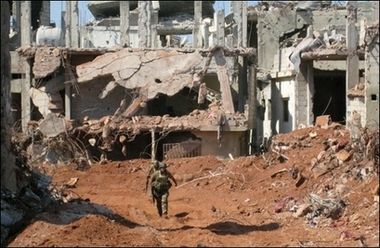
That public sentiment is being backed by a carefully choreographed promotional campaign of television ads and billboards boosting the profile of the Army. In one television spot, a Lebanese soldier walks down a main street in Beirut as passersby stop and salute him. Banks are offering credit cards with a military camouflage design. Billboards show heroic pictures of soldiers in action and praise the sacrifices of the Army.Last week, more than 60 women and children were evacuated from Nahr al-Bared, mostly families of the Fatah al-Islam militants, the last noncombatants to leave the war-ravaged camp, previously home to a mainly Palestinian population of 40,000. Their departure heralds a final offensive against the surviving militants who are thought to number under 100.Weeks of intense artillery shelling has reduced most of the camp to rubble. Bullet and shell holes pockmark the skeletal remains of buildings. The floors of other houses lie pancaked on top of one another. Lebanese flags flutter from the ruins, planted by soldiers as they inched through the warren-like passageways of the camp, battling the militants.

Read more
Lebanese army readies final assault on Islamists

NAHR AL-BARED, Lebanon (AFP) – Lebanese troops prepared on Sunday to launch a final assault on Islamists holed up for months in Nahr al-Bared camp from where the last women and children have now been evacuated. As Palestinian Ulemas, or clerics, sought a way out for wounded fighters in last-minute negotiations, an army spokesman  forecast: "The strikes against the militants will become more intense."

The wives and children of the remaining Fatah al-Islam militants were evacuated on Friday and there had since been some "close quarter combat," the army spokesman said, forecasting an unhindered all-out attack."Before we were more cautious because of the presence of women and children. That will no longer be the case," he said.Sunday also saw heightened sniper fire directed at the soldiers, an AFP correspondent on the scene reported.One of the clerics, requesting anonymity, said the Rally of Palestinian Ulemas had been contacted by the militants’ spokesman, Abu Salim Taha, to negotiate the evacuation of the wounded "who number eight or nine."

"We are on the point of reaching an agreement," the cleric said. "It’s a matter of finalising the last details on time and method of evacuation."It was Taha who, after several unsuccessful efforts at mediation between the Islamists and the army, contacted the clerics over securing safe passage out of the camp for the Islamists’ wives and children — a total of 63 people.

Read more
Lebanese cabinet considers disabling phone network of Hezbollah

Lebanese government was mulling over severing private Hezbollah phone network connections that started in southern Lebanon and ended up in Beirut and its suburbs, local Naharnet news website reported on Tuesday."We agreed to draw a plan of action for a peaceful resolution of this issue, but we are serious about resolving it because it is a dangerous matter," Lebanese Information Minister Ghazi Aridi was quoted as saying.
Aridi said after a lengthy cabinet session on Monday that the government has formed a committee to draft a report on recent information that Hezbollah had installed its own communication infrastructure in southern Lebanon.He said initial reports have shown that the Hezbollah communication networks "went beyond (the southern village of) Zawtar Sharqiyeh … to reach Beirut and the suburbs of Beirut which are outside the security areas of the leadership of the resistance (Hezbollah)."

Read more
Three months on, Lebanese army still battling Islamists

Sylvie Groult, AFP, August 17, 2007, NAHR AL BARED, Lebanon —  Three months into the deadly standoff between the Lebanese army and Islamist guerrillas holed up in a refugee camp, troops are still battling to crush an unexpectedly well-armed and well-organized enemy. Located along the Mediterranean coast near the northern city of Tripoli, the Nahr Al Bared camp, today, is but an apocalyptic scene of twisted steel and ruins. The red-and-white Lebanese flag flutters here and there as a sign of the army’s advance.

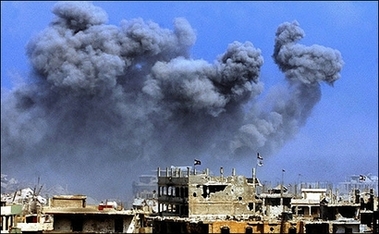
Black-and-white smoke hangs over the skeletal buildings that heave at the impact of each mortar round, or from the explosion of mines spread by the Fatah Al Islam fighters all over the sprawling camp. The army, in the last week, has resorted to air attacks in a bid to flush out the estimated 70 militants thought to be still hiding in subterranean shelters, along with some 100 women and children.

"We are using airstrikes, as shelling them with tank fire is no longer effective or sufficient," said an army spokesman. "We are trying to clear the small area around where the Islamists are holed up, so that our tanks and military equipment can get through." The drawn-out battle, which has claimed the lives of more than 200 people, including 136 soldiers, has taken even the war-hardened Lebanese by surprise.

Defense minister Elias Murr mistakenly announced an end to the fighting at the end of June, but has, since, kept a low profile, refusing to make a prognosis as to when the standoff may end. On the battle front, troops continue to slowly clear the camp’s sinuous streets of booby-traps and mines, as they try to seize the last, tiny area still controlled by the Islamists. The camp’s 31,000 Palestinian refugees fled at the start of the fighting May 20, leaving behind the Al Qaeda-inspired militants who infiltrated into Lebanon and took up positions inside Nahr Al Bared last year.

Read more