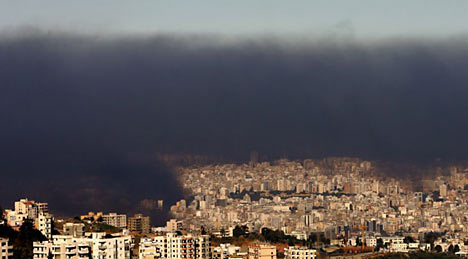
 Jan 24, Life was returning to normal in the Lebanese capital and around the country Wednesday, a day after violent confrontation between government supporters and opponents killed three people and wounded dozens. The violence was the worst escalation of the opposition’s campaign to topple Prime Minister Fuad Saniora’s Cabinet.
Most private and public schools that closed Tuesday after the opposition called a general strike against the government reopened Wednesday as did banks and commercial shops in Beirut and other cities. The road to the airport, closed by burning tires and earthen barricades set up by the opposition, was reopened by the Lebanese army shortly after midnight Tuesday. This allowed a Middle East Airlines plane to fly to Milano Wednesday morning. Roads at Beirut’s northern and southern entrances were reopened to traffic Wednesday after they were blocked by burning tires and sand barricades by protesters.
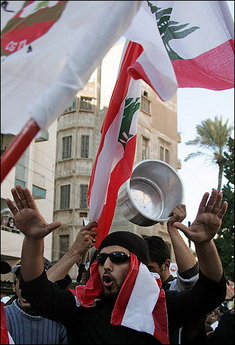 By Tom Perry BEIRUT, Jan 23 (Reuters) – Lebanon’s opposition called on workers to go on strike on Tuesday in an escalation of its campaign against the government that is set to deepen the political crisis in the country. Hezbollah leader Sayyed Hassan Nasrallah, part of the opposition, called on Lebanese to observe the strike and be ready for more steps which the opposition might announce to press its demands for veto power in cabinet and new elections. Prime Minister Fouad Siniora’s has shrugged off the demands, instead preparing for an international aid conference in Paris on Thursday that it hopes will yield billions of dollars for Lebanon’s debt-laden economy.
 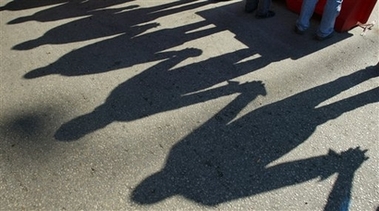 Beirut, Jan 14 (DPA) The slogan ‘I love life’ is currently covering billboards around the Lebanese capital as the government and the opposition compete over who loves life and Lebanon more. It is a campaign used by the March 14 Coalition and has been countered by slogans from the opposition that read: ‘We love life without debt or outside interferences.’The billboards represent the competition between Lebanon’s government and its allies, and the opposition to show their love for Lebanon.’We love life with pride,’ reads a billboard for the Lebanese Shia movement Hezbollah. A few metres away, a large billboard pasted up by the forces that support the government of Premier Fouad Seniora says: ‘We want to live. We love life.’
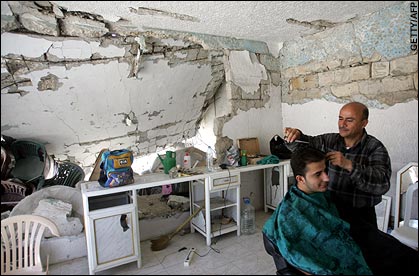 By Michael Hirst in Beirut, Sunday Telegraph, Talking politics is normally a favourite pastime in Lebanon. But after a summer of war and an autumn of government in deadlock, Beirut’s shops, cafes and barbers have drawn a line under the heated national dialogue by banning all talk of current affairs on their premises
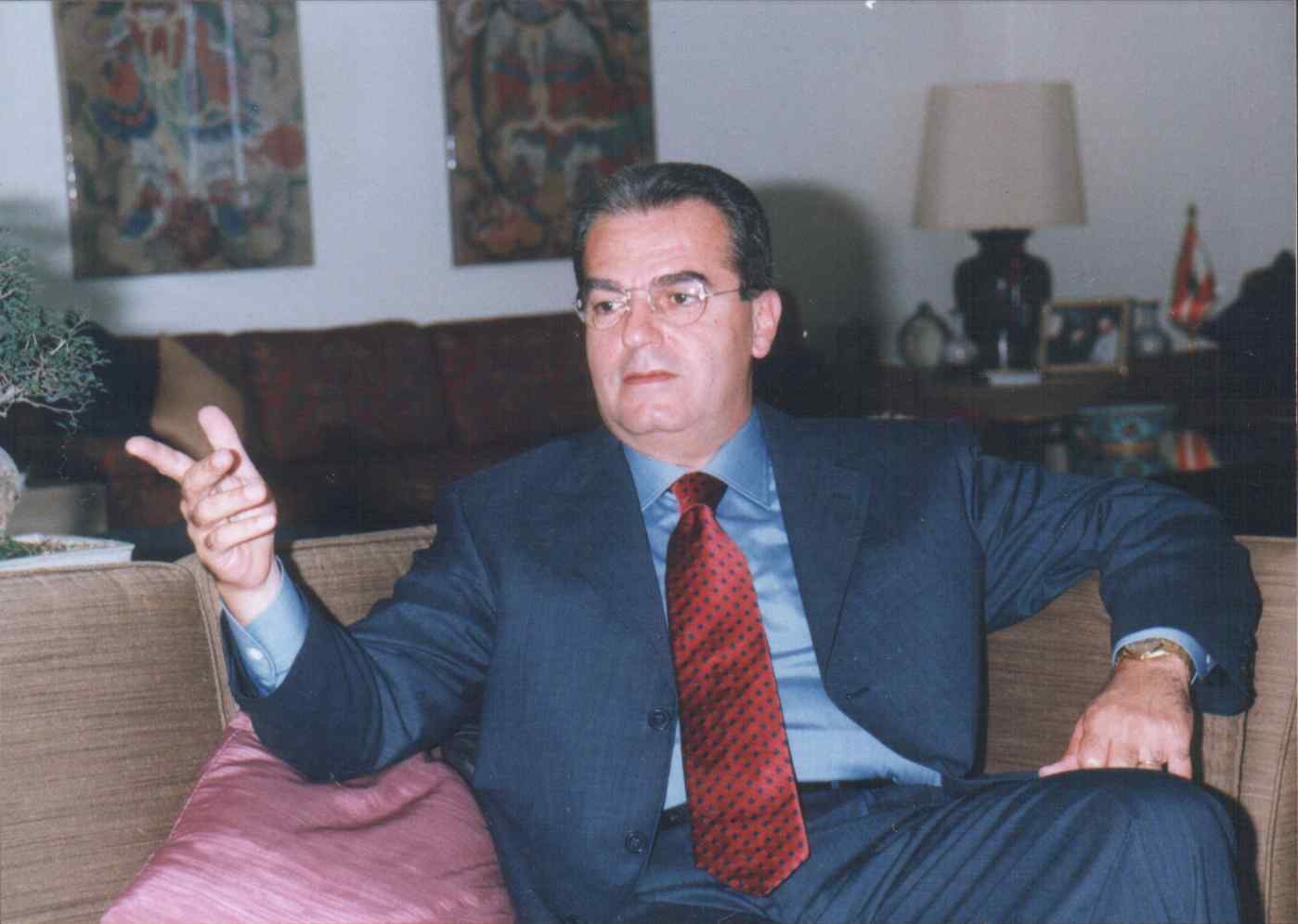 الإنفراج على صعيد الأزمة الحكومية لأنه حريص على الأمانة التي أولاه إياها الدستور اللبناني وهذه الأمانة تخوله الرجوع إلى الدستور في كلّ خَطوة يخطوها مما يجري فضلاً عن قلقه على الأوضاع الإقتصادية والمعيشية التي تطاول كلّ المواطنين بلا إستثناء.
 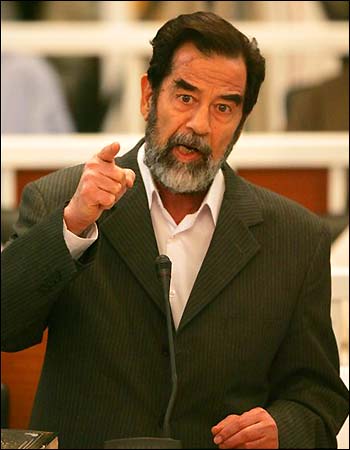 BAGHDAD, Dec. 30 (Xinhua) — Iraq’s ousted president Saddam Hussein was defiant and calm, refusing to have a hood pulled over his head while he was led the gallows shortly after 6 a.m. (0300GMT) on Saturday. Iraqi state-run television, al-Iraqia, released videotape of Saddam final moments before execution. The video showed Saddam, wearing a white shirt without a tie and a dark overcoat, being led to the gallows with a calm and defiant face and was chatting with his two masked hangmen who placed the noose around his neck. The Iraqi television later showed footage of Saddam in a white shroud lying with his neck twisted to one side at an awkward angle, with what appeared to be blood or a bruise on his left cheek. Before the rope was put around his neck, Saddam shouted: "God is the greatest. Long live the nation and Palestine is Arab," Sami al-Askari, the political adviser to Prime Minister Nuri al-Maliki, told the Iraqi channel. The execution took place at an Iraqi army base in Kadhimiya, once was Saddam’s main military intelligence headquarters.
 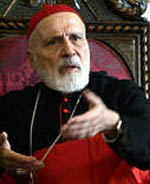 By Maroun Khoury, Daily Star, BKIRKI: Maronite Patriarch Nasrallah Butros Sfeir said Thursday that the protests currently taking place in Lebanon can very easily engender chaos. Speaking during a meeting with a delegation of residents from the Bekaa regions of Baalbek and Deir al-Ahmar, Sfeir said that "protests like these are unfortunately allowed in Lebanon and if we look around us, we can see none of the countries allow their citizens to do what the Lebanese are doing these days."
 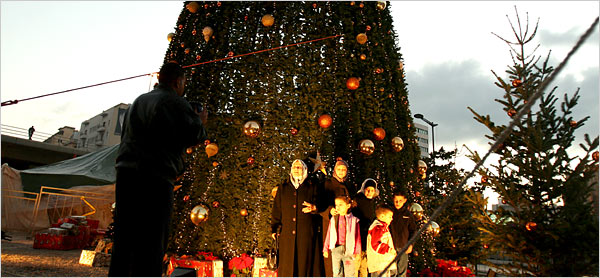 The New York Times, By HASSAN M. FATTAH, BEIRUT, Lebanon, Dec. 28