 By Patrick Lannin, Reuters | September 1, 2006, STOCKHOLM — International donors pledged more than $940 million yesterday for war-torn Lebanon’s immediate relief efforts, nearly double the target amount.The funds raised at the Stockholm meeting will go to short-term needs, from shelter for those who lost their homes in Israel’s war with Hezbollah to the removal of unexploded bombs.
Lebanon hopes to hold a bigger conference later this year to raise money for longer-term reconstruction.“We believe that this a very important accomplishment. . . . This will pave the way for further efforts," Lebanese Prime Minister Fouad Siniora told a news conference.He told the delegates from 60 countries and aid groups the pledges “show that the Lebanese people are not alone."A statement released after the conference said donors had promised more than $940 million. A Swedish Foreign Ministry official said this included $175 million of US funds, part of an aid package unveiled by President Bush last week.
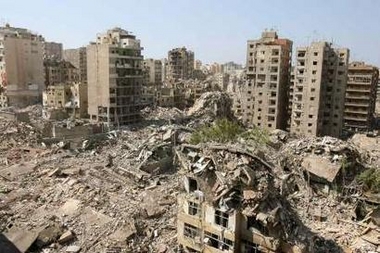 By Roula Khalaf in Beirut and Mark Turner at the United Nations, Published: August 27 2006 18:33 | Last updated: August 27 2006 18:33, The Lebanese government will on Monday press Kofi Annan, UN secretary-general, for a lifting of the Israeli air and sea blockade and appeal for international help to persuade Israel to withdraw from a disputed border area.Mr Annan arrives in Beirut on the first leg of a high-stakes Middle East tour in which he will face a dizzying array of conflicting agendas and entrenched demands.
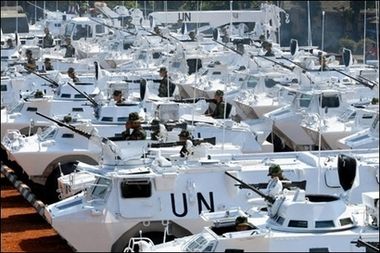
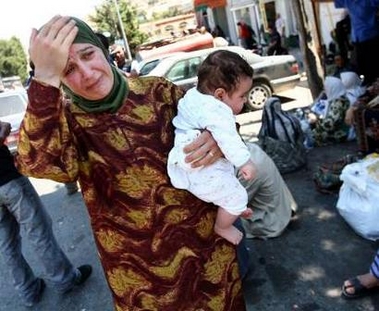 BEIRUT, 21 August (IRIN) AP – The international community should show more commitment to calls by the United Nations to strengthen the international peacekeeping force in Lebanon, said experts in Beirut. "For the ceasefire to hold, the international community needs to show more preparedness and commitment to joining the international peacekeeping force as soon as possible," said Rami Khouri, editor-at-large of The Daily Star newspaper, on Monday. There has already been a breach of the 14 August ceasefire as Israel carried out an attack on the eastern Beqaa Valley on 19 August. The UN condemned the action, saying it was a violation of UN Security Council Resolution (SCR) 1701, which calls for a cessation of hostilities between Israel and the armed wing of Lebanese political party Hezbollah. "The Secretary-General is deeply concerned about a violation by the Israeli side of the cessation of hostilities," a UN spokesman said on 19 August.
 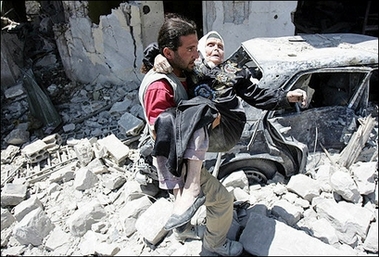 The United Nations AP- on Thursday outlined a "robust" mandate for thousands of international peacekeepers to be deployed in Lebanon and urgently called on member states to pledge troops. UN Deputy Secretary General Mark Malloch Brown said the force would be "robust" but not offensive and set out draft rules of engagement.
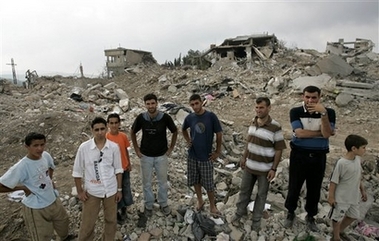 BEIRUT, Lebanon AP
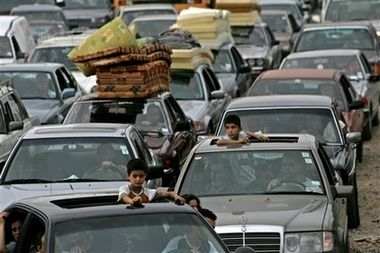 YABOUS BORDER CROSSING, Syria, August 14 (UNHCR)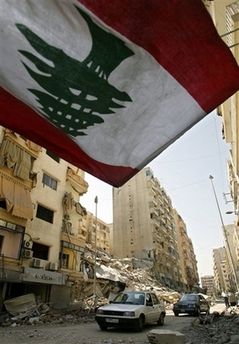
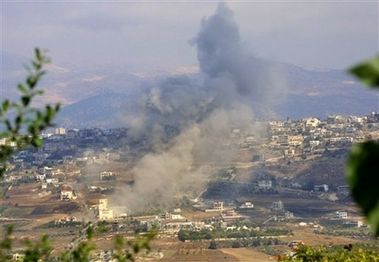 By RAMIT PLUSHNICK-MASTI, aug 13, Associated Press Writer ,
 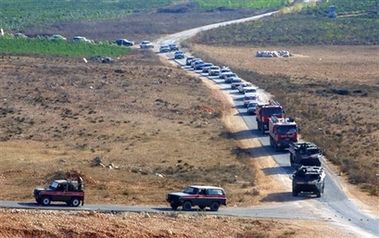 Anthony Shadid, Washington Post Foreign Service, Sunday, August 13, 2006; Page A01, HASBAYA, Lebanon, Aug. 12, Israeli troops entered Marjayoun at 3:30 a.m. Thursday. They had first seized Burj al-Molouk. Next was Qleia. The last, along a road stretching from the border, was the capital of the province, a faded, once-prosperous town that unfurls up a hill overlooking a valley carpeted in olive trees and the imposing, wizened peaks of Mount Hermon, known here as Jebel al-Sheikh."They came with the tanks, of course," said Fouad Hamra, the town’s mayor.