Khazen

Lebanon’s new resolve on Palestinian issue

By Nicholas Blanford, Correspondent of The Christian Science Monitor

AIN AL-HILWEH, LEBANON – After decades of uneasy relations, Lebanon and its Palestinian population are set to embark on a ground-breaking dialogue to improve conditions in the Palestinian refugee camps and curb uncontrolled armed groups.

For Ibrahim Khalil, that could mean an end to the knee-deep sewage that pours into his home during winter rains.

"Our homes are all damp and humid and not fit to live in. When it rains, my home is flooded with sewage because the drains can’t take it. And this is the good part of the camp," says the Palestinian resident of this squalid refugee camp on the outskirts of the southern Lebanese town of Sidon.

By working with the Palestinian Liberation Organization (PLO), which reopens its Beirut office Monday, to ameliorate the plight of refugees like Mr. Khalil, Lebanon hopes to offer Palestinians greater job opportunities and better living conditions to weaken the lure of the many armed Palestinian factions operating in the camps. Though Beirut has long been under international pressure to disarm the groups, the imminent negotiations – regarded as a key step in allaying that pressure – signal a change in how the government plans to tackle the problem.

"This is a major turning point," says Sultan Abul Aynayn, the head of the Fatah movement in Lebanon. "The Lebanese have moved from treating the Palestinians as a security concern to a humanitarian concern."

Read more
Syria starts removing sand berms inside Lebanon

BEIRUT (AFP) – Tractors started to dismantle sand berms erected by Syrian border guards several kilometers inside Lebanese territory, the head of a municipality in the region said.

"Works started this morning in the presence of officials from the two sides, and should take about a week," said Bassel Hujairi, head of the municipality of Aarsal.

Five tractors of the Syrian and Lebanese armies as well as from Aarsal municipality started to remove the berms, under the supervision of administrative and military officials from the two countries, he said.

The operation came after an agreement between Lebanese and Syrian officials in a meeting held on May 9 in the Syrian resort town of Bludan, near Damascus.

"The committee which supervises the works is not entitled to define or draw the borders. The operation is only a solution for the farmers, to allow them to access their lands," said Hujairi.

Read more
U.S. Envoy Urges Syria to Accept Lebanon

By EDITH M. LEDERER, Associated Press Writer

UNITED NATIONS – The U.S. ambassador to the United Nations said Friday a new Security Council resolution is needed to force Syria "to come out of denial" and recognize Lebanon’s independence by establishing diplomatic relations and setting their border. 
The United States, France and Britain formally introduced the draft resolution Friday in the Security Council. But it faces opposition from Russia, China and other members who say it is not needed and would constitute U.N. interference in bilateral Lebanese-Syrian relations.

U.S. Ambassador John Bolton agreed the Security Council should not be involved in their bilateral relations. "But that’s not the issue here," he said. "The question between Syria and Lebanon involves the decades-long occupation of one country by the other, continued meddling in the internal affairs of Lebanon by Syria, and therefore questions of the extension of diplomatic relations here are critical to breaking through the denial that apparently still grips Lebanon."

Read more
Syrian FM Says UN May Hinder Lebanon Ties

By SAAD AL-ENEZI, Associated Press Writer

KUWAIT CITY – Syria’s foreign minister said Friday the U.N. Security Council’s involvement in Syria and Lebanon may impede attempts to improve relations between the two countries. 
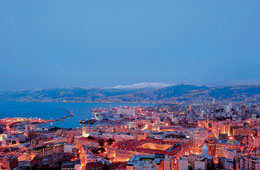
Foreign Minister Walid Moallem spoke in Kuwait hours after the United States, France and Britain introduced a draft resolution in the Security Council that urged Syria to establish diplomatic ties with Lebanon and delineate the border between the two countries. The draft also calls on Syria, as well as Iran, to work for the disarmament of militia in Lebanon

Read more
Shia of Lebanon

Financial times, By Roula Khalaf, The newly built stone mansions in the village of Kfar Jos symbolise the changing fortunes of Lebanon’s Shia community, the country’s largest minority sect. Nestling at the edge of the town of Nabatiye, known as the Shia capital of southern Lebanon, Kfar Jos’s landscape has been transformed by a wave of immigrants who brought home part of the wealth earned in Africa and America.

At Nabatiye town hall, officials say almost every family in this part of the Lebanon has a member working abroad, their remittances helping to lift the living standards of one of the country’s most deprived regions. They proudly list the social and economic achievements, including the establishment of 16 bank branches, five hospitals and more than 15 schools.Signs of the Shia community’s political empowerment are visible too, with posters of revered political chiefs plastered all over town and in surrounding villages.

Among them is the late Musa Sadr, the charismatic leader who was the first, in the 1970s, to assert the Shia’s political rights and fight discrimination by the then dominant Sunni Muslims and Christian Maronites.

Read more
Karen El Khazen on LBC

Pls Click View Video to view the video of Karen El Khazen, during a prime on LBC. The video is 20 MB (4 min) You can view the video by using Windows media player. With a High speed internet connection the video should not take more then 3 min to completely open, with a dial […]

Read more
Lebanon talks resume but breakthrough unlikely

By Lin Noueihed , BEIRUT (Reuters) – Rival politicians resumed talks on Friday to end Lebanon’s political crisis but were unlikely to decide to dismiss the president or agree on the fate of Hizbollah’s weapons. The "national dialogue" conference, the first top-level political gathering since Lebanon’s 1975-1990 civil war, was adjourned on April 3 with a promise to lay to rest a dispute over whether Emile Lahoud should stay or go.
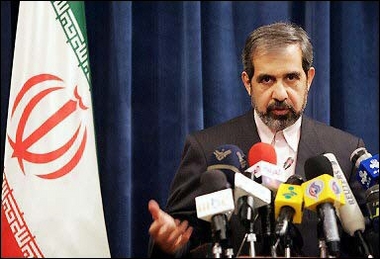
Lahoud has been under pressure to resign from politicians, who see him as the last vestige of Syrian tutelage that ended a year ago. The president, who has appeared relaxed and assertive on television in recent weeks, has so far refused to step down.

Parliament chooses the president in Lebanon, but political sources say that even the anti-Syrian bloc, which won a majority in the 128-seat house in May-June elections, has been unable to agree on its own preferred candidate let alone one that would be acceptable to other deputies. That being the case, the sources envision two scenarios.

Read more
UN Draws Attention To Tehran’s Role In Lebanon
By Bill Samii, Iranian involvement in Lebanese affairs has been an issue since the early 1980s, and it came in for renewed attention last week. On April 18, a United Nations report urged Tehran to cooperate to resolve Lebanese issues. Washington’s ambassador to the UN has welcomed the spotlight on Iran’s involvement in Lebanon, while an outspoken Lebanese politician has been decrying this problem for some time.
WASHINGTON, April 24, 2006 (RFE/RL) — UN Security Council Resolution 1559 made in 2004 calls for a withdrawal of foreign forces from Lebanon and the disarming of the country’s militias. Syrian forces have pulled out, but UN special rapporteur Terje Roed-Larsen noted in his April 18 report that the provision calling for "the disbanding and disarmament of all Lebanese and non-Lebanese militias" has not been "fully implemented."

The report refers to Hizballah as "the most significant Lebanese militia," and it adds that "there has not yet been any noticeable change in the operational status and capabilities of Hizballah." Referring obliquely to the influence of Iran and Syria on Hizballah, the report adds, "a dialogue with parties other than the Lebanese authorities is indispensable" in the pursuit of disarming and disbanding the militias.

Read more
Lebanese play breaks taboos on Arab women’s sexuality

By Alaa Shahine, BEIRUT (Reuters) – The young, pretty actress appears before a capacity crowd at a Beirut theater and says she was forced to shave her pubic hair to please her husband in bed after finding out he was cheating on her. "My husband hates the hair. He thinks it is filthy and disgusting and forced me to remove it … and when I stopped shaving he had an affair with another woman," she says.
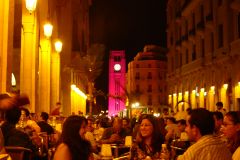
"But you have to love the hair if you love ‘CoCo’," she says, referring to the vagina and drawing applause and laughter from the audience. "Women’s Talk," inspired by American playwright Eve Ensler’s hit "The Vagina Monologues," is one of two plays recently shown in Beirut which openly and frankly tackle the issue of women’s sexuality, a taboo in the largely conservative Middle East.

The play, starring four young actresses and comprising 12 monologues, three of them adapted from Ensler’s work, also brings into the open such serious problems as rape, domestic violence and sexual harassment, which Arab women are discouraged from discussing in public. The audience needs to know about these issues. I don’t know why it is shameful for a woman to talk openly about her period, for example," said Lina Khoury, who wrote and directed her monologues based on interviews with women of different ages.

"We have to question the very customs and traditions in our society that are besieging and oppressing us," she told Reuters. Lebanon has long prided itself on being a bastion of freedom in the conservative Middle East and it is no surprise that such a play would open in its liberal capital. Yet even here, Khoury had to tone down some language to get the censor’s approval and waited more than a year for permission to show the play

Read more
The Israeli Invasion of Lebanon

History

The 1982 Israeli Invasion of Lebanon 

Reasons and Aims

Pierre Khazen 12/3/2006 

Shlomo Argov:

On 3 June 1982 at 11 pm, Shlomo Argov, the Israeli Ambassador to Britain was attacked by 3 members of Abu Nidal’s Organization. The assassins were waiting for the ambassador to leave a Diplomats dinner party which was held in Dorchester hotel in London and critically injured him when one of the bullets fired hit his head; Argov was rushed to the hospital where doctors managed to save his life but he remained paralysed till he died in 2003.   

Ariel Sharon:

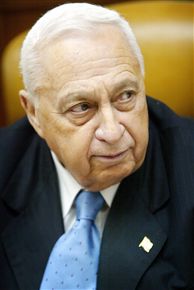
Ariel Sharon, Minister of Defence, heard about this attempt to assassinate the ambassador while he was paying Romania a visit according to his duty. He decided to continue with his meetings with senior officials in the Romanian regime. He left to Israel the day after.

The Government:

Menachem Begin held a meeting the next day with the government to discuss the increasing Palestinian terror against Israeli targets without the presence of Ariel Sharon as he still did not arrive in Israel. The government decided that Israel?s reaction would target the PLO in Lebanon which was based and operated from there.   

Read more