Abdel Wahab Badrakhan, Dar al Hayat, Is al-Zirqawi in Lebanon now? Statements on the Internet websites can take him anywhere. Yet, announcing that his organization is responsible for launching missiles from South Lebanon toward Israeli settlements is a clear message to the Americans rather than the Israelis.Guess who benefits from instigating such a message?Could it be Saddam Hussein, for instance, or the Iraqi resistance, which is striving to extend its struggle to Palestine through Lebanon? Of course not. Could it be "Hezbollah" or some Palestinian groups present in Lebanon, especially "the People’s Front – General Command"? The answer is also no, because these organizations cannot solely call in "Al Qaeda", welcome it, and bear its burdens. As such, if al-Zirqawi really arrived to Lebanon, the party that led him to Iraq led him to Lebanon, i.e. Syria and Iran.
It is most likely that the terrorist organization is not yet present in Lebanon; however, it is not unlikely that it has advocates therein. Did these advocates grow to have the potential to hold missiles and transpierce South Lebanon to launch them on Israel? If this is the case, the situation should alarm the Lebanese army first, and then Hezbollah. In other words, it should alarm the Lebanese government with its rift between Syrian proponents and opposers. Such transpiercing is unjustified except for mere destructive motives and has nothing to do with smart "resistance" that the Lebanese supported -despite the divergence in points of views – and still refuse to undermine its importance. As long as these suspicions swirled around the "General Command" with respect to launching the missiles, this organization has become, following the report of "al-Qaeda", either "innocent" or on the contrary linked to "al-Qaeda". In both cases, its status must be clarified, since this is not the first suspicion that it has been subjected to.
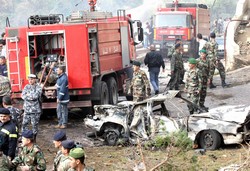 BEIRUT, 8 Jan 2006 (IRIN) – The Lebanese Press Federation announced it would press murder charges against those involved in the killing of journalist and Member of Parliament Gebran Tueini, who died in a car-bomb attack on 12 December 2005 in the capital, Beirut.According to a statement, federation president Mohammad Baalbaki commissioned has lawyers to "file a lawsuit against everyone which the investigation proves to be a perpetrator, accomplice, instigator or participant in this hideous crime."
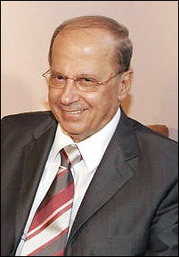 BEIRUT, January 7 (RIA Novosti) – Former army commander and prime minister of Lebanon Michel Aoun said in an interview with RIA Novosti Sunday that cooperation between Russia and the U.S. is important for the world as a whole, including the Middle East."Russia is now not a side in the conflict, it plays the role of helper in funding the needed solutions, and this is right," he said.
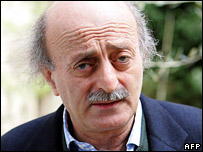 Beirut, Asharq Al-Awsat- Walid Junblatt, head of the Democratic Gathering bloc in the Lebanese parliament, has continued his campaign against the Syrian regime, which he described as a "family regime." He rejected any settlement with this regime "after the assassinations and assassination attempts it carried out in Lebanon." Junblatt explained to Asharq al-Awsat some aspects of the telephone interview conducted with him by the newspaper Washington Post two days ago, considering that the talk that he called on the United States to invade Syria was a "hasty interpretation" of what he said, but at the same time he called for change in Syria "because the Syrian people deserve this." Junblatt said "the Syrian regime’s filibustering with regard to an international trial and its exertion of pressure on some parties in Lebanon regarding this subject is aimed at escaping an international solution similar to the trial of Serbian leader Slobodan Milosivic.
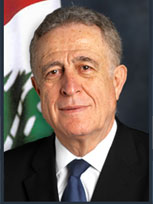 5 January 2006, Lebanon: Latest charge against human rights lawyer Dr Muhamad Mugraby must be dropped and all harassment against him ceaseHuman rights lawyer Dr Muhamad Mugraby is due to appear before the Military Court in Beirut on 9 January charged with slandering the
 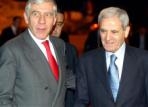 By Alaa Shahine, BEIRUT (Reuters) – Foreign Secretary Jack Straw urged Syria on Wednesday to cooperate with a U.N. inquiry into the assassination of former Lebanese Prime Minister Rafik al-Hariri and respect the sovereignty of its smaller neighbour.Straw made his comments as diplomats said Syria had agreed to allow U.N. investigators to interview its foreign minister over the killing but was still considering a request for a meeting with President Bashar al-Assad.
 BEIRUT, 2 January (IRIN) – After a steady decrease in the number of landmine victims since the withdrawal of Israeli troops from southern Lebanon in 2000, last year witnessed a sudden resurgence of cases. In December alone, three girls were injured by an unexploded cluster bomb in the south of the country, leading one to have her leg amputated. A foreign worker also had to have a leg amputated after stepping on a landmine at a construction site in Beirut. "We have 21 survivors and five killed this year," Brigadier General Salim Raad, director of the National De-mining Office, established in 1998, said. "The numbers have almost doubled in comparison to 2004." According to Raad, poverty is the main reason behind the increase in cases.
 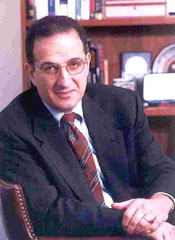 by James Zogby, (Tuesday January 03 2006)