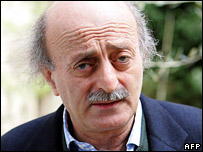
 Beirut, Asharq Al-Awsat- Walid Junblatt, head of the Democratic Gathering bloc in the Lebanese parliament, has continued his campaign against the Syrian regime, which he described as a "family regime." He rejected any settlement with this regime "after the assassinations and assassination attempts it carried out in Lebanon." Junblatt explained to Asharq al-Awsat some aspects of the telephone interview conducted with him by the newspaper Washington Post two days ago, considering that the talk that he called on the United States to invade Syria was a "hasty interpretation" of what he said, but at the same time he called for change in Syria "because the Syrian people deserve this." Junblatt said "the Syrian regime’s filibustering with regard to an international trial and its exertion of pressure on some parties in Lebanon regarding this subject is aimed at escaping an international solution similar to the trial of Serbian leader Slobodan Milosivic.
He emphasized that "the only solution is this method (international trial), which will put both Syria and Lebanon at ease." Junblatt explained that the his talk that the Americans came to Iraq in the name of the majority does not mean that invasion is the solution, considering this "a hasty interpretation" of his talk, but he stressed that "one day there must be democratic change in Syria that will give the people the chance (to govern themselves). Until now the regime in Syria is a family regime and not the regime of the Ba’th Party or the regional command of that party. The Syrian people deserve a chance to govern themselves."
Asked whether he supported change, regardless of the method, Junblattt said: "Syria has capacities and efficiencies that can carry out a democratic and peaceful change." He strongly rejected the "blackmail" practiced by the Syria regime, which is telling the international community "either us or chaos." He cited several examples of the downfall of regimes similar to the Syrian regime, such as the collapse of the former USSR and its satellite regimes.
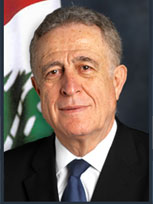 5 January 2006, Lebanon: Latest charge against human rights lawyer Dr Muhamad Mugraby must be dropped and all harassment against him ceaseHuman rights lawyer Dr Muhamad Mugraby is due to appear before the Military Court in Beirut on 9 January charged with slandering the
  By Alaa Shahine, BEIRUT (Reuters) – Foreign Secretary Jack Straw urged Syria on Wednesday to cooperate with a U.N. inquiry into the assassination of former Lebanese Prime Minister Rafik al-Hariri and respect the sovereignty of its smaller neighbour.Straw made his comments as diplomats said Syria had agreed to allow U.N. investigators to interview its foreign minister over the killing but was still considering a request for a meeting with President Bashar al-Assad.
 BEIRUT, 2 January (IRIN) – After a steady decrease in the number of landmine victims since the withdrawal of Israeli troops from southern Lebanon in 2000, last year witnessed a sudden resurgence of cases. In December alone, three girls were injured by an unexploded cluster bomb in the south of the country, leading one to have her leg amputated. A foreign worker also had to have a leg amputated after stepping on a landmine at a construction site in Beirut. "We have 21 survivors and five killed this year," Brigadier General Salim Raad, director of the National De-mining Office, established in 1998, said. "The numbers have almost doubled in comparison to 2004." According to Raad, poverty is the main reason behind the increase in cases.
 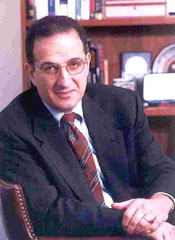 by James Zogby, (Tuesday January 03 2006)
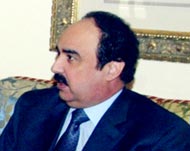 Beirut – Syrian Brigadier General Rustom Ghazaleh, who has been implicated in the murder of a former Lebanese Premier Rafik Hariri, said Tuesday he was ready to resign if asked by Syrian President Bashar al Assad. ‘If the leadership asks me to die a martyr, I am ready,’ Ghazaleh, the former head of Syrian military intelligence in Lebanon, told the television news channel al Jazeera in a broadcast monitored in Beirut.
 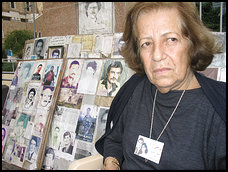 By Anthony Shadid, Washington Post Foreign Service Monday, January 2, 2006; BEIRUT — On this morning, as on every morning since Oct. 17, 1985, Audette Salem cleaned the rooms of her son and daughter. She left his razor, toothbrush and comb as they were on the day her children were abducted from the streets of Beirut during Lebanon’s civil war. She fiddled with her daughter’s makeup and straightened her bed. She dusted the three guitars, the papers still on their desks and the pack that holds a 20-year-old cigarette, the artifacts of two lives interrupted.