Khazen

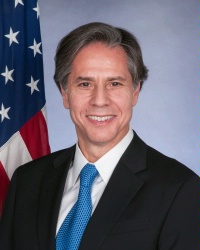
State Department diverting $85m in Egyptian military financing towards Taiwan and Lebanon

by breakingdefense.com — WASHINGTON — Human rights concerns have prompted the Biden administration to divert $85 million away from a larger foreign military financing (FMF) pot for Egypt and divvy it up between Taiwan and Lebanon, State Department officials announced today. In an email to Breaking Defense, an administration source confirmed that $55 million would be bound for Taiwan and $30 million for Lebanon. In total, Secretary of State Antony Blinken has notified Congress that Washington will provide Cairo with $1.215 billion in FMF from its fiscal 2022 budget, one State Department official told reporters. “Egypt is making specific and ongoing contributions to US national security priorities,” the official said. “Egypt is a strategic partner of the United States with a crucial voice in efforts to advance regional peace and security …. This decision in no way diminishes our commitment to advancing human rights in Egypt and around the world.”

A $1.3 billion FY22 pot included $980 million in funds that were not subject to human rights conditions, and another $320 million that had the conditions attached. From that second coffer, Blinken opted to “waive the certification requirements” due to “US national security interest” for $235 million of that total, the official explained. However, he was not able to do that with the remaining $85 million because it was subject to different statutory certification requirements aimed at ensuring that Egypt is making “clear and consistent progress in releasing political prisoners,” providing detainees with due process and preventing American citizens from being harassed. “That requirement on the $85 million may not be waived [and] the secretary determined that Egypt has not fulfilled those conditions,” the State Department official said. “Therefore, we are reprogramming $85 million [for] other priorities and other countries in consultation with the Congress.” “As we have done for decades, consistent with the Taiwan Relations Act, we will continue to provide defensive articles and services necessary for Taiwan to maintain a sufficient self-defense capability,” an administration official wrote in a statement to Breaking Defense. “We will support Taiwan’s self-defense capabilities commensurate with the threat it faces.” That $55 million joins a $80 million military transfer to Taiwan that the Biden administration unveiled last month.

Read more
Libya floods: Muqtada al-Sadr says disappearance of Lebanese cleric to blame

by middleeasteye.net — Influential Iraqi cleric Muqtada al-Sadr has blamed the floods in Libya that have left more than 5,000 people dead on the country’s involvement in the disappearance of Lebanese cleric Musa al-Sadr in 1978. Writing on his social media accounts on Tuesday, Sadr listed a litany of causes for the natural disasters that […]

Read more
Designating Hizballah Operatives and Financial Facilitators in South America and Lebanon

by MATTHEW MILLER, DEPARTMENT SPOKESPERSON — The United States is today designating key Hizballah operatives and financiers operating a network in South America and Lebanon that generates revenue for Hizballah’s terrorist activities and provides cover for its presence in Latin America. Today’s action, taken in collaboration with partners in the U.S. government, including the Drug […]

Read more
Chilling Rumor About What Obama Is Secretly Doing For Biden

Story by David Rufful — Speculation is swirling about who is really in charge and the Biden Administration as President Joe Biden appears unfit for office. At 80 years old, Biden is the oldest president in US history. If re-elected, he would be 82 at the start of his next term and 86 at the end of it. Numerous high-profile political commentators and former politicians, including former Speaker of the House Newt Gingrich, have suggested Biden can’t possibly be making the important decisions. (Poll: Is Joe Biden Fit to be President? VOTE)

During an appearance on Newsmax, political commentator Megyn Kelly suggested that former president Barack Obama and former First Lady Michelle Obama may be actually running the show. “There are a lot of people who think the Obamas are already running the government and that there is some sort of shadow puppet situation going on that they’re controlling,” Kelly told Newsmax. “There’s been questions from the beginning — is it Joe Biden really making the calls?” “I think Michelle Obama is seen as a savior figure by the Democrats who think she’s the most beautiful person ever. They think she’s the strongest leader. They think she’s their big hope,” Kelly said. Obama Suggested Having a ‘Front-Man’ For 3rd Term Dr. Ronny Jackson, the former White House physician for both Obama and Trump, has suggested that Biden is suffering from age-related dementia based on his constant mental lapses and gaffes in public.

Read more
AI to replace 2.4 million jobs in the US by 2030, many fewer than other forms of automation

Story by Katyanna Quach – the register — • It’s not all bad news. Poets are safe. And machines will take some jobs no human wants Generative AI will replace 2.4 million US jobs by 2030, and influence another eleven million, but other forms of automation will cost more jobs, according to a report from analyst firm Forrester.… The firm’s 2023 Generative AI Jobs Impact Forecast [PDF] predicts that the tech will reshape more jobs than it replaces, but also includes a section titled “Let’s Be Clear: Generative AI Is Coming After White Collar Jobs”. White collar workers most at risk of being left behind will be technical writers, social science research assistants, proofreaders, copywriters, and those in administrative positions. The biggest disruptions will be felt by workers that have college degrees, perform white-collar jobs, and are middle class. People with annual salaries less than $60,000, for example, will be impacted less by generative AI than those that earn $90,000 or more. Here’s a chart below showing how much different types of jobs can expect to be influenced by technology: Such workers have a couple of years in which to prepare, Forrester’s analysts suggest, because its modelling assumes it will take time for “questions on intellectual property rights, copyright, plagiarism, model refresh rates, model bias, ethics, and model response reliability” to be resolved.

The report also predicts that while generative AI will cost jobs, other forms of automation will have a greater impact. In 2023, the report predicts, generative AI will cause 9.3 percent of jobs lost to automation, rising to 30.4 percent by 2030. Not every job replaced by automation is a job lost to humans, the report asserts, because humans don’t want certain jobs. “In some cases, automation will stand in for jobs that have been hard to fill,” the report states. “For instance, physical robotics and automation are only beginning to fill the workforce gaps that have plagued frontline work in the 2020s.” But other jobs will impact humans and Forrester’s analysts warn of “deep social challenges like those faced in the post-industrial Rust Belt.”

Read more
How the AI Revolution Will Reshape the World

By MUSTAFA SULEYMAN — time.com — We are about to see the greatest redistribution of power in history. Over millennia, humanity has been shaped by successive waves of technology. The discovery of fire, the invention of the wheel, the harnessing of electricity—all were transformational moments for civilization. All were waves of technology that started small, with a few precarious experiments, but eventually they broke across the world. These waves followed a similar trajectory: breakthrough technologies were invented, delivered huge value, and so they proliferated, became more effective, cheaper, more widespread and were absorbed into the normal, ever-evolving fabric of human life.

We are now facing a new wave of technology, centered around AI but including synthetic biology, quantum computing, and abundant new sources of energy. In many respects it will repeat this pattern. Yet it will also depart from it in crucial ways only now becoming clear. Amidst all the hype, the hope, the fear, I think the fundamentals are getting lost; the unique characteristics of this wave are getting missed in the noise. Understanding them, seeing what, exactly, is changing, is critical to understanding the future. AI is different from previous waves of technology because of how it unleashes new powers and transforms existing power. This is the most underappreciated aspect of the technological revolution now underway. While all waves of technology create altered power structures in their wake, none have seen the raw proliferation of power like the one on its way.

Think of it like this. Previous era’s most powerful technologies were generally reserved to a small capital rich elite or national governments. Building a steam powered factory, an aircraft carrier or a nuclear power plant were costly, difficult and immense endeavors. With the leading technologies of our time, that’s no longer going to be true. If the last great tech wave—computers and the internet—was about broadcasting information, this new wave is all about doing. We are facing a step change in what’s possible for individual people to do, and at a previously unthinkable pace. AI is becoming more powerful and radically cheaper by the month—what was computationally impossible, or would cost tens of millions of dollars a few years ago, is now widespread.

Read more
Lebanese powerlifter Joya Khairallah becomes the world’s strongest 22-year-old

by Nada Maucourant Atallah — thenationalnews.com  — When she stepped on to the platform amid enthusiastic cheers from her supporters, Lebanese powerlifter Joya Khairallah, 22, was faced with a steel bar loaded with several red plates weighing an impressive total of 183.5kg. This was an immense challenge for the young woman, weighing only 52kg, but she had to overcome it if she wanted to claim first-place at the 2023 International Powerlifting Federation (IPF) World Junior Championships. No one in her category had ever accomplished this feat, until August 29 in Cluj-Napoca in Romania, when Miss Khairallah firmly grasped the heavy bar and pulled it from the ground level to her hips, a movement called a “deadlift” – one of three lifts performed in powerlifting.

When she reached the lockout position, marking the end of the movement, she screamed in triumph and knelt to the floor, having just broken the world record. “After stepping on to the platform, I initially had doubts because I was exhausted, and my back was hurting, but I persevered, I got it and I won,” she told The National in Beirut during her first training session, a few days after the international competition. “There’s no actual word that really describes how I felt. It feels wonderful, but I’m still a bit in denial,” she added. The Lebanese champion achieved a total of 428.5kg for the three lifts (bench, squat, and deadlift), setting yet another IPF Junior World Record in her weight class.

Read more
Generative AI at an inflection point: What’s next for real-world adoption?

by venturebeat.com — Gary Grossman Edelman – Generative AI is gaining wider adoption, particularly in business. Most recently, for instance, Walmart announced that it is rolling-out a gen AI app to 50,000 non-store employees. As reported by Axios, the app combines data from Walmart with third-party large language models (LLM) and can help employees with a range of tasks, from speeding up the drafting process, to serving as a creative partner, to summarizing large documents and more. Deployments such as this are helping to drive demand for graphical processing units (GPUs) needed to train powerful deep learning models. GPUs are specialized computing processors that execute programming instructions in parallel instead of sequentially — as do traditional central processing units (CPUs). According to the Wall Street Journal, training these models “can cost companies billions of dollars, thanks to the large volumes of data they need to ingest and analyze.” This includes all deep learning and foundational LLMs from GPT-4 to LaMDA — which power the ChatGPT and Bard chatbot applications, respectively.

Riding the generative AI wave

The gen AI trend is providing powerful momentum for Nvidia, the dominant supplier of these GPUs: The company announced eye-popping earnings for their most recent quarter. At least for Nvidia, it is a time of exuberance, as it seems nearly everyone is trying to get ahold of their GPUs. Erin Griffiths wrote in the New York Times that start-ups and investors are taking extraordinary measures to obtain these chips: “More than money, engineering talent, hype or even profits, tech companies this year are desperate for GPUs.” In his Stratechery newsletter this week, Ben Thompson refers to this as “Nvidia on the Mountaintop.” Adding to the momentum, Google and Nvidia announced a partnership whereby Google’s cloud customers will have greater access to technology powered by Nvidia’s GPUs. All of this points to the current scarcity of these chips in the face of surging demand. Does this current demand mark the peak moment for gen AI, or might it instead point to the beginning of the next wave of its development?

How generative tech is shaping the future of computing

Read more
Expanding the capacity of the Port of Beirut

by Zlatan Hrvacevic — The Port of Beirut has historically played a vital role in Lebanon’s economy, as a major cargo and transit hub. However, due to the civil war and political instability, this key position has weakened over time. The situation was compounded by the COVID-19 pandemic and a major explosion in 2020. As […]

Read more
Kuwaiti man’s love letter to Lebanon spreads cheer online – one blissful blog at a time

By Liza Ayach — Thenationalnews.com — I have been following Luai Ahmad Alkilani on social media for some time now. A big reason why he’s captured my admiration is because, despite being Kuwaiti, he showcases life in Lebanon more fervently than the Lebanese themselves, especially the cuisine. When I reach out to the businessman-turned-blogger, he tells me his love affair with the country began in his childhood when his parents used to whisk him away to the scenic hills of Bhamdoun, Falougha and Hammana for summer getaways. Now 56, Alkilani has woven a bond with the country that transcends both time and nationality. While his first wife is Kuwaiti, Alkilani’s second wife is Lebanese, solidifying his deep-rooted attachment to the country. “Kuwait is where I primarily reside, but I often travel to Lebanon and typically dedicate my entire summer to being there,” says Alkilani. “My family, children and friends also cherish the country due to my frequent visits and extensive explorations.

In Lebanon, you can swim by the shore and dine in the mountains within a 45-minute drive. A self-professed “food enthusiast”, Alkilani says his adoration for Lebanese dishes sparked his mission to advocate cross-cultural gastronomy. “I adore Lebanese food in all its varieties,” he says, with his favourites spanning street food classics such as mankoushe and falafel to delicacies served at fine-dining restaurants. “I often contemplate crafting fusion dishes that combine Kuwaiti and Lebanese flavours, to satisfy people from both nations,” he adds. “These creations would blend Levantine-spiced rice with signature Gulf sauces, for a culinary blend that could yield exquisite, innovative dishes for dining tables across the region.”

Read more