AlJazeera, Years of war and political instability have disrupted Lebanon’s ambitions to tap into its energy sector. Bidding for the right to …

by gulfnews 0 Joseph A. Kechichian, Senior Writer - Beirut: It takes Mansour Khalife a good two hours to reach the Lebanese capital from the city of Jounieh given the unprecedented traffic chaos prevailing in the country. “I promise to light a candle to Mar Charbel [the country’s venerated Maronite patron saint] the day I reach my shop in an hour,” Khalife, a salesman who works in downtown Beirut, told Gulf News. Khalife’s car is among the 1.6 million registered vehicles taking to Lebanon’s roads every day. That figure does not include cars not registered in Lebanon, which has swelled due to the massive number of Syrians who have filtered into the country due to the civil war in their land. Chronic congestion and lack of parking have always plagued the country, but a growing population coupled with the influx of Syrians has made the situation particularly intolerable.
Syrians now make up a quarter of the population, bringing the total population to around 6 million, up from 4 million. This figure does not take into account the country’s one million Palestinian refugees and 750,000 foreign workers who are not counted in national census figures. Hundreds of thousands of commuters who drive to Beirut every day complain that they waste precious hours of their life behind the wheel. To alleviate the growing burden on the roads, governor Ziad Chebib promised to reveal a new plan to revamp the city’s public transport system within weeks. However the promise has not excited Lebanese due to many past pledges that have not materialised — a plan for a metro and light-rail system have been floated. The absence of an effective public transit system has only made Lebanese more dependent on cars.
In 2015, the last year for which statistics are available, 39,361 new passenger cars were sold in Lebanon, up by an annual 4.1 per cent, which brought the state over $500 million (Dh1.83 billion) in excise taxes, cars registration fees, and cars control fees. Few Lebanese take public buses due the danger associated with navigating the country’s haphazard roads combined with the reckless drivers to whom they would perforce have to entrust their safety. Lebanon records more than 6 million automobile passenger trips each day, up from 2.8 million in 2007 and 1.7 million in 1995, according to statistics from the Ministry of Public Works and Transport.
A 2012 American University of Beirut study confirmed the existence of a “deep-rooted need for an effective public transportation system as a competitive alternative to automobile dependency”. The Council for Development and Reconstruction — the supra-national body in charge of everything after the civil war — failed to heed calls for urgent action, which is the primary reason why traffic jams are now the norm.

by the961- The new Lebanese Nationality Program website was launched by the Lebanese government to help Lebanese people abroad (who don’t have their citizenship) reclaim their Lebanese nationality. This is an initiative launched by the Lebanese Ministry of Foreign Affairs & Emigrants to initiate and facilitate the process for people of Lebanese heritage. This service is completely free and the website is available in 4 languages: English, Spanish, French and Portuguese. There were several major waves of emigration from Lebanon to South America starting in the late 1800’s due to the 1860 conflict in Lebanon. The ruling parties at the time intentionally passed laws to “punish” these emigrants, denying them the automatic right of return to Lebanon – making it near impossible to pass the nationality to their children.
Despite several generations in South America and the Lebanese language not being passed on to the children, there still maintains a strong Lebanese ethnic identity. Brazil alone is home to the most number of Lebanese people in the world, including Lebanon. Estimates range from 7 million up to 12 million Lebanese. Hence why the website is available in Portuguese.

Aoun said that Lebanon was keen to strengthen ties with Estonia in various sectors, but especially in areas related to technology. He added that Lebanon was seeking to establish a joint group for the two countries to activate trade and increase Lebanon’s exports to Estonian markets. Kaljulaid, at Baabda Palace, was thanked by Aoun for her country’s contribution to the U.N. Interim Force in Lebanon.
Following her meeting with Aoun, Kaljulaid met with Hariri at his Downtown Beirut residence where she reiterated that her country was prepared to offer Lebanon assistance in the digital sector. Their discussion also covered regional developments and bilateral relations between Lebanon and Estonia. “We can cooperate in wider sectors in the future,” Hariri told Kaljulaid, adding that Lebanon was seeking assistance from Estonia to promote e-government projects. “We understand you have done a lot in e-government and this is something we would like to implement in our country, so hopefully we can work together to do that,” Hariri said in a statement following the meeting.
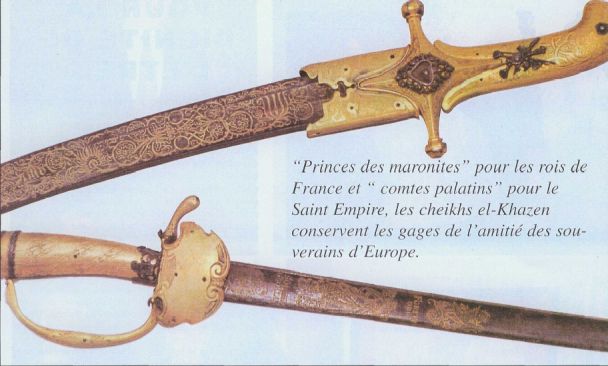

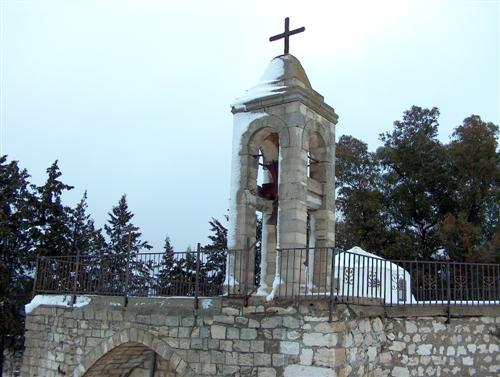
Population Movements to Keserwan - The Khazens and The Maans
ما جاء عن الثورة في المقاطعة الكسروانية
ثورة أهالي كسروان على المشايخ الخوازنة وأسبابها
Origins of the "Prince of Maronite" Title
Growing diversity: the Khazin sheiks and the clergy in the first decades of the 18th century
Historical Members:
Barbar Beik El Khazen [English]
Patriach Toubia Kaiss El Khazen(Biography & Life Part1 Part2) (Arabic)
Patriach Youssef Dargham El Khazen (Cont'd)
Cheikh Bishara Jafal El Khazen
Patriarch Youssef Raji El Khazen
The Martyrs Cheikh Philippe & Cheikh Farid El Khazen
Cheikh Nawfal El Khazen (Consul De France)
Cheikh Hossun El Khazen (Consul De France)
Cheikh Abou-Nawfal El Khazen (Consul De France)
Cheikh Francis Abee Nader & his son Yousef
Cheikh Abou-Kanso El Khazen (Consul De France)
Cheikh Abou Nader El Khazen
Cheikh Chafic El Khazen
Cheikh Keserwan El Khazen
Cheikh Serhal El Khazen [English]
Cheikh Rafiq El Khazen [English]
Cheikh Hanna El Khazen
Cheikha Arzi El Khazen
Marie El Khazen