by AP – BEIRUT — The commander of U.S. forces in the Middle East has met with top officials in Lebanon to …
by Middle East Monitor The President of the Palestinian Authority, Mahmoud Abbas, has suggested to his Lebanese counterpart that the Lebanese army …

This is an opinion article - It represents author opinion
By Peter Speetjens - middleeasteye.net/
With Lebanese elections set to take place in May, the customary tug-of-war has started over exactly how those elections are to take place. Democracy in Lebanon is all about foreplay. For months on end, the country’s political elite engages in courtesy visits and tete-a-tetes behind closed doors to determine the rules of the electoral game. Once agreed, the “moment supreme” at the ballot box is but a formality, as 90 percent of the outcome can be predicted. A Tom and Jerry cartoon doing the rounds on social media illustrates the current hustle and bustle in Lebanon’s political circles. It shows the famous cat and mouse accompanied by their bulky bulldog neighbor sitting around a juicy steak. Taking turns, the characters suggest how to best divide it. Naturally, each one wants the biggest chunk for himself and what was supposed to be a cosy dinner ends up in a massive brawl. Whoever posted the cartoon replaced the heads of Tom, Jerry and the dog with the faces of Gebran Bassil, Mohamed Raad and Saad Hariri. For those not familiar with Lebanese political theatre, Bassil is Christian, minister of foreign affairs and son-in-law of President Michel Aoun; Raad is Shia and has been a Hezbollah MP since 1992; Hariri is Sunni, current prime minister and son of the slain former prime minister Rafik Hariri.
The “steak” on the table is the electoral law proposed by President Aoun and his Free Patriotic Party. It suggests dividing Lebanon into some 15 electoral districts that will be decided by proportional representation rather than winner takes all Proportional representation has its benefits. In many of Lebanon’s electoral districts, it is a thin line between winning and losing. Sometimes, a few hundred votes make the difference between all or nothing, which swings the door wide open for vote buying.
Being awarded the number of seats relative to the proportion of the vote would lead to fairer representation and a greater variety in parliament. In addition, it would be much harder to influence the elections through vote buying. All of Lebanon’s Christian factions support the proposal, which in itself is no small feat. It is almost a matter of principle for Lebanese Christians to not agree on anything. The proposal, furthermore, has the backing of Amal and Hezbollah, the country’s main Shia parties.
By Ross Mcdonagh For Dailymail.com – Meryl Streep arrived at the Oscars… and she was not wearing Chanel. The 67-year-old screen legend …
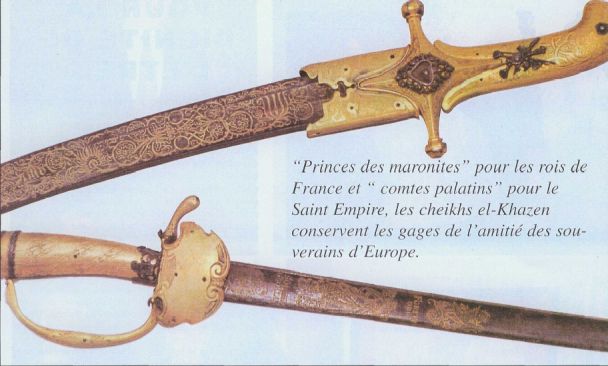
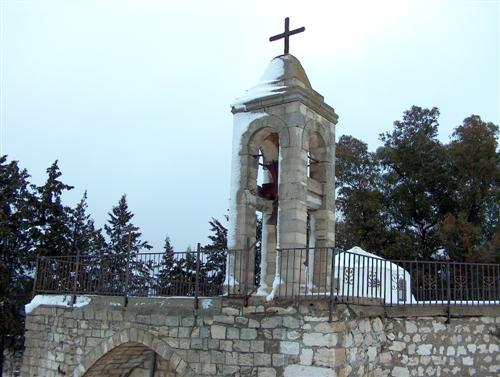
Population Movements to Keserwan - The Khazens and The Maans
ما جاء عن الثورة في المقاطعة الكسروانية
ثورة أهالي كسروان على المشايخ الخوازنة وأسبابها
Origins of the "Prince of Maronite" Title
Growing diversity: the Khazin sheiks and the clergy in the first decades of the 18th century
Historical Members:
Barbar Beik El Khazen [English]
Patriach Toubia Kaiss El Khazen(Biography & Life Part1 Part2) (Arabic)
Patriach Youssef Dargham El Khazen (Cont'd)
Cheikh Bishara Jafal El Khazen
Patriarch Youssef Raji El Khazen
The Martyrs Cheikh Philippe & Cheikh Farid El Khazen
Cheikh Nawfal El Khazen (Consul De France)
Cheikh Hossun El Khazen (Consul De France)
Cheikh Abou-Nawfal El Khazen (Consul De France)
Cheikh Francis Abee Nader & his son Yousef
Cheikh Abou-Kanso El Khazen (Consul De France)
Cheikh Abou Nader El Khazen
Cheikh Chafic El Khazen
Cheikh Keserwan El Khazen
Cheikh Serhal El Khazen [English]
Cheikh Rafiq El Khazen [English]
Cheikh Hanna El Khazen
Cheikha Arzi El Khazen
Marie El Khazen