Hamat airport in Lebanon
By Gulf news - Joseph A. Kechichian - Beirut: Lebanese MP Riad Rahal, a member of the Future Movement from the Akkar region, north of Tripoli, has urged officials to “begin work to revamp the Qlay‘at Military Airfield into a civilian airport immediately.” A statement issued on Saturday by The Movement of Public Opinion in Akkar [MPOA], a new civil society organisation, hailed the social media campaign as a long overdue initiative. Although the relatively neglected Akkar region provides Lebanon with a vast pool of young men who serve in the armed forces, it also houses a key airfield, the Rene Mouawad Airbase — Qlay‘at, named after the head-of-state assassinated in 1989, and which hosts a helicopter wing. Officials now want to revitalise the region and, simultaneously, encourage Lebanon to have a second international gateway. In fact, Qlay‘at offers a strategic alternative to Rafik Hariri International Airport [RHIA], which is located in Beirut’s southern suburbs, Dahiyah, and which poses potential security risks as its perimeter fence is too close to various Hezbollah strongholds.
Over the years, a controversial debate preoccupied the Lebanese to find an alternative civilian facility — whether at Qlay‘at or the Rayaq Airbase in the Bekaa Valley — precisely to avoid serious security breaches at RHIA. The Qlay‘at facility has a 3,600-metre by 60-metre concrete runway and there are warehouses for fuel, areas for maintenance, spare parts, telecoms devices and radars.

Jared Kushner, second from left, with his wife, Ivanka Trump, and Stephen K. Bannon, the president’s chief adviser, at the White House on Friday for a visit by Prime Minister Shinzo Abe of Japan.
By
When Jared Kushner was 17 years old, he stood where a million Jews had been murdered and listened to Israel’s prime minister stress the country’s importance. “The Holocaust could have been prevented. We know it could not have taken place had the Jewish state been established a few years earlier,” the prime minister, Benjamin Netanyahu, said in 1998, standing amid the ruins of an Auschwitz-Birkenau crematory. He had just led Mr. Kushner and thousands of other teenagers waving Israeli flags in a procession through the camp’s gates and past the barracks. As part of the commemoration, the group would soon leave Poland and fly to Israel, to complete the journey from slaughter to Zionist rebirth.
Back then, Mr. Kushner was a high school basketball player, a Billy Joel fan, a quiz team manager and no one’s guess to become a negotiating partner with Mr. Netanyahu. But unlike other students on the trip, he knew the prime minister, who was friendly with his father, a real estate developer and donor to Israeli causes. Mr. Netanyahu had even stayed at the Kushners’ home in New Jersey, sleeping in Jared’s bedroom. (The teenager moved to the basement that night.) On Wednesday, when the Israeli prime minister visits the White House, Mr. Netanyahu and Mr. Kushner will reunite on far different terms from before — and yet their meeting will be imbued with some of the shared ideas of those old encounters. Mr. Netanyahu is on his second stint as prime minister; Mr. Kushner, now 36, is President Trump’s son-in-law and a leading adviser on Middle Eastern affairs with a formidable assignment. Mr. Trump has said that Mr. Kushner will try to “do peace,” which the president has called “the ultimate deal.”
Mr. Kushner, on something of a crash course in diplomacy, has been speaking with Arab leaders in recent weeks. But he is a mystery to most Middle Eastern officials. He has no experience in government or international affairs. His up-close exposure to the Arab world amounts to trips to a handful of Persian Gulf countries and one star-studded jaunt to Jordan.
Even though Mr. Kushner has visited Israel since childhood, and more recently to do business, he is little known there. Though he holds strong views about the state of Israel, he has not been outspoken about them, save for editorials in The New York Observer, the newspaper he owns. His thinking on sensitive matters like settlements is not well understood. “Israel wasn’t a political discussion for him; it was his family, his life, his people,” said Hirschy Zarchi, rabbi at the Chabad House at Harvard, where Mr. Kushner was an undergraduate.
Rather than diplomatic experience, Mr. Kushner has ties to Israel that are personal and religious. His visit to Auschwitz was stark, but its themes were not new to him. His grandmother survived the Holocaust by crawling through a homemade tunnel in Poland. His grandfather escaped the massacres by hiding in a hole for years. An Orthodox Jew, Mr. Kushner was instructed to protect Israel, remember the genocide and assure the survival of the Jewish people, those close to him say.
By worldbank.org
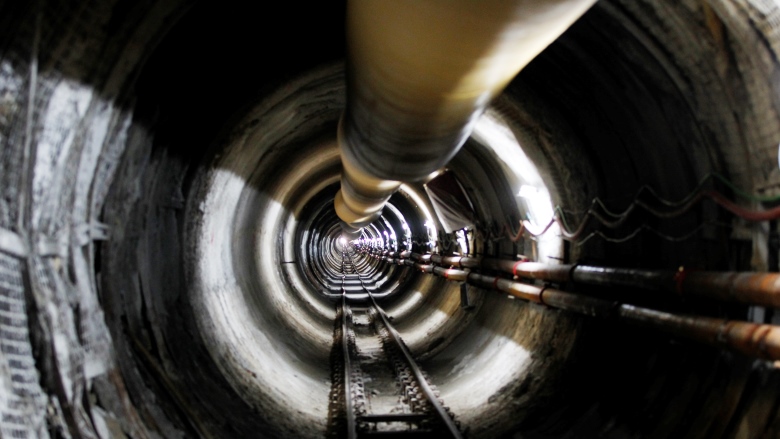
Lebanon is a small country with a ridge of limestone mountains close to its coast. Most of its fresh water is stored in mountain snowcaps or in the ground, the rest of it washing through cracks and caverns into the sea, feeding the thousands of wells that supply water to the capital of Beirut and its surrounding areas along the way. Snow was abundant in the past, but more recently climate change has led to a decrease in the volume of water generally available, especially in the hot summer months of May to September. Monitoring rainfall is an important part of the work of the Greater Beirut and Mount Lebanon Water Establishment, which manages the water supply of half Lebanon’s population. Its Director-General, Joseph Nseir, checks on the quantities of snow, water, and rainfall daily. His worries increase when the quantities fall.
Nseir knows that the only way to secure the water supply is to expand the storage of water and improve the management of it. The World Bank Group supports the Lebanese water sector through technical assistance and a wide range of operations, including the Water Supply Augmentation Project, better known as the Bisri Dam. The Lebanese government decided on the location for the dam after years of studying options, carrying out social and environmental impact assessments, and gathering feedback from public consultation.

By Business Insider Lydia Ramsey:
As we age, our brains might start to get less sharp, making it harder to learn new things or remember key events. And for some, that cognitive decline could be significant, in some rarer cases leading to Alzheimer's Disease. Here's what the science has to say about the best ways to lower your risk of Alzheimer's and cognitive decline.

Population Movements to Keserwan - The Khazens and The Maans
ما جاء عن الثورة في المقاطعة الكسروانية
ثورة أهالي كسروان على المشايخ الخوازنة وأسبابها
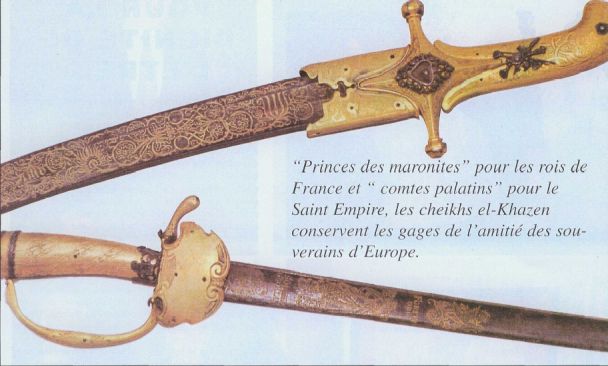
Origins of the "Prince of Maronite" Title
Growing diversity: the Khazin sheiks and the clergy in the first decades of the 18th century
Historical Members:
Barbar Beik El Khazen [English]
Patriach Toubia Kaiss El Khazen(Biography & Life Part1 Part2) (Arabic)
Patriach Youssef Dargham El Khazen (Cont'd)
Cheikh Bishara Jafal El Khazen
Patriarch Youssef Raji El Khazen
The Martyrs Cheikh Philippe & Cheikh Farid El Khazen
Cheikh Nawfal El Khazen (Consul De France)
Cheikh Hossun El Khazen (Consul De France)
Cheikh Abou-Nawfal El Khazen (Consul De France)
Cheikh Francis Abee Nader & his son Yousef
Cheikh Abou-Kanso El Khazen (Consul De France)
Cheikh Abou Nader El Khazen
Cheikh Chafic El Khazen
Cheikh Keserwan El Khazen
Cheikh Serhal El Khazen [English]
Cheikh Rafiq El Khazen [English]
Cheikh Hanna El Khazen
Cheikha Arzi El Khazen
Marie El Khazen