By reuters, A Syrian Christian Orthodox family was turned back from Philadelphia International Airport after traveling to the United States from Lebanon, airport sources in Beirut said on Sunday.
The family of six were denied entry under U.S. President Donald Trump's new ban on nationals of seven Muslim-majority countries, including Syria, and flew back to Lebanon via Doha, the sources said. (Writing by John Davison, editing by Larry King)
DUBAI: Emirates airline has changed pilot and flight attendant rosters on flights to the United States following the sudden U.S. travel ban on seven Muslim-majority countries, but it said U.S. flights continue to operate to schedule. The world's largest long-haul carrier, who flies daily to 11 U.S. cities, has made "the necessary adjustments to our crewing, to comply with the latest requirements," an Emirates spokeswoman told Reuters by email on Sunday. President Donald Trump on Friday temporarily suspended the entry of people from Iran, Iraq, Libya, Somalia, Sudan, Syria and Yemen. The decision caught airlines off guard, according to the International Air Transport Association
The ban applies to pilots and flight attendants from the seven countries, even though all flight crew who are not U.S. citizens already need a special visa to enter the country. Another Emirates spokeswoman said the impact of the ban on operations would be minimal. The airline employs over 23,000 flight attendants and about four thousand pilots from around the world, including the United States, Europe and the Middle East.

By Harry Enten
Donald Trump signed a wide-ranging executive order on Friday that resets the United States’ immigration and refugee programs. The policy bars immigrants from seven heavily Muslim countries from entering the U.S. for 90 days, including people with green cards. It bans all refugees from entering the U.S. for 120 days, and indefinitely bans Syrian refugees. And it cuts the number of refugees the U.S. will accept overall in 2017. (For a more detailed rundown, read here.)
The scope of Trump’s executive order is such that we’re largely in uncharted waters. Past polls are only so useful, as most of them did not ask about actions as broad as the ones Trump undertook. This isn’t like same-sex marriage, or other more straightforward yes-no issues that have been polled for years. I’d be suspect of anyone claiming it’s clear which way public support will go on Trump’s actions — at least until we get more polling.
Slight differences in framing and question wording can also have big effects on how well immigration, refugee and terrorism policies poll. Whether Trump’s executive order is viewed in humanitarian terms or (as the Trump administration has tried to frame it) in the context of counterterrorism could go a long way towards determining how much the public supports it.
In the meantime, here’s what we do know:
1. In the context of terrorism, at least a plurality of Americans are OK with immigration bans.
The Trump administration has argued that this is not a ban on Muslims. Rather, they’ll likely argue, as the order itself does, that the policies are meant “to protect the American people from terrorist attacks by foreign nationals admitted to the United States.” It’s not at all clear these policies will actually improve national security, but the American people have been more supportive of immigration restrictions in the name of counterterrorism. In a Quinnipiac University poll conducted in January, 48 percent of voters supported “suspending immigration from ‘terror prone’ regions, even if it means turning away refugees from those regions.” Forty-two percent were opposed. And a December Politico/Harvard T.H. Chan School of Public Health poll found 50 percent of Americans were in favor of “banning future immigration from regions where there are active terrorist groups.”
2. But a majority of Americans oppose a religion-based immigration ban.
Just 41 percent of Americans supported a temporary ban on Muslims entering the country who are not U.S. citizens, according to an August 2016 ABC News/Washington Post poll. A slight majority (52 percent) were opposed. A July CBS News/New York Times survey, which asked a similar question, found only 35 percent of voters thought the U.S. should temporarily ban Muslim immigration.

By The Hill ^ | Max Greenwood
The United States could prioritize the resettlement of Christian refugees over members of other religious groups, President Trump said on Friday. “They’ve been horribly treated,” Trump said in an interview with Christian Broadcasting Network anchor David Brody. “Do you know if you were a Christian in Syria it was impossible, at least very tough, to get into the United States?”
“If you were a Muslim you could come in, but if you were a Christian, it was almost impossible and the reason that was so unfair, everybody was persecuted in all fairness, but they were chopping off the heads of everybody but more so the Christians. And I thought it was very, very unfair. So we are going to help them.” When asked by Brody if he saw helping persecuted Christians abroad as a “priority,” Trump promptly replied, “yes.”

Rep. Tulsi Gabbard (D-Hawaii) meets with Syrian religious leaders in Aleppo, led by Archbishop Denys Antoine Chahda of the Syrian Catholic Church of Aleppo, and joined by Archbishop Joseph Tabji of Maronite Church of Aleppo, Rev. Ibrahim Nseir of the Arab Evangelical Presbyterian Church of Aleppo, and others. Each called for peace, and an end to foreign support of terrorists who are trying to rid Syria of its secular, pluralistic, free society. (Photo from Gabbard's website, courtesy of Abraham Williams)
By Susan Jones |
CNSNews.com) - Rep. Tulsi Gabbard, a Hawaii Democrat, says she made a secret, four-day trip to Syria -- meeting with ordinary people and even President Bashar al-Assad -- because the suffering of the Syrian people "has been weighing heavily on my heart." "I wanted to see if there was in some small way, a way that I could express the love and the aloha and the care that the American people have for the people of Syria, and to see firsthand what was happening there, to see that situation there," Gabbard told CNN's "The Lead" with Jake Tapper on Wednesday.
She returned with a message:
"I'll tell you what I heard from the Syrian people that I met with, Jake, walking down the street in Aleppo, in Damascus, hearing from them. “They expressed happiness and joy at seeing an American walking through their streets. But they also asked why the U.S. and its allies are providing support and arms to terrorist groups like al-Nusra, al-Qaida or al-Sham, ISIS who are on the ground there, raping, kidnapping, torturing and killing the Syrian people.
"They asked me, why is the United States and its allies supporting
these terrorist groups who are destroying Syria when it was al Qaida who
attacked the United States on 9/11, not Syria. I didn't have an answer
for them,” Gabbard said. “The reality is... every place that I
went, every person that I spoke to, I asked this question to them, and
without hesitation, they said, there are no moderate rebels. Who are
these moderate rebels that people keep speaking of?
Regardless of the name of these groups, the strongest fighting force on the ground in Syria is al Nusra, or al Qaida and ISIS. That is a fact,” Gabbard said. “There is a number of different, other groups -- all of them essentially are fighting alongside, with, or under the command of the strongest group on the ground that's trying to overthrow Assad.

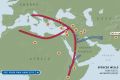


Population Movements to Keserwan - The Khazens and The Maans
ما جاء عن الثورة في المقاطعة الكسروانية
ثورة أهالي كسروان على المشايخ الخوازنة وأسبابها
Origins of the "Prince of Maronite" Title
Growing diversity: the Khazin sheiks and the clergy in the first decades of the 18th century
Historical Members:
Barbar Beik El Khazen [English]
Patriach Toubia Kaiss El Khazen(Biography & Life Part1 Part2) (Arabic)
Patriach Youssef Dargham El Khazen (Cont'd)
Cheikh Bishara Jafal El Khazen
Patriarch Youssef Raji El Khazen
The Martyrs Cheikh Philippe & Cheikh Farid El Khazen
Cheikh Nawfal El Khazen (Consul De France)
Cheikh Hossun El Khazen (Consul De France)
Cheikh Abou-Nawfal El Khazen (Consul De France)
Cheikh Francis Abee Nader & his son Yousef
Cheikh Abou-Kanso El Khazen (Consul De France)
Cheikh Abou Nader El Khazen
Cheikh Chafic El Khazen
Cheikh Keserwan El Khazen
Cheikh Serhal El Khazen [English]
Cheikh Rafiq El Khazen [English]
Cheikh Hanna El Khazen
Cheikha Arzi El Khazen
Marie El Khazen