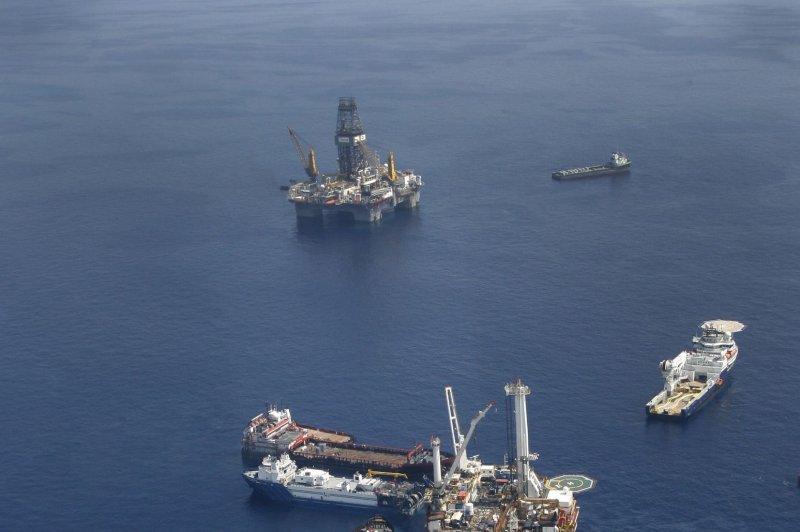
Transparency is a top priority for a Lebanese government looking to bring bidders back to its offshore oil and gas reserves, the energy minister said. Lebanon this week filed a request to join the Extractive Industries Transparency Initiative, a body that aims to cast light on how countries manage their oil, gas and mineral resources. Energy Minister Cesar Abi Khalil said that, as the country opens itself up to foreign energy investors, accountability was essential.
"At the beginning of the new term [of office], transparency is our main focus," he was quoted by The Daily Star in Lebanon as saying.The effort follows a decision to put five offshore oil and gas blocks up for auction in Lebanon's Exclusive Economic Zone by the end of February. State profits, the minister said, would be decided after the bidding process is completed.
Decrees put forward by the Lebanese government outline a model for revenue sharing, something that derailed previous efforts to court foreign investors. Three years ago, Beirut postponed an offshore natural gas auction after rancor erupted over the amount of revenue Beirut would get from energy companies. The Lebanese government estimates there are 95 trillion cubic feet of natural gas and 750 million barrels of oil in its territorial waters. The country, meanwhile, has been at odds over maritime borders in the Mediterranean Sea. According to the Lebanese newspaper, Israel has been the hold out in U.N.-mediated efforts to settle border disputes.

BEIRUT, Lebanon — There was once a nice sea view at the Al Jazira beach club, and umbrellas of palm fronds sticking from the sand are reminders of nicer days. Nowadays, the place is surrounded by an ever-growing garbage dump. “It used to be a beach,” said Hassan, a Syrian man who works as a caretaker at the club and insisted on being identified only by his first name because of a lawsuit concerning the city. “There was sea. There were rocks. I used to fish.”
Just up the shoreline, Mohammed Jradi, who has been fishing the waters of the Mediterranean off Beirut for 20 years, said the trash had driven even the fish away. “All over the world, they have solutions for this, but not here,” he said.
by Nick Ames California architect firm Morphosis has designed a new US Embassy in Beirut, Lebanon and the US State Department has …

by Naharnet Newsdesk and dailystar
The General Directorate of General Security announced Wednesday that it has arrested two Lebanese men, two Nepalese women and a Palestinian man on charges of “spying for Israeli embassies abroad.” “During interrogation, the detainees confessed to the charges, admitting that they had called phone numbers belonging to the Israeli enemy's embassies in Turkey, Jordan, Britain and Nepal with the aim of spying and passing on information,” a General Security statement said.
According to the source, the four are also charged with handing Israeli authorities information with the aim of assassinating pro-Hezbollah Sheikh Maher Hammoud, Sunni cleric Saheeb Habli and former MP Oussama Saed in the southern city of Sidon, monitoring the convoy of General Security chief Maj. Gen. Abbas Ibrahim when moving from the capital Beirut to his southern hometown of Kaouthariyet Es Siyad in Sidon, and mapping army posts. The suspects allegedly confessed to gathering information on specific security officials and targets within Lebanon, while taking pictures and videos of “sensitive” areas in the south and sending them to Israel.
The investigations revealed that the two aforementioned Nepalese women were actively recruiting Nepalese domestic workers in Lebanon with the aim of spying for Israel. “They gave them the phone number of the Israeli embassy in Nepal so that they pass on information about their employers to the Mossad Israeli intelligence agency,” the statement added. “Following interrogation, they were referred to the relevant judicial authorities on charges of collaborating with the Israeli enemy and efforts are underway to arrest the rest of the culprits,” General Security said.
Population Movements to Keserwan - The Khazens and The Maans
ما جاء عن الثورة في المقاطعة الكسروانية
ثورة أهالي كسروان على المشايخ الخوازنة وأسبابها
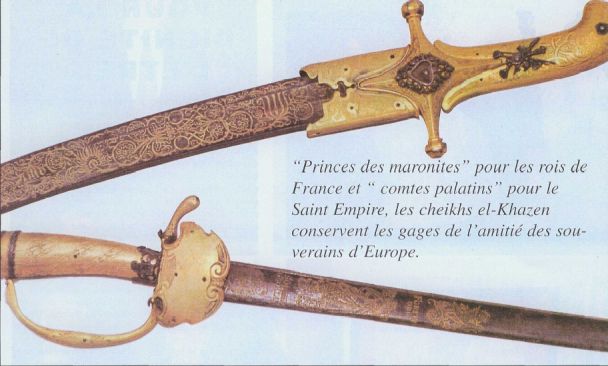
Origins of the "Prince of Maronite" Title
Growing diversity: the Khazin sheiks and the clergy in the first decades of the 18th century
Historical Members:
Barbar Beik El Khazen [English]
Patriach Toubia Kaiss El Khazen(Biography & Life Part1 Part2) (Arabic)
Patriach Youssef Dargham El Khazen (Cont'd)
Cheikh Bishara Jafal El Khazen
Patriarch Youssef Raji El Khazen
The Martyrs Cheikh Philippe & Cheikh Farid El Khazen
Cheikh Nawfal El Khazen (Consul De France)
Cheikh Hossun El Khazen (Consul De France)
Cheikh Abou-Nawfal El Khazen (Consul De France)
Cheikh Francis Abee Nader & his son Yousef
Cheikh Abou-Kanso El Khazen (Consul De France)
Cheikh Abou Nader El Khazen
Cheikh Chafic El Khazen
Cheikh Keserwan El Khazen
Cheikh Serhal El Khazen [English]
Cheikh Rafiq El Khazen [English]
Cheikh Hanna El Khazen
Cheikha Arzi El Khazen
Marie El Khazen