By Thomas Schellen - Make no mistake about it, it is not a new idea that media types are today’s variant of preachers. Whether they work in advertising or in news media, the profession features a whole gamut of prophets, proselytizers and missionaries. The message about this land according to Amos (the prophet, not the communications satellites) was that its previous inhabitants were “as tall as cedars and as strong as oaks,” promising inbound migrants a fruitful environment (after overcoming various obstacles). Given the Middle East’s known propensity for starting religions – just think of the “land of milk and honey” that a bunch of tribal nomads were promised millennia ago – it cannot come as a surprise that even within the battered Lebanese economy, the media crisis of spring 2016 caused an uproar of concern. Several newspaper companies announced that they were running out of money and were threatened in their survival.
According to reports, the organizations faced with closure or forced to downsize were the venerable An-Nahar and As-Safir newspapers as well as the Al-Akhbar and Future media organizations. Unconfirmed numbers from the Syndicate of Lebanese Journalists later said that of the 2,600 journalists with membership in the organization, 70 percent were already affected by media closures or at risk to be so in the near term. The crisis was exacerbated by the broad failures of media owners to exhibit concerns for their journalists and employees – omitting what AA President Georges Jabbour called a “CSR spirit” (see interview) – and by ham-fisted publisher appeals of the give-us-money-or-death variety.
The 2016 media crisis occupied the minds of professionals and people interested in the sector throughout 2016, as was shown in November during a media conference when a panel was tasked with discussing if the death or the rebirth of print media was in the Lebanese future. Putting the topic on agenda was beneficial to move the discussion to open ground and compare the situation in the Lebanese media with that of foreign print media markets, especially the UK and France, according to Bachir Khoury, the Lebanese journalist who moderated the panel. (The two markets were represented on the panel through an editor of Le Figaro and a former Middle East correspondent of The Guardian.)
By Naharnet After two days of search operations, the dead body of Lebanese citizen Majid Raji al-Hashem, 61, was found Tuesday buried …

When compared with the banking sector and the initiatives taken by Banque du Liban (BDL), the year was unnervingly quiet for the country’s insurance industry. Preliminary information on the performance of insurance companies suggests that the 4 percent growth in gross premiums to $1.2 billion at the end of the third quarter was low when compared with growth rates achieved in most of the past ten years. However, growth was not devastatingly low when one compares it to the inflation rate in the Lebanese economy, which edged into positive territory this year, but was too small to provide the economy with growth incentives.
According to figures by the Association des Compagnies d’Assurances au Liban (ACAL), premium growth rates in several lines of non-life insurance were negative at end of September 2016. Indications of positive premiums growth came only from two small business lines, miscellaneous and public liability insurance and from motor, medical, and life premiums. Granted, the latter three lines are the high-volume lines and represent some 93 percent of total insurance sector turnover in 2016, but at growth rates of 7 percent for life insurance – which includes savings contracts – and 6 and 3 percent, respectively, in motor and medical premiums, no single coverage line or subsector of insurance was reporting figures that could be described as encouraging.
By dailynewsegypt Known for his passion for exploring the unknown and his ambition to leave an affluent legacy by enriching people’s lives …

Population Movements to Keserwan - The Khazens and The Maans
ما جاء عن الثورة في المقاطعة الكسروانية
ثورة أهالي كسروان على المشايخ الخوازنة وأسبابها
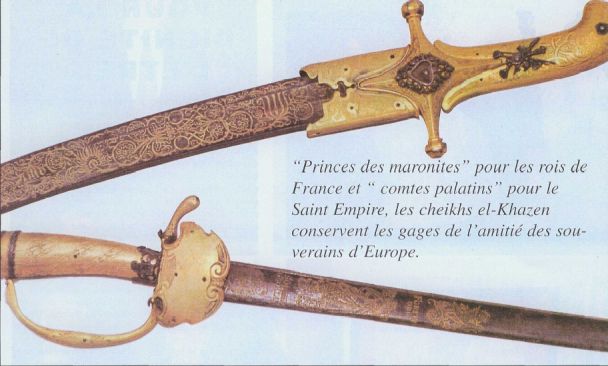
Origins of the "Prince of Maronite" Title
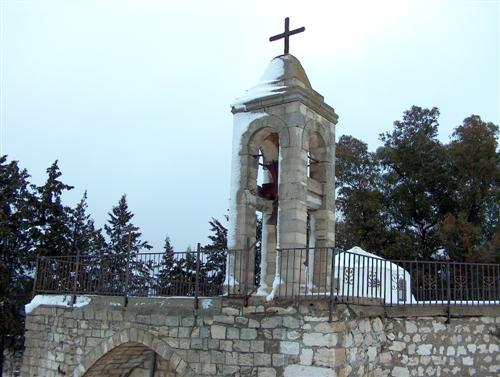
Growing diversity: the Khazin sheiks and the clergy in the first decades of the 18th century
Historical Members:
Barbar Beik El Khazen [English]
Patriach Toubia Kaiss El Khazen(Biography & Life Part1 Part2) (Arabic)
Patriach Youssef Dargham El Khazen (Cont'd)
Cheikh Bishara Jafal El Khazen
Patriarch Youssef Raji El Khazen
The Martyrs Cheikh Philippe & Cheikh Farid El Khazen
Cheikh Nawfal El Khazen (Consul De France)
Cheikh Hossun El Khazen (Consul De France)
Cheikh Abou-Nawfal El Khazen (Consul De France)
Cheikh Francis Abee Nader & his son Yousef
Cheikh Abou-Kanso El Khazen (Consul De France)
Cheikh Abou Nader El Khazen
Cheikh Chafic El Khazen
Cheikh Keserwan El Khazen
Cheikh Serhal El Khazen [English]
Cheikh Rafiq El Khazen [English]
Cheikh Hanna El Khazen
Cheikha Arzi El Khazen
Marie El Khazen