
Getting stronger, looking hotter, being less humiliated when climbing the stairs with spry colleagues — these are all solid reasons to work out.
And yet if you're having trouble mustering the motivation to hit the gym regularly, do yourself a favor and stop lecturing yourself about the myriad benefits of physical activity. It's hardly helping.
A better bet? Put a time on your calendar and do it, and trust that you'll like it.
That's according to Dan Ariely, a professor of psychology and behavioral economics at Duke University and the author of the new book about human motivation, "Payoff." Ariely visited the Business Insider office in November and explained that too many people make the same mistake when trying to motivate themselves to do anything, whether that's working out or writing a report.
The mistake is anticipating that the workout will be awful the whole time and that the only reason to do it is to achieve those long-term goals mentioned above. The activity we're dreading is rarely as painful as we imagine it will be, Ariely said — in fact, there's a good chance we'll enjoy it.
Here's Ariely:
"When we think about running, it just seems like it's really going to be miserable and painful and unpleasant and so on. And we don't engage in it. But the fact is that once we're in the task, life changes. All of a sudden, we think less about the misery and we learn to enjoy things."
In other words, as you've probably heard before, the hardest part of working out is just getting started. Once you do, Ariely said, thoughts of getting stronger and looking better kind of melt away as you take in the sensation of your breath, the music coming through your headphones, and the sound of your feet hitting the ground.
In psychologist-speak, the mistake we're making here is placing too much value on extrinsic motivators, like long-term health goals, and too little on intrinsic motivators, like having fun right now.
From Naharnet
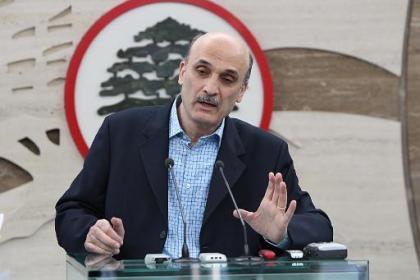
Lebanese Forces leader Samir Geagea snapped back Thursday at Syrian President Bashar Assad over the latter's criticism of Lebanon's so-called dissociation policy. “Lebanon's continuation of its dissociation policy is specifically in Assad's interest, because 'should Lebanon speak' it will definitely be against him,” Geagea said in a statement.
In an interview with Syria's al-Watan newspaper, Assad has noted that “Lebanon cannot dissociate itself from the blazes that are raging around it.” “It cannot endorse 'the policy of no policy' or what has been called the dissociation policy,” Assad said.
Although the Lebanese state has officially adopted the dissociation policy, Hizbullah has sent thousands of fighters into the neighboring country to help Assad fight an Islamist-led uprising. The party has argued that its controversial intervention was necessary to protect Lebanese border towns from extremist groups.
On the other hand it was also reported that an assassination plot could be planned against him, Progressive Socialist Party leader MP Walid Jumblat pointed the finger at the Syrian regime saying it is the “primary suspect” behind such a plot, As Safir daily reported Thursday.
Jumblat said he believes that the “biggest winner who will benefit from my assassination is the Syrian regime which has grown stronger after the field developments on the battlefront in Syria,” he told the daily.
“In compliance with the security advice, I am residing most of the time at Moukhtara. If it was not for a minor surgery that I had to take in one of my eyes, I would not have come to my residence in Clemenceau in such circumstances,” he went on to say.

by Joseph A. Kechichian, Senior Writer
Beirut: Syrian President Bashar Al Assad has lashed out at Lebanon over its disassociation policy approved in 2012, which ensured that Lebanon’s political factions did not take sides in Syria’s civil war. The policy miraculously managed to save Lebanon from being dragged into the brutal war next door, despite the fact that Hezbollah ignored the policy as it openly fought alongside Al Assad forces in Syria.
In an interview with the Damascus daily Al Watan, the Syrian president said, “Lebanon cannot be dissociated from the fires flaring up [in the region] and [cannot] adopt the policy of no politics or what is called the disassociation policy.” Observers believe it was a direct warning to recently elected president Michel Aoun not to forget that he has to answer to Damascus. “As long as the [president] is a patriot and works in favour of the Lebanese, Lebanon will become stronger. And when Lebanon is strong, Syria will be at ease and stronger,” Al Assad said. Aoun reconciled with pro-Syrian parties in Lebanon too, especially Hezbollah, which chose to fight alongside the Ba’ath regime.
It remains unclear whether Aoun will now abolish or alter the 2012 “Baabda Declaration” that was approved by rival March 8 and March 14 leaders — including Hezbollah — to “keep Lebanon away from the policy of regional and international conflicts and sparing it the negative repercussions of regional tensions and crises”.
On Wednesday, Aoun received the pro-regime Syrian Grand Mufti Ahmad Badr Al Deen Hassoun, accompanied by Syria’s Ambassador to Lebanon Ali Abdul Karim, which raised the ire of a leading pro-opposition journalist, Carol Maalouf. Maalouf attacked the head-of-state and Cardinal Mar Bisharah Butros Al Ra‘i (who also welcomed the Mufti) on her Facebook page that mobilised supporters and opponents alike.
Population Movements to Keserwan - The Khazens and The Maans
ما جاء عن الثورة في المقاطعة الكسروانية
ثورة أهالي كسروان على المشايخ الخوازنة وأسبابها
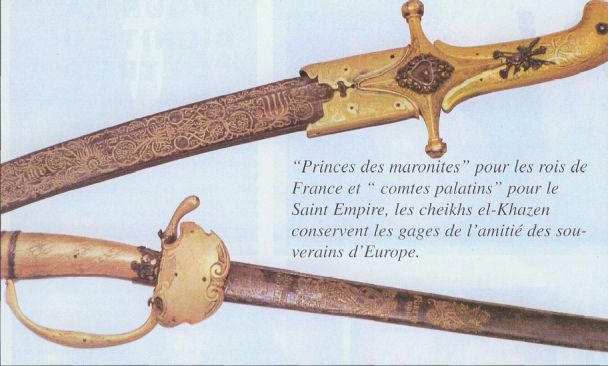
Origins of the "Prince of Maronite" Title
Growing diversity: the Khazin sheiks and the clergy in the first decades of the 18th century
Historical Members:
Barbar Beik El Khazen [English]
Patriach Toubia Kaiss El Khazen(Biography & Life Part1 Part2) (Arabic)
Patriach Youssef Dargham El Khazen (Cont'd)
Cheikh Bishara Jafal El Khazen
Patriarch Youssef Raji El Khazen
The Martyrs Cheikh Philippe & Cheikh Farid El Khazen
Cheikh Nawfal El Khazen (Consul De France)
Cheikh Hossun El Khazen (Consul De France)
Cheikh Abou-Nawfal El Khazen (Consul De France)
Cheikh Francis Abee Nader & his son Yousef
Cheikh Abou-Kanso El Khazen (Consul De France)
Cheikh Abou Nader El Khazen
Cheikh Chafic El Khazen
Cheikh Keserwan El Khazen
Cheikh Serhal El Khazen [English]
Cheikh Rafiq El Khazen [English]
Cheikh Hanna El Khazen
Cheikha Arzi El Khazen
Marie El Khazen