(L-R) Mohamed Baasiri, Vice Governor of the Central Bank of Lebanon, Amr Moussa, former Secretary General of the Arab League, and Saad Azhari, Chairman BLOM Bank at a session at the Union of Arab Bankers conference (MEE/Paul Cochrane)
BEIRUT - Arab bankers have had enough of being at the receiving end of US regulatory diktats. After years of reluctant compliance, they are finally speaking out. In November, they proposed establishing an Arab banking lobby to try to have a say in US and international regulations.
Middle East and North African (MENA) banks have been under the US financial regulatory spotlight since the Patriot Act was rammed through Congress in 2001 and the onslaught of the open-ended "War on Terror".
The MENA financial sector has had to comply with a barrage of US rules and OECD "recommendations" to be in line with international norms on anti-money laundering (AML) and countering the financing of terrorism (CFT). Banks have also had to adhere to economic sanctions against certain countries (Syria, Sudan and Iran), and screen for thousands of names on regulatory blacklists.
On top of that, MENA banks, like everywhere else in the world, have had to adopt, at significant cost (some $8bn worldwide), US legislation like 2014’s Foreign Account Tax Compliance Act (FATCA). FATCA, which is an attempt to repatriate tax dollars, requires non-US financial institutions to provide information on US account holders to the Internal Revenue Service (IRS).

by Michael Karam- the national ae
I love arriving at Beirut’s Rafik Hariri International Airport (Rhia). The four-and-a-half hour Middle East Airlines flight from London is the perfect decompression chamber to prepare both the neophyte and the veteran traveller alike for the madness that lies ahead in that the inside of the Airbus resembles the sitting room of a vast Lebanese home in which every extended family member is represented. Now of course, it’s all very sanitised. For the full experience, you have to hark back to the days when you could smoke on aeroplanes and the fuselage was one massive party. Then it was the real deal.
Even when flying stiff upper lip British Airways, the captain will more often than not be unable to resist telling everyone on board that he and his crew are looking forward to a night out in Beirut. The mind may boggle, but apparently the global enthusiasm for our dysfunctional city is contagious.
Disembarking on to the jetty at Rhia offers a host of sensory stimuli. There is the smell – a mix of aviation fuel, cigarettes, sweat and after shave – and the sights: the floodlit tarmac, the bored customs officers, weary dispatchers with wheelchairs and the slightly less scruffy, clearly more senior officials – "the US$100 men" – waiting to receive certain passengers – the MP, the minister’s wife, the designer with a particularly fragile ball gown; it can be anyone – who for the eponymous fee, they will whisk through passport control and, if needs be, customs.

By Sean Cronin
The slowdown in the advertising industry has led one of the region’s biggest agencies to transfer some staff from Dubai to Beirut to trim costs. Omnicom Media Group is shifting staff from its Dubai Media City regional headquarters to Beirut as big brands slash marketing budgets and corporates across the region cut back on spending.
The agency, whose clients include McDonald’s, hopes to save as much as 8 per cent on its payroll costs when between 20 and 30 positions are initially transferred to Beirut next year. More are expected to follow in 2018.
"We have to adapt to the changing dynamics of our industry," said Elie Khouri, the regional chief executive of Omnicom Media Group, in an interview in Dubai.
"Now you can be in a remote place and do a lot of things in our business. Of course you have to have the centre team that are client-facing, but you can do a lot of the back office work in other places. We were looking at India in certain aspects before and now we are looking at Beirut to do some of the things we do in Dubai to save costs."
#khazen #LebaneseSaints

Population Movements to Keserwan - The Khazens and The Maans
ما جاء عن الثورة في المقاطعة الكسروانية
ثورة أهالي كسروان على المشايخ الخوازنة وأسبابها
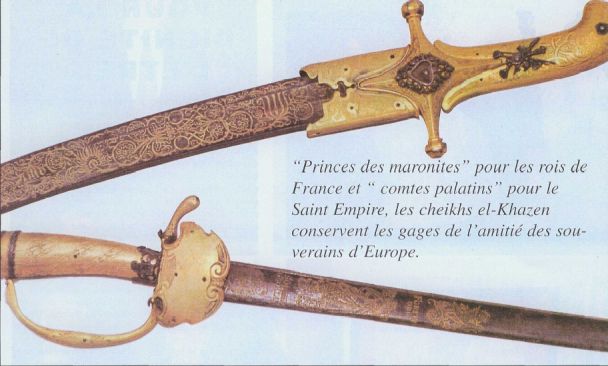
Origins of the "Prince of Maronite" Title
Growing diversity: the Khazin sheiks and the clergy in the first decades of the 18th century
Historical Members:
Barbar Beik El Khazen [English]
Patriach Toubia Kaiss El Khazen(Biography & Life Part1 Part2) (Arabic)
Patriach Youssef Dargham El Khazen (Cont'd)
Cheikh Bishara Jafal El Khazen
Patriarch Youssef Raji El Khazen
The Martyrs Cheikh Philippe & Cheikh Farid El Khazen
Cheikh Nawfal El Khazen (Consul De France)
Cheikh Hossun El Khazen (Consul De France)
Cheikh Abou-Nawfal El Khazen (Consul De France)
Cheikh Francis Abee Nader & his son Yousef
Cheikh Abou-Kanso El Khazen (Consul De France)
Cheikh Abou Nader El Khazen
Cheikh Chafic El Khazen
Cheikh Keserwan El Khazen
Cheikh Serhal El Khazen [English]
Cheikh Rafiq El Khazen [English]
Cheikh Hanna El Khazen
Cheikha Arzi El Khazen
Marie El Khazen