
By Adam Levy The Motley Fool
A lot of investors look at Amazon.com (NASDAQ:AMZN) and see a company with unparalleled distribution capabilities or a market-leading cloud computing service. What I see, though, is the place people go to shop online.
While that might sound completely obvious, it's an advantage that's hard for competitors to overcome. In America, 55% of online shoppers begin their product search on Amazon.com, according to a recent survey from BloomReach. I'm willing to bet a large percentage of shoppers end their product search on Amazon as well.
That influx of shoppers leads to more product creators and merchants wanting to get their products on the virtual shelves of Amazon so their items show up in shoppers' product searches. That inimitable shopper behavior is at the core of one of Amazon's three pillars: its Fulfilled by Amazon program.

The Daily Star, BEIRUT: A new Cabinet cannot be formed unless Lebanon’s politicians find solutions to a number of contentious issues, a Future Movement official said Monday. "Matters are complicated concerning Cabinet formation," former MP Mustafa Alloush told Voice of Lebanon radio (100.5). These complications are the "tip of the iceberg," he said.
Meanwhile, Change and Reform MP Hikmat Deeb said that "agreements have been made on fundamental issues," during a morning talk show on LBCI. However, he added that some disputes over "minor details" remain unresolved.
Caretaker Social Affairs Minister Rashid Derbas told Voice of Lebanon radio (93.3) that disagreements over the distribution of ministerial portfolios indicate that political rivals "favor their personal interests over that of the state."
He said that Prime Minister-designate Saad Hariri had "made big compromises, including the election of [President] Michel Aoun, on condition that the Cabinet would be formed within a week of his election." Derbas blamed Hariri and Aoun for the delay in Cabinet formation, but said that he believes that the PM-designate will "make further settlements to accelerate [an agreement] on his Cabinet lineup."

The article represent option of the author
There are more than a few ironies regarding the Oct. 31 election by the Lebanese parliament of former Gen. Michel Aoun, a Maronite Catholic who received his military training in the United States, as the country’s new president. One of the most striking is his shifting allegiances and the inconsistencies of U.S. policy toward Lebanon.
Aoun’s political party, known as the Free Patriotic Movement, is the most popular Christian-led political group in the country, surpassing the once-dominant far-right-wing Phalangists. Aoun’s party is aligned with the March 8 Alliance, one of the two main political blocs in the country, which includes leftists and Arab nationalists, as well as Hezbollah, the Iranian-backed radical Shiite group. As a result, both The Washington Post and The New York Times announced the election of the “Hezbollah ally” to the presidency and The Guardian referred to him as “a staunch ally of Iran.”
In 2007, former Rep. Gary Ackerman, D-N.Y., when he was ranking member of the Middle East Subcommittee of the House Foreign Affairs Committee, accused Aoun and his supporters of being “agents” and “boot-licking Lebanese proxies” of Syria and Iran, whom he referred to as the “puppet masters pulling on the strings.” He further accused “Aounists” of trying to “take through violence and intimidation what they cannot achieve at the ballot box.”
In reality, Aoun has become president last month through a constitutional process by a democratically elected parliament. This was not the case back in 1988 when he led a military regime, one of two rival governments. In October 1990, as the only major obstacle remaining to implementing the Taif Accords, which finally brought an end to that country’s bloody 15-year civil war, he was ousted by Lebanese and Syrian forces. The operation was openly supported by the United States, concerned with Aoun’s then-alliance with Iraqi dictator Saddam Hussein, the only foreign leader who provided Aoun’s regime with unconditional support.
JBEIL BYBLOS #khazen Mar Youhana – Jbeil
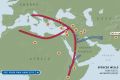


Population Movements to Keserwan - The Khazens and The Maans
ما جاء عن الثورة في المقاطعة الكسروانية
ثورة أهالي كسروان على المشايخ الخوازنة وأسبابها
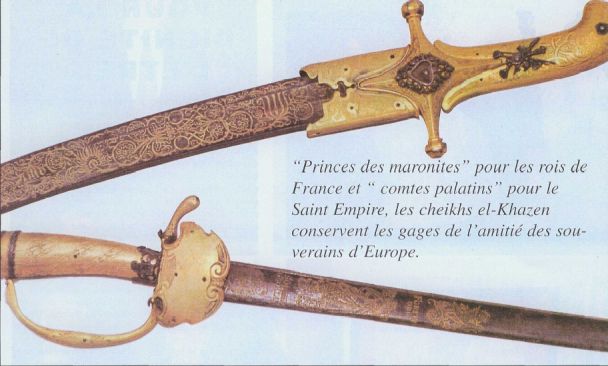
Origins of the "Prince of Maronite" Title
Growing diversity: the Khazin sheiks and the clergy in the first decades of the 18th century
Historical Members:
Barbar Beik El Khazen [English]
Patriach Toubia Kaiss El Khazen(Biography & Life Part1 Part2) (Arabic)
Patriach Youssef Dargham El Khazen (Cont'd)
Cheikh Bishara Jafal El Khazen
Patriarch Youssef Raji El Khazen
The Martyrs Cheikh Philippe & Cheikh Farid El Khazen
Cheikh Nawfal El Khazen (Consul De France)
Cheikh Hossun El Khazen (Consul De France)
Cheikh Abou-Nawfal El Khazen (Consul De France)
Cheikh Francis Abee Nader & his son Yousef
Cheikh Abou-Kanso El Khazen (Consul De France)
Cheikh Abou Nader El Khazen
Cheikh Chafic El Khazen
Cheikh Keserwan El Khazen
Cheikh Serhal El Khazen [English]
Cheikh Rafiq El Khazen [English]
Cheikh Hanna El Khazen
Cheikha Arzi El Khazen
Marie El Khazen