By Babu Das Augustine, Banking Editor
Dubai: The recent political developments in Lebanon such as the election of President Michel Aoun and the designation of Saad Hariri to form the government is expected to boost investor confidence in the country’s financial system. However analysts say in the short to medium term, banks’ foreign asset holdings paint a grim picture.
In mid-October, Banque du Liban (BdL), Lebanon’s central bank, published data showing that Lebanese banks’ foreign assets, mostly in the form of foreign bank placements, had declined by $1.9 billion (Dh6.9 billion) between May 2016 to August 2016, and by $1.1 billion in August alone. As a result, Lebanese banks’ net foreign liabilities increased to $18 billion in August from $15 billion at the beginning of the year.
The repatriated $1.9 billion of foreign assets were invested in long-term Lebanese government Eurobonds and BdL certificates of deposits (CDs) that increased the banks’ overall exposure to the sovereign.
The large reduction in Lebanese banks’ foreign assets is the result of a BdL financial operation that began in May. Although the BdL has not disclosed details of this operation, according to Moody’s estimate, BdL bought $2 billion of Eurobonds from the Lebanese Ministry of Finance in exchange for an equivalent amount of debt denominated in Lebanese pounds.
Additionally, there are reports that BdL bought roughly $6 billion of Lebanese pound denominated Treasury bills over the summer from commercial banks at a premium and sold them the $2 billion in Eurobonds and an additional $4 billion in CDs. Banks were required to keep the profits generated from these transactions as Lebanese pound-denominated reserves ahead of the implementation of International Financial Reporting Standard No 9, which takes effect in 2018.
Lebanese Saints

BEIRUT: Activists and locals Saturday rallied in Beirut's Ramlet al-Baida and the northern city of Tripoli to denounce the lack of government action to protect public properties along Lebanon’s coastal line. Demonstrators marched in Ramlet al-Baida against the construction of a private resort in the area, holding placards and signs that denounced what they claim were attempts to make the public beach a private property.
The protesters chanted slogans against the resort project, holding a large banner that read "Who removed the signs of trespassing and no construction on the real estate?" A civil campaign in Beirut called "The Beach is for Everyone" issued a statement saying that the resort called "Eden Rock” was being built on public land and that the protest was an act of "self-defense" in a battle to protect public property.
They demanded Beirut's Governor Ziad Chebib, municipality, the Interior Ministry and Public Works Ministry to take action and halt construction work at the site. Meanwhile, activists and locals in Tripoli protested the construction of a parking lot on a stretch of the northern city's public beach, against which Tripoli's Mayor Abdul Qader Alameddin had said Friday legal action would be taken if the project continues.
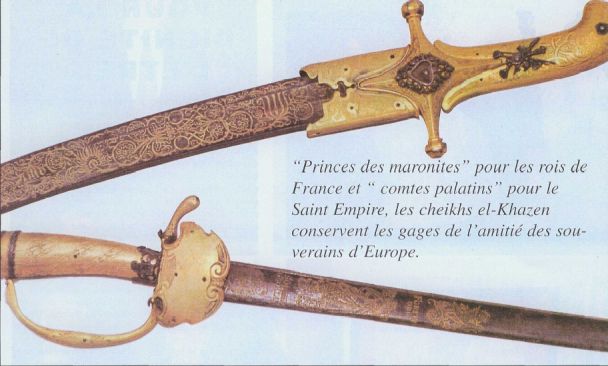
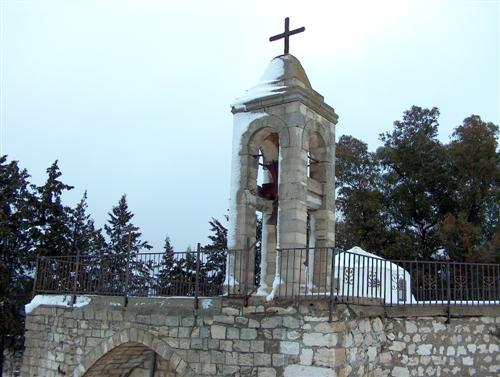
Population Movements to Keserwan - The Khazens and The Maans
ما جاء عن الثورة في المقاطعة الكسروانية
ثورة أهالي كسروان على المشايخ الخوازنة وأسبابها
Origins of the "Prince of Maronite" Title
Growing diversity: the Khazin sheiks and the clergy in the first decades of the 18th century
Historical Members:
Barbar Beik El Khazen [English]
Patriach Toubia Kaiss El Khazen(Biography & Life Part1 Part2) (Arabic)
Patriach Youssef Dargham El Khazen (Cont'd)
Cheikh Bishara Jafal El Khazen
Patriarch Youssef Raji El Khazen
The Martyrs Cheikh Philippe & Cheikh Farid El Khazen
Cheikh Nawfal El Khazen (Consul De France)
Cheikh Hossun El Khazen (Consul De France)
Cheikh Abou-Nawfal El Khazen (Consul De France)
Cheikh Francis Abee Nader & his son Yousef
Cheikh Abou-Kanso El Khazen (Consul De France)
Cheikh Abou Nader El Khazen
Cheikh Chafic El Khazen
Cheikh Keserwan El Khazen
Cheikh Serhal El Khazen [English]
Cheikh Rafiq El Khazen [English]
Cheikh Hanna El Khazen
Cheikha Arzi El Khazen
Marie El Khazen