Lebanon is a sectarian nation, yet it has avoided civil war while the Middle East burns – here’s why
By Robert Fisk
in Beirut @indyvoices
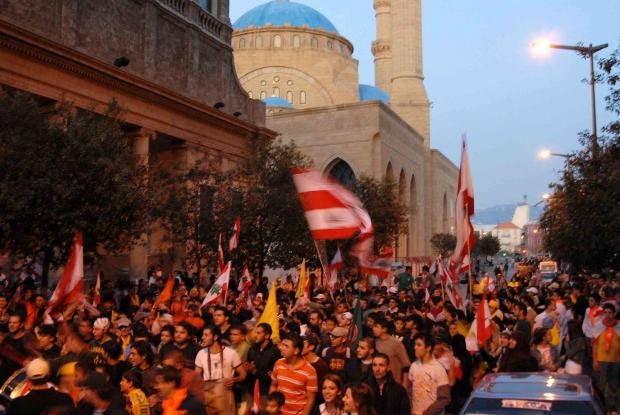
Maybe it’s because I live in Lebanon, and return to Beirut from Aleppo and Damascus, that the place seems so “normal”. While all around this little jewel, the Middle East burns – Syria, the occupied West Bank, Iraq, Yemen, Libya, increasingly Egypt and, alas, Turkish Kurdistan – Lebanon glistens brightly in the darkness, largely untarnished by the horrors on the other side of its borders. Or so it seems.
We might be forgiven for believing that this little paradise still exists in the Arab world. True, Lebanon has no president, no functioning government and constant power cuts (I currently have three electricity outages a day, sometimes totalling six hours, without a generator). Reading by candlelight might seem as romantic as Milton – preferably without its physical effect on him – but it gets a little boring after a while.
True, the Syrian war has stained Lebanon. Mosque bombings, the attempted destruction of the Iranian embassy by suicide killers, the brief capture of the Lebanese town of Ersal by Isis and the beheading of Lebanese soldiers who were seized there, seemed to foreshadow a replay of the country’s old civil war. Hezbollah fighters from southern Lebanon receive military funerals when they are driven home by the dozen from the Syrian battlefields. Sunni and Alawite (Shia) gunmen have fought in the northern city of Tripoli.

by
Over the past two years, Lebanese politics has been crippled by the inability of the country’s political forces to agree on a successor to former president, General Michel Sulaiman, whose six-year term had come to an end in May 2014. Since then, Lebanon’s political class has looked beyond their borders for a solution to their problems, hoping that a regional power-broker would come to their rescue. However, with the key regional actors preoccupied with other pressing issues, most notably the conflict in Syria and Iraq, Lebanon’s leaders finally decided to rely on their own political skills to agree on a presidential candidate. This endeavour led earlier this year to shaking up the alliances within the two main political camps in major ways. Sa’ad Hariri, leader of the March 14 Alliance and former premier, took his allies off guard last year when he backed the bid of Sulaiman Frangieh, a nominal member of the opposing March 8 alliance for presidency. Meanwhile, one of Hariri’s main allies within the March 14 camp, Samir Geagea of the Lebanese Forces, supported the bid of General Michel Aoun, a nominal coalition partner of Frangieh.

Donald Trump has raged against the media throughout his campaign, calling the press biased — and a poll released Wednesday says a majority of Americans agree. Even voters who don’t support the GOP presidential nominee said the press has it in for him.
Like many recent surveys, the Quinnipiac University poll found that Hillary Clinton is leading the race for the White House with 47 percent of the vote, compared to Trump’s 40 percent when third-party candidates are included. But 55 percent of voters told pollsters Trump was right when he charged the media is biased against, compared to 42 percent who said it wasn’t. Republicans and independents were overwhelmingly with Trump on that issue — and so were 20 percent of Democrats.
“Donald Trump made the charge, and American likely voters agree: There is a media bias against the GOP contender,” said pollster Tim Malloy. Trump has made attacks on the media a cornerstone of his outsider campaign, eliciting cheers and anger at his rallies when he excoriates media outlets and even individual reporters.
“Let’s be clear on one thing, the corporate media in our country is no longer involved in journalism – they are a political special interest no different from a lobbyist,” he railed in a recent speech in Florida.
Former
Lebanese Prime Minister Saad al-Hariri endorsed Michel Aoun
for the vacant presidency, Long
an opponent of the Iran-backed Shi'ite group Hezbollah, Hariri would
become prime minister again under the plan that could reshape Lebanese
politics. It has drawn opposition in his party and a final decision has
not yet been taken, allies said. The
presidency, which is reserved for a Maronite Christian in the country's
sectarian power-sharing arrangements, has been vacant for 2 1/2 years
due to political conflicts. Aoun, a veteran politician in his 80s, has
long coveted the post.
It was not immediately clear if Aoun's candidacy would enjoy enough support among other politicians to secure the necessary two-thirds quorum for the vote in the 128-seat parliament.
The next scheduled parliamentary session to elect a president is set for Oct. 31.
Population Movements to Keserwan - The Khazens and The Maans
ما جاء عن الثورة في المقاطعة الكسروانية
ثورة أهالي كسروان على المشايخ الخوازنة وأسبابها
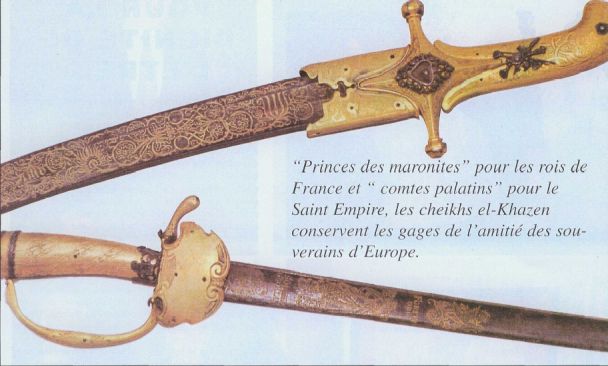
Origins of the "Prince of Maronite" Title
Growing diversity: the Khazin sheiks and the clergy in the first decades of the 18th century
Historical Members:
Barbar Beik El Khazen [English]
Patriach Toubia Kaiss El Khazen(Biography & Life Part1 Part2) (Arabic)
Patriach Youssef Dargham El Khazen (Cont'd)
Cheikh Bishara Jafal El Khazen
Patriarch Youssef Raji El Khazen
The Martyrs Cheikh Philippe & Cheikh Farid El Khazen
Cheikh Nawfal El Khazen (Consul De France)
Cheikh Hossun El Khazen (Consul De France)
Cheikh Abou-Nawfal El Khazen (Consul De France)
Cheikh Francis Abee Nader & his son Yousef
Cheikh Abou-Kanso El Khazen (Consul De France)
Cheikh Abou Nader El Khazen
Cheikh Chafic El Khazen
Cheikh Keserwan El Khazen
Cheikh Serhal El Khazen [English]
Cheikh Rafiq El Khazen [English]
Cheikh Hanna El Khazen
Cheikha Arzi El Khazen
Marie El Khazen