Beirut- Lebanon’s Internal Security Forces (ISF) announced Tuesday that an operation to smuggle 3.5 million Captagon pills has been foiled. The thwarted …
Nemr Abou Nassar is widely known as "Lebanon's King of Comedy." By far the most famous comedian in his country, Nassar — who's often billed as simply "Nemr" — regularly performs for crowds all over the world. He's recorded five standup specials, been on the Axis of Evil Comedy Tour and graced the cover of Rolling Stone Middle East. His show A Stand Up Revolution was a ratings juggernaut for the Lebanese Broadcasting Corporation, but ended after one season beecause of incompatibility with the network. While his notoriety has spread across the Middle East and into Europe, Nassar is still being introduced to American audiences. Eschewing overtly religious or political material, Nassar aims to bridge cultural divides with humor.
Westword caught up with Nemr ahead of his one-night-only special headlining engagement at Comedy Works South on October 12 to discuss his comedic influences, introducing himself to American audiences and finding unity in laughter.
Westword: Will there be your first trip to Denver?
Nemr Abou Nassar: Yes, sir. Never been before. I’m very excited, to be honest.
After fleeing civil war with your family, you spent part of your childhood in the States. I know you were pretty young, but do you have any memories of this period?
Of the time I spent in America, you mean? I left America when I was eleven, so I definitely have a lot of impressions of that time because it was very formative for me. But if you’re asking if I have any memories of the civil war in Beirut, I was two, so obviously I don’t. But I remember when I did get to San Diego. My earliest memories are not happy ones, I can tell you that much. When I think back on it, and I’ve been asked to often, it feels like a bit blocked off. Not like a trauma or anything, but I could tell that my parents weren’t happy. When you’re around a household that doesn’t have happiness, when there’s a lot of stress, it kind of makes things dark for everyone else around, you know what I’m saying?
Cheikh Walid el Khazen awarded by the Sovereign Order of Malta with the Pro Merito Melitensi Grand-Cross.
Order of pro Merito Melitensi is an order of merit awarded in recognition of a pursuit that gives honor and prestige to the Sovereign Order of Malta. A distinction instituted in 1920, It is an acknowledgement of actions which bring it honor and prestige, and which promote Christian values.
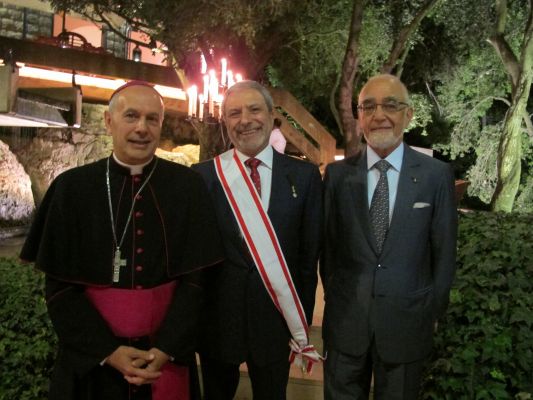
Cheikh Walid el Khazen with Archbishop Gabriele Giordano Caccia, Apostolic Nuncio and President Marwan Sehnaoui of the Order of Malta in Lebanon
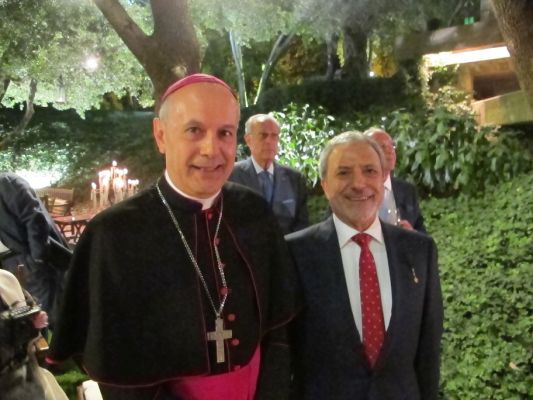
Cheikh Walid el Khazen with Archbishop Gabriele Giordano Caccia, Apostolic Nuncio
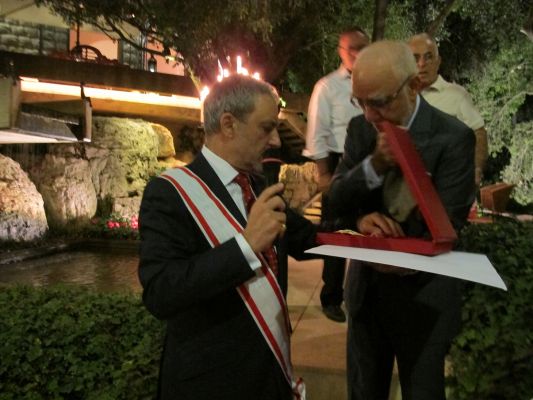
Cheikh Walid el Khazen awarded by the Sovereign Military Order of Malta with the Pro Merito Melitensi Cross.
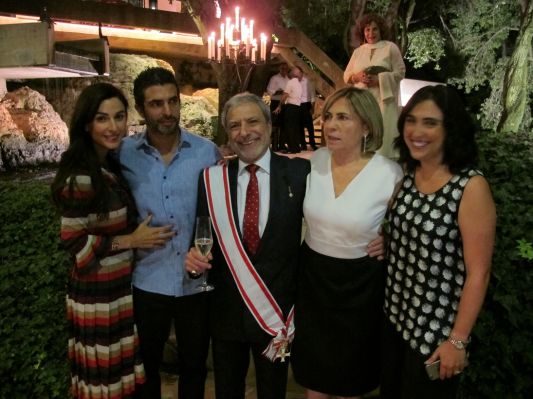
Cheikh Walid and Gloria el Khazen with their family Cheikh Chafic and Dana el Khazen and Tayma el Khazen Haddad
By Syed Hamad Ali

Andrew Arsan is a historian at Cambridge University specialising in modern Middle East and French and British imperialism. His book, “Interlopers of Empire: The Lebanese Diaspora in Colonial French West Africa”, won last year’s Gladstone Prize, an annual award from the Royal Historical Society for the best first book in non-British history.
“We tend to think about the Middle East only in terms of the flow of refugees,” Arsan tells Weekend Review as we sit in his office at St John’s College, Cambridge. “People who are forced out by war, by dislocation, by conflict. Yes, there is clearly a truth to that, especially at the moment. But we tend to forget the ways in which Middle Eastern people moved about freely, for economic reasons — as economic migrants, as labour migrants ... in the late 19th, early 20th century, people who were moving across the Indian Ocean, and also people who moved out to the US, South America, West Africa. So I was interested, in a sense, in not treating the Middle East as an exception, as very different to other parts of the world, but trying to think about it as a region, like other regions, which fits into a general pattern of global history in the 19th and 20th centuries.”




Population Movements to Keserwan - The Khazens and The Maans
ما جاء عن الثورة في المقاطعة الكسروانية
ثورة أهالي كسروان على المشايخ الخوازنة وأسبابها
Origins of the "Prince of Maronite" Title
Growing diversity: the Khazin sheiks and the clergy in the first decades of the 18th century
Historical Members:
Barbar Beik El Khazen [English]
Patriach Toubia Kaiss El Khazen(Biography & Life Part1 Part2) (Arabic)
Patriach Youssef Dargham El Khazen (Cont'd)
Cheikh Bishara Jafal El Khazen
Patriarch Youssef Raji El Khazen
The Martyrs Cheikh Philippe & Cheikh Farid El Khazen
Cheikh Nawfal El Khazen (Consul De France)
Cheikh Hossun El Khazen (Consul De France)
Cheikh Abou-Nawfal El Khazen (Consul De France)
Cheikh Francis Abee Nader & his son Yousef
Cheikh Abou-Kanso El Khazen (Consul De France)
Cheikh Abou Nader El Khazen
Cheikh Chafic El Khazen
Cheikh Keserwan El Khazen
Cheikh Serhal El Khazen [English]
Cheikh Rafiq El Khazen [English]
Cheikh Hanna El Khazen
Cheikha Arzi El Khazen
Marie El Khazen