By Middle East correspondent Matt Brown - ABC.net.au
People go about their business; shopping, visiting friends and family, but the military has heavily fortified checkpoints at key intersections. They are backed up by armoured personnel carriers armed with machine guns, stationed down the backstreets, ready to quell sectarian bloodletting, and suppress the jihadists and the stories they tell.
In Bab al Tabane, a poor and dirty neighborhood known as a centre of radical Sunni militancy, there are many young men who have answered the call to arms in Syria.
One of them, Hassan Srour, a young man in his mid-twenties, agreed to go on camera to detail his brief but gruelling bid to join the fight.
It was the early days of the insurgency, 2012, and his brother, Hussein, had already gone over.
"My brother ... is the one who encouraged me. He would describe what was going on, how they would bomb and kill children," Hassan told 7.30.
Iran
sentenced Nizar Zakka, a Lebanese citizen with permanent U.S. residency,
to 10 years in prison and a $4.2 million fine after he was found guilty
of collaborating against the state, his U.S.-based lawyer announced on
Tuesday. Zakka, an
information technology expert, was invited to Iran by a government
official a year ago, but then disappeared after attending a conference
in Tehran. State media announced
in November that he had been detained by Iran's powerful Revolutionary
Guards, and reported that he had ties to U.S. military and intelligence
services. Zakka's supporters and his U.S. lawyer Jason Poblete have said that he is innocent of any wrongdoing. "Nizar
doesn't recognize this process," Poblete said in a telephone interview.
"He was there at the invitation of the Iranian government, and he was
pulled over on the side of the road by a bunch of men. He's been treated
as a hostage ever since."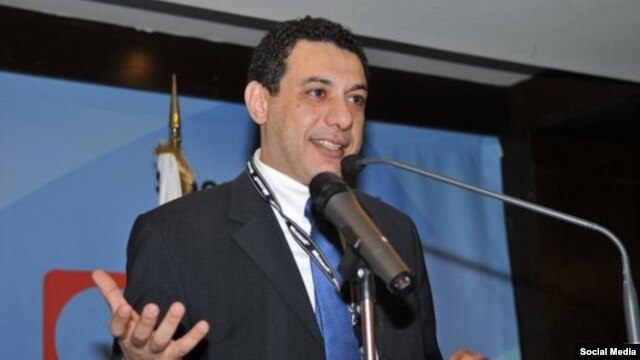

Al Monitor - By Scott Preston a journalist based in Beirut, Lebanon writing about social and political issues in the Middle East. On Twitter: @scottapreston
According to the World Bank, the restoration of Syria represents an industry estimated to be worth over $200 billion. The figure has some businessmen and policymakers hoping that the anticipated boost in multinational trade will save the Lebanese economy, which has stagnated in recent years.
Two free trade agreements, a common language and historic commercial ties are expected to give Lebanon a competitive advantage over other countries that share a border with Syria. “In the last 10 or 15 years when we started liberalizing the economy, at the time when Syria was pursuing a protective planning system, Lebanon was pursuing a free trade economy,” Nabil Sukkar, the managing director of the Syrian Consulting Bureau for Development and Investment, a consultancy specializing in market and investment expertise, told Al-Monitor.
“Lebanon became sort of the Hong Kong of Syria. A lot of business was done in Lebanon to serve Syria, and I expect that in the post-conflict reconstruction period, Lebanon will again become the Hong Kong of Syria,” he said.
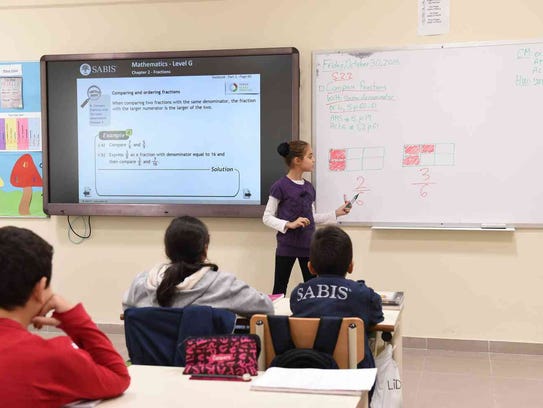
SAN FRANCISCO — George and Amal Clooney are launching an ambitious initiative to educate Syrian refugee children in Lebanon — and they are getting started with a big injection of cash and brain power from Google.
The Internet giant's philanthropic arm Google.org is donating $1 million to the Clooney Foundation for Justice — one of 51 philanthropic efforts from companies around the world announced as President Obama convenes a meeting of world leaders at the United Nations on the refugee crisis. The White House says corporate commitments for refugee relief total $650 million and will provide employment opportunities for 220,000 refugees and education for 80,000 refugees.
With Google's help, the Clooneys want to help the more than 250,000 children — about half of the school-age children in Lebanon — who are not in school. Some have never seen the inside of a classroom.
"That leads to a horrible outcome a decade from now, a generation from now," George Clooney told USA TODAY. "Let's not lose an entire generation of people because they happened to be born in the wrong place at the wrong time."
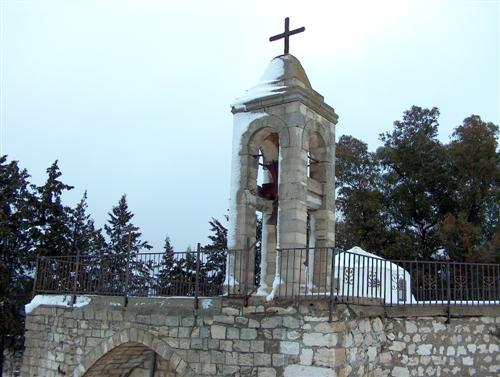
Population Movements to Keserwan - The Khazens and The Maans
ما جاء عن الثورة في المقاطعة الكسروانية
ثورة أهالي كسروان على المشايخ الخوازنة وأسبابها
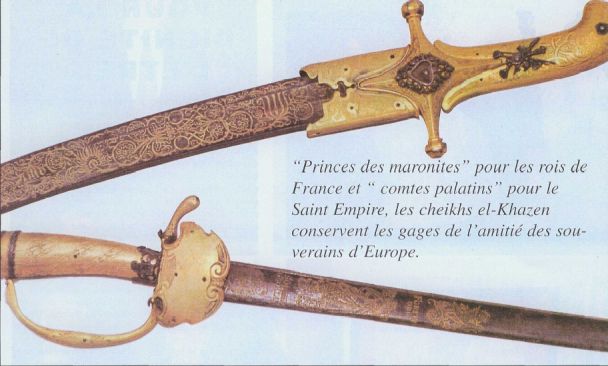
Origins of the "Prince of Maronite" Title
Growing diversity: the Khazin sheiks and the clergy in the first decades of the 18th century
Historical Members:
Barbar Beik El Khazen [English]
Patriach Toubia Kaiss El Khazen(Biography & Life Part1 Part2) (Arabic)
Patriach Youssef Dargham El Khazen (Cont'd)
Cheikh Bishara Jafal El Khazen
Patriarch Youssef Raji El Khazen
The Martyrs Cheikh Philippe & Cheikh Farid El Khazen
Cheikh Nawfal El Khazen (Consul De France)
Cheikh Hossun El Khazen (Consul De France)
Cheikh Abou-Nawfal El Khazen (Consul De France)
Cheikh Francis Abee Nader & his son Yousef
Cheikh Abou-Kanso El Khazen (Consul De France)
Cheikh Abou Nader El Khazen
Cheikh Chafic El Khazen
Cheikh Keserwan El Khazen
Cheikh Serhal El Khazen [English]
Cheikh Rafiq El Khazen [English]
Cheikh Hanna El Khazen
Cheikha Arzi El Khazen
Marie El Khazen