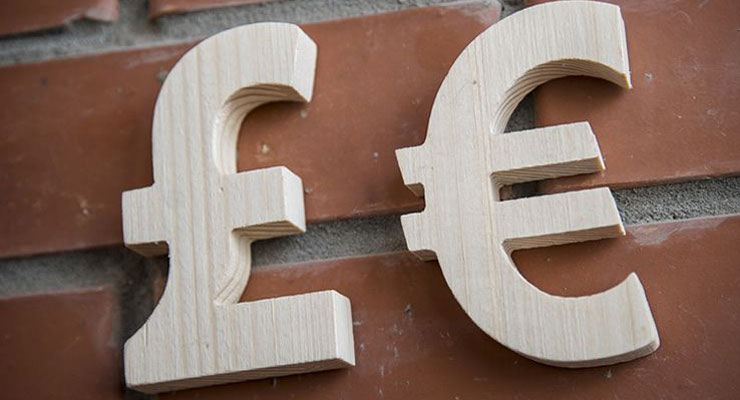
By Derek A. Issacs with reporting by Rania Ghanem and Shikrallah Nakhoul posted in businessnews.com.lb
Local business stakeholders expect
little or no change from the UK’s decision today to leave the European
Union (EU). The value of imports from the UK stands at $525 million (up
from $305 million in 2006) with exports last year at around $40 million
(compared to $30 million in 2006).
Mohamed Choucair, Chairman
of the Federation of Chambers of Commerce, Industry and Agriculture
said: “We do not expect any change in our bilateral trade relations.” He
expects that the UK will maintain its trade agreements and will not
impose custom duties on the local products entering its market.
Food
industries including wine, preserves, and canned food are the main
products exported to the UK. “We believe that the UK market will remain
open for local products,” he said.

By SARAH EL DEEB, Associated Press
SAADNAYEL, Lebanon (AP) — The small crowd broke out in giggles when a young male actor, dressed in a towel and a wig, strutted around the dusty open market in Lebanon's Bekaa valley during a street performance. He was portraying a Syrian woman coquettishly complaining of how she has no privacy with her husband in a crowded refugee tent.
The mood turned from comedy to tragedy as the troupe of Syrian actors moved to the next act: A refugee girl with a heart condition dies because no Lebanese hospital agrees to admit her on an emergency basis. While some among the Lebanese watching were sympathetic, one family walked away, grumbling in protest. "There are lots of lies," Mohammed Razzak said of the performance. "As a Lebanese, I don't get the assistance they (Syrians) get."
The range of reactions at the Saadnayel market was precisely what the directors anticipated, even desired. The Caravan, a street performance project touring Lebanon over the next six weeks, gives Syrian refugees the chance to tell and act out their own stories and experiences and present them to Lebanese who often see the Syrians as little more than a wave of the needy and poor that has overwhelmed their country.

Major General Herzl ‘Herzi’ Halevy was at it again a few days ago. Another war in Lebanon, the Israeli chief of the country’s ‘Military Intelligence Directorate’ threatened, would turn it into “a country of refugees”. Not very original, when you come to think of it, because Lebanon already hosts around 350,000 Palestinian refugees from the land which Herzi calls Israel and a further million refugees from Syria. In total, that’s about a fifth of the entire population of Lebanon. The Lebanese might be forgiven for yawning. Haven’t we been here before?
Well, yes, as a matter of fact, we have. But first the usual context. Herzi was talking to the annual Herzliya conference in Israel where chiefs of staff and military intelligence bosses warn their countrymen of the massive firepower which may be unleashed on them by Hezbollah, al-Qaeda, Isis, Arab states with whom they don’t have a peace treaty, Old Uncle Tom Cobley and all. Herzi was marking the 10th anniversary of the last Lebanon war – the third Lebanon war, according to the Israelis, who would have to explain why there have really been five Lebanon wars (1978, 1982, 1994, 1996 and 2006) if they stuck with the facts. But there you go.





Population Movements to Keserwan - The Khazens and The Maans
ما جاء عن الثورة في المقاطعة الكسروانية
ثورة أهالي كسروان على المشايخ الخوازنة وأسبابها
Origins of the "Prince of Maronite" Title
Growing diversity: the Khazin sheiks and the clergy in the first decades of the 18th century
Historical Members:
Barbar Beik El Khazen [English]
Patriach Toubia Kaiss El Khazen(Biography & Life Part1 Part2) (Arabic)
Patriach Youssef Dargham El Khazen (Cont'd)
Cheikh Bishara Jafal El Khazen
Patriarch Youssef Raji El Khazen
The Martyrs Cheikh Philippe & Cheikh Farid El Khazen
Cheikh Nawfal El Khazen (Consul De France)
Cheikh Hossun El Khazen (Consul De France)
Cheikh Abou-Nawfal El Khazen (Consul De France)
Cheikh Francis Abee Nader & his son Yousef
Cheikh Abou-Kanso El Khazen (Consul De France)
Cheikh Abou Nader El Khazen
Cheikh Chafic El Khazen
Cheikh Keserwan El Khazen
Cheikh Serhal El Khazen [English]
Cheikh Rafiq El Khazen [English]
Cheikh Hanna El Khazen
Cheikha Arzi El Khazen
Marie El Khazen