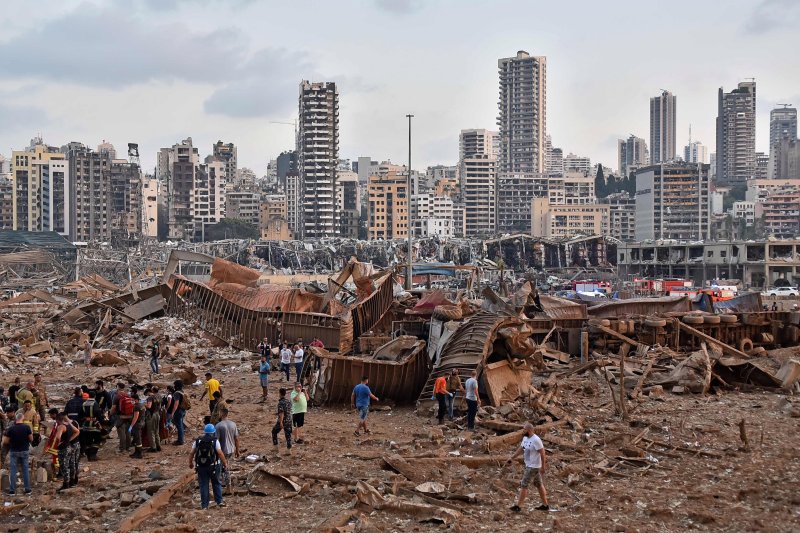
By Najia Houssari -- arabnews.com -- BEIRUT: Relatives of some of the victims of the massive explosion at Beirut’s port in 2020, which killed at least 218 people, on Wednesday protested against the judiciary’s plan to appoint a new judge to the official investigation. They denounced the move as an attempt by the country’s political class to avoid justice. The probe into the blast, which caused billions of dollars in damage, has been stalled since December, after three former cabinet ministers filed legal challenges against the investigating judge, Tarek Bitar. Justice Minister Henri Khoury and the Higher Judicial Council, Lebanon’s top judicial body, are looking at appointing a second judge, reportedly with a view to releasing some port and customs officials and other workers who have been detained without charge since the explosion.
William Noun, whose brother died in the blast, said: “The families of the victims want the investigations to be conducted again. We also want Judge Bitar to carry out his duties away from the political rivalries.” The mother of another victim said: “We are not against setting detainees free. However, truth and justice must be achieved.” Moody Koraytem, the sister of Hassan Kamel Koraytem, the chairman and director general of Beirut Port, who is one of those being detained, said: “The fate of the detainees is in the hands of the people in power. Those detainees have not yet faced a trial, which is unjust to them and their families.” An unprecedented number of cases have been filed against Bitar, who was suspended after he accused a former premier, former ministers and current lawmakers of bearing responsibility for the blast as a result of their negligence.
Final results – America Has voted!! Mayyas Congratulations!!
We know that a lot of America’s Got Talent live shows tend to be dominated by and large by singers. Yet, Mayyas …
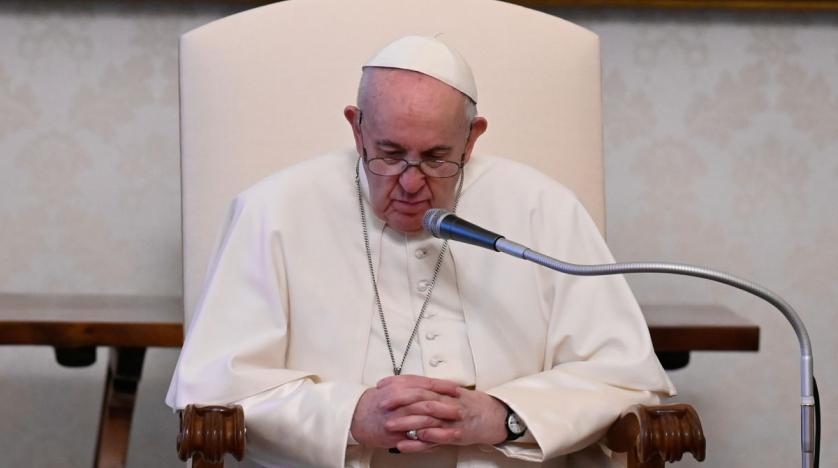
by catholicnewsagency.com -- Andrea Gagliarducci - The decision of Pope Francis to approve the new constitution of the Order of Malta, abolish positions, appoint a transitional government, and convene a general chapter to support the reform came quickly, but not suddenly. For some time, it had become evident that the pope wanted to bypass all resistance and carry out the reform of the order outlined by the men he called to that office — and to do so against any contrary opinion. At the same time, Pope Francis’ decree of Sept. 3 cannot be simply described as a “victory” of the religious side over the secular side, the latter chiefly represented by German protagonists. That would be a reductive view of the situation.
The reform of the Sovereign Military Order of Malta is a reform in a more spiritual sense, at least in terms of its intentions. At the same time, the reform had to be careful not to jeopardize the sovereignty of the Order of Malta while recognizing its complex reality and sometimes turbulent history. The Order of Malta’s structure includes priories, sub-priories, and 48 affiliated associations. The organization also employs some 45,000 staff, assisted by almost 100,000 volunteers. The order’s humanitarian projects budget is said to amount to $2.3 billion. At the same time, the Sovereign Military Hospitaller Order of St. John of Jerusalem of Rhodes and of Malta — that is the full official name — has three classes of knights.




Population Movements to Keserwan - The Khazens and The Maans
ما جاء عن الثورة في المقاطعة الكسروانية
ثورة أهالي كسروان على المشايخ الخوازنة وأسبابها
Origins of the "Prince of Maronite" Title
Growing diversity: the Khazin sheiks and the clergy in the first decades of the 18th century
Historical Members:
Barbar Beik El Khazen [English]
Patriach Toubia Kaiss El Khazen(Biography & Life Part1 Part2) (Arabic)
Patriach Youssef Dargham El Khazen (Cont'd)
Cheikh Bishara Jafal El Khazen
Patriarch Youssef Raji El Khazen
The Martyrs Cheikh Philippe & Cheikh Farid El Khazen
Cheikh Nawfal El Khazen (Consul De France)
Cheikh Hossun El Khazen (Consul De France)
Cheikh Abou-Nawfal El Khazen (Consul De France)
Cheikh Francis Abee Nader & his son Yousef
Cheikh Abou-Kanso El Khazen (Consul De France)
Cheikh Abou Nader El Khazen
Cheikh Chafic El Khazen
Cheikh Keserwan El Khazen
Cheikh Serhal El Khazen [English]
Cheikh Rafiq El Khazen [English]
Cheikh Hanna El Khazen
Cheikha Arzi El Khazen
Marie El Khazen