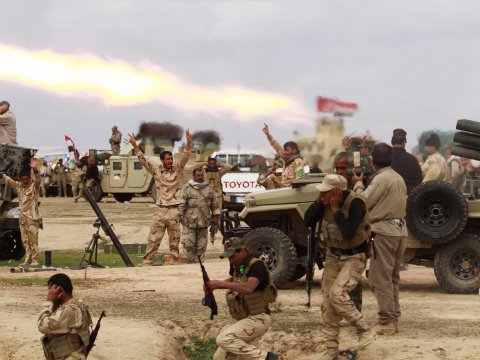
The coffin contains the body of the latest young fighter killed on the front lines of the war with Islamic State (IS).
But few worshippers at Najaf's Imam Ali mosque pay it heed. On one side women weep and wail at the shrine of Ali, the son-in-law of the Prophet Muhammad who became Islam's fourth caliph, and whose murder can be seen as the beginning of the divide between Sunni and Shia.
On the other a group of pilgrims from Iran sits in quiet prayer. The sermon booming from the loudspeakers is discussing marriage, not war. The ground around the building is packed with families and scattered with the leftovers from picnics.
Last summer the residents of Najaf, in Iraq's Shia heartland, were in mortal fear of IS. Its fighters had swarmed out of their redoubts in Syria and north-west Iraq to take control of much of the Sunni part of the country.
They were little more than a dozen kilometres from taking Baghdad and also threatened Erbil, the capital of the autonomous Kurdish region in the north. In June IS declared the re-establishment of the caliphate--the single state held to rule over all Muslims. But unlike the caliphate of Ali, this would be one which had highly exclusive definitions of what a Muslim is: Shias need not apply, and a lot of Sunnis would not make the grade, either.
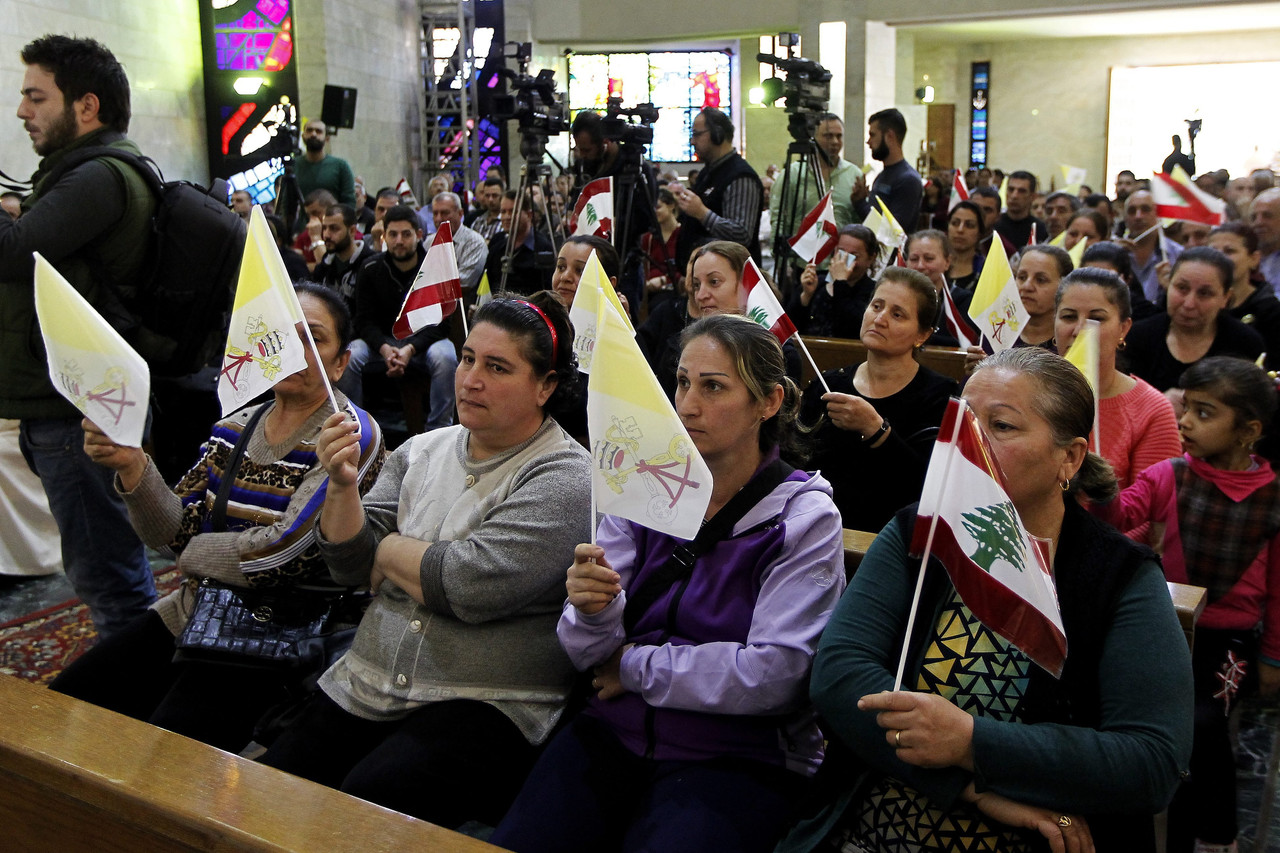
BEIRUT—Islamic State attacks on Syria’s Assyrian population have driven the Christian minority into Lebanon, further straining the impoverished nation and raising concerns that Christianity is being depleted in the Middle East as refugees move on to Europe.
The Lebanese government, which early this year tightened visa regulations in a bid to stem the tide of Syrian refugees, this month granted the Assyrians an exception, citing the Islamic State campaign that began in late February. More than 1.2 million Syrians have overwhelmed the country of four million, along with 500,000 Palestinian and Iraqi refugees.
United Nations, United States: Gordon Brown, UN special envoy for education, launched an international appeal Wednesday to close a funding gap …




Population Movements to Keserwan - The Khazens and The Maans
ما جاء عن الثورة في المقاطعة الكسروانية
ثورة أهالي كسروان على المشايخ الخوازنة وأسبابها
Origins of the "Prince of Maronite" Title
Growing diversity: the Khazin sheiks and the clergy in the first decades of the 18th century
Historical Members:
Barbar Beik El Khazen [English]
Patriach Toubia Kaiss El Khazen(Biography & Life Part1 Part2) (Arabic)
Patriach Youssef Dargham El Khazen (Cont'd)
Cheikh Bishara Jafal El Khazen
Patriarch Youssef Raji El Khazen
The Martyrs Cheikh Philippe & Cheikh Farid El Khazen
Cheikh Nawfal El Khazen (Consul De France)
Cheikh Hossun El Khazen (Consul De France)
Cheikh Abou-Nawfal El Khazen (Consul De France)
Cheikh Francis Abee Nader & his son Yousef
Cheikh Abou-Kanso El Khazen (Consul De France)
Cheikh Abou Nader El Khazen
Cheikh Chafic El Khazen
Cheikh Keserwan El Khazen
Cheikh Serhal El Khazen [English]
Cheikh Rafiq El Khazen [English]
Cheikh Hanna El Khazen
Cheikha Arzi El Khazen
Marie El Khazen