Greek Orthodox Archbishop of Beirut Elias Audeh called on Thursday politicians to give up their narrow interests to safeguard the country, …
BEIRUT: Maronite Patriarch Beshara Rai asked God during a Christmas Day mass attended by the country’s key Christian rivals to guide …
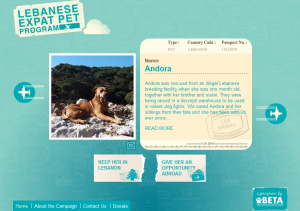
Lebanese Expat Pet Programme’, an initiative by Beirut for the Ethical Treatment of Animals (BETA), seeks families abroad to adopt rescued animals.
The campaign seeks to raise awareness about the fact that as a result of low adoption rates in Lebanon, the organisation has had to resort to sending Lebanese dogs abroad for adoption. JWT Beirut is the agency behind it.
“Our shelters are full. Many of the dogs we have rescued have permanent injuries due to abuse and many are fully-grown dogs not puppies. These two factors make them less likely to be adopted in Lebanon. In addition, we have a no kill policy. It is not an option to euthanise our animals if we cannot find them homes. As a result, we have had to look abroad for adoptive families due to very low adoption rates in Lebanon,” said Helena Husseini, vice president, BETA.
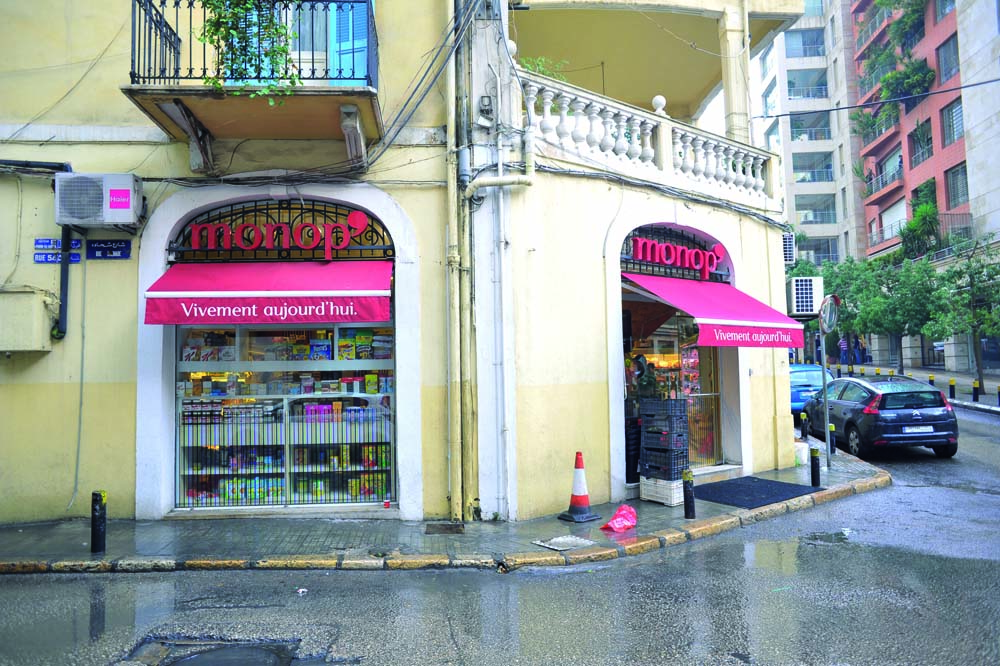
Retailing in Lebanon in 2014 felt the impact of global trends, as well as influences particular to the chaotic situation in the Middle East. In particular, Lebanon’s ailing economy and the influx of over 1 million refugees from Syria has had a major impact on the sector.
According to Business Monitor International, while sales of sporting goods, electrical appliances and consumer electronics have been down by 7 to 10 percent, grocery retail sales in supermarkets and hypermarkets were up more than 5 percent. Significantly, the UN sponsored exchange card program for refugees has put LBP 300,000 ($200) a week into the hands of each refugee family to spend on food. Coinciding with this boost to demand, many refugees themselves have started small stores, increasing competition significantly. In fact, An-Nahar has reported that the number of small grocery stores in Lebanon has increased by as much as 70 percent. This has made life even more difficult for the small native operators — particularly in areas of north Lebanon and the Bekaa valley, where many refugee families are concentrated. In addition to this, like everywhere in the world, independent food stores have had to face continued growth in the number, and market share, of the major supermarket chains, which have been successfully diversifying what they offer. In Lebanon, this has included deep discount chains such as Fahed Super Value, premium stores such as TSC Signature, and the local Monop’ mini-markets.




Population Movements to Keserwan - The Khazens and The Maans
ما جاء عن الثورة في المقاطعة الكسروانية
ثورة أهالي كسروان على المشايخ الخوازنة وأسبابها
Origins of the "Prince of Maronite" Title
Growing diversity: the Khazin sheiks and the clergy in the first decades of the 18th century
Historical Members:
Barbar Beik El Khazen [English]
Patriach Toubia Kaiss El Khazen(Biography & Life Part1 Part2) (Arabic)
Patriach Youssef Dargham El Khazen (Cont'd)
Cheikh Bishara Jafal El Khazen
Patriarch Youssef Raji El Khazen
The Martyrs Cheikh Philippe & Cheikh Farid El Khazen
Cheikh Nawfal El Khazen (Consul De France)
Cheikh Hossun El Khazen (Consul De France)
Cheikh Abou-Nawfal El Khazen (Consul De France)
Cheikh Francis Abee Nader & his son Yousef
Cheikh Abou-Kanso El Khazen (Consul De France)
Cheikh Abou Nader El Khazen
Cheikh Chafic El Khazen
Cheikh Keserwan El Khazen
Cheikh Serhal El Khazen [English]
Cheikh Rafiq El Khazen [English]
Cheikh Hanna El Khazen
Cheikha Arzi El Khazen
Marie El Khazen