BEIRUT: The Lebanese Army stepped up patrols in the eastern border town of Arsal Friday after unknown gunmen tried to dismantle …
Maronite Patriarch Beshara al-Rahi on Friday criticized Lebanese politicians for “destroying” the country and slammed lawmakers for “protecting their seats” at …
BEIRUT: The different religious groups of the Middle East must remain united in the face of "takfiri" attempts to divide them, …
By Nicholas Bladford
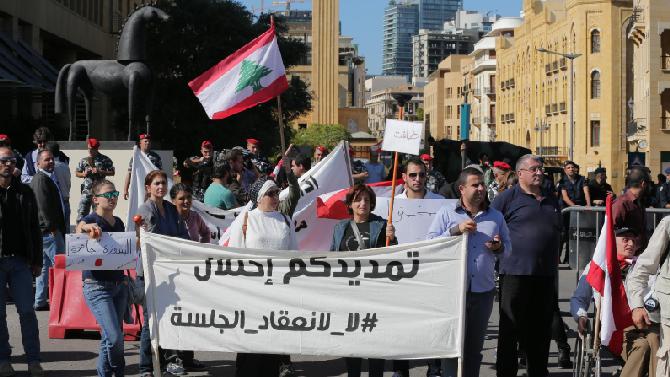
Lebanese Protestors reject lawmakers externsion for their mandate in Beirut
Beirut — Lebanese lawmakers voted Wednesday to extend their parliamentary mandate for a second time, citing the difficult security climate in the country and spillover from the war ravaging neighboring Syria. The parliamentary extension to June 2017 – a total of eight years in power – underlines Lebanon’s nervousness over the political and sectarian violence sweeping Syria and Iraq. On top of the postponed parliamentary elections, Lebanon has a presidential vacuum: Lawmakers have repeatedly failed to convene in sufficient numbers to elect a new head of state. The presidential palace in the hills above Beirut has been vacant since May, the end of President Michel Suleiman's six-year term.. Lebanon is often hailed as a rare beacon of democracy in the Arab world, but it is a dysfunctional democracy at best. Since 2005, when Syria removed its steely grip from the country, Lebanon has stumbled from one political crisis to another; paralysis and deadlock are becoming the norm.
The last time Lebanese citizens were allowed to hold a parliamentary vote was in 2009 when 128 lawmakers were elected for the customary four-year term. However, in May 2013, parliament decided to extend its mandate for 17 months because lawmakers said that insecurity made it impossible to hold a nationwide poll on time.
Under the constitution, once parliamentary elections are held, the serving government moves into a caretaker capacity pending the naming of a new prime minister and the formation of a new cabinet. The president appoints prime ministers following consultations with the elected lawmakers. However, with no president in power, holding elections at this time threatened a constitutional deadlock and governmental paralysis.

Population Movements to Keserwan - The Khazens and The Maans
ما جاء عن الثورة في المقاطعة الكسروانية
ثورة أهالي كسروان على المشايخ الخوازنة وأسبابها
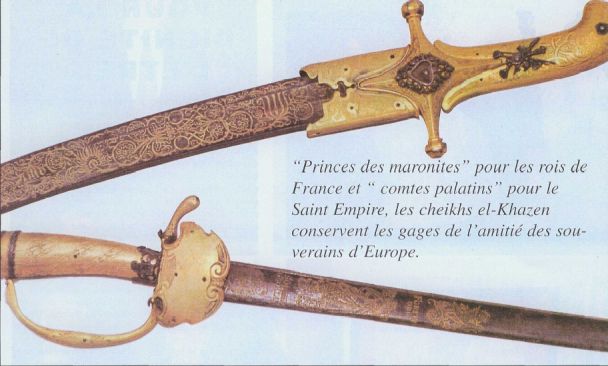
Origins of the "Prince of Maronite" Title
Growing diversity: the Khazin sheiks and the clergy in the first decades of the 18th century
Historical Members:
Barbar Beik El Khazen [English]
Patriach Toubia Kaiss El Khazen(Biography & Life Part1 Part2) (Arabic)
Patriach Youssef Dargham El Khazen (Cont'd)
Cheikh Bishara Jafal El Khazen
Patriarch Youssef Raji El Khazen
The Martyrs Cheikh Philippe & Cheikh Farid El Khazen
Cheikh Nawfal El Khazen (Consul De France)
Cheikh Hossun El Khazen (Consul De France)
Cheikh Abou-Nawfal El Khazen (Consul De France)
Cheikh Francis Abee Nader & his son Yousef
Cheikh Abou-Kanso El Khazen (Consul De France)
Cheikh Abou Nader El Khazen
Cheikh Chafic El Khazen
Cheikh Keserwan El Khazen
Cheikh Serhal El Khazen [English]
Cheikh Rafiq El Khazen [English]
Cheikh Hanna El Khazen
Cheikha Arzi El Khazen
Marie El Khazen