By Nicholas Bladford
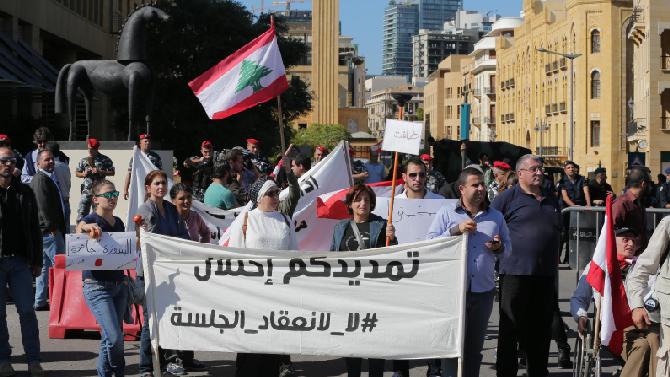
Lebanese Protestors reject lawmakers externsion for their mandate in Beirut
Beirut — Lebanese lawmakers voted Wednesday to extend their parliamentary mandate for a second time, citing the difficult security climate in the country and spillover from the war ravaging neighboring Syria. The parliamentary extension to June 2017 – a total of eight years in power – underlines Lebanon’s nervousness over the political and sectarian violence sweeping Syria and Iraq. On top of the postponed parliamentary elections, Lebanon has a presidential vacuum: Lawmakers have repeatedly failed to convene in sufficient numbers to elect a new head of state. The presidential palace in the hills above Beirut has been vacant since May, the end of President Michel Suleiman's six-year term.. Lebanon is often hailed as a rare beacon of democracy in the Arab world, but it is a dysfunctional democracy at best. Since 2005, when Syria removed its steely grip from the country, Lebanon has stumbled from one political crisis to another; paralysis and deadlock are becoming the norm.
The last time Lebanese citizens were allowed to hold a parliamentary vote was in 2009 when 128 lawmakers were elected for the customary four-year term. However, in May 2013, parliament decided to extend its mandate for 17 months because lawmakers said that insecurity made it impossible to hold a nationwide poll on time.
Under the constitution, once parliamentary elections are held, the serving government moves into a caretaker capacity pending the naming of a new prime minister and the formation of a new cabinet. The president appoints prime ministers following consultations with the elected lawmakers. However, with no president in power, holding elections at this time threatened a constitutional deadlock and governmental paralysis.
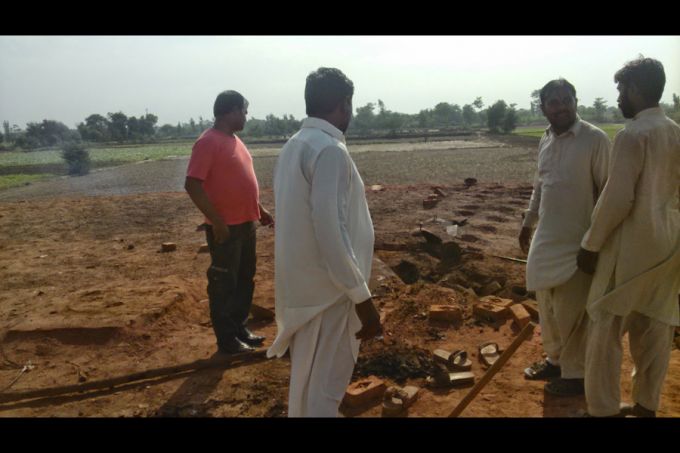
.- The reported killing of a Christian couple in Pakistan by a mob on Tuesday has sparked calls for the nation's government to protect its people, and especially its minorities.“The burning alive of a Christian couple is a test case for our government. Our government must provide protection to all citizens and especially to the poor and downtrodden Christians,” Fr. James Channan, O.P., director of the Peace Center Lahore, told CNA Nov. 4 in an email interview.
That morning, Shahzad Masih and his wife Shama, a Christian couple, were allegedly killed and their bodies burned by a mob after they were accused of desecrating the Quran. The couple lived in Kot Radha Kishan, a city located nearly 40 miles southwest of Lahore. Shama was pregnant, and the couple had three additional children. They were reported to be in their 20s or 30s. Fr. Channan said he is “under a deep shock and disbelief” because of the incident. “I demand from the government and law enforcing agencies of Pakistan that justice must be done and culprits must be punished.”
The Masihs' bodies were allegedly burned in a brick kiln where they had worked, but there are varying reports of the details of the case.
LOS ANGELES, CA (Catholic Online) - The 2014 election has been characterized as an American referendum on Obama's tenure as president. Americans have been angered by NSA spying, alleged criminal behavior within the IRS, a lack of cooperation with investigations into corruption, frightening immigration policy, Ebola policy, and a general lack of impact against the rise of Islamic militancy, and this is the short list.
The impacts of this election are significant. Obama for example, could face impeachment, especially as congressional investigations gain steam. Notably, the subpoenaed Fast and Furious documents were turned over on Tuesday. Other impacts include the inability of Obama to confirm Supreme Court appointments for the next two years, which will guarantee the conservative makeup of the court for a considerable time. Liberal Justice Ruth Bader Ginsberg is widely expected to depart office soon, and Obama will likely have difficulty filling the seat with someone he prefers.
Maronite Cardinal Mar Bechara Boutros Rahi said that Lebanon is a neutral state under the National Charter, stressing the need for …




Population Movements to Keserwan - The Khazens and The Maans
ما جاء عن الثورة في المقاطعة الكسروانية
ثورة أهالي كسروان على المشايخ الخوازنة وأسبابها
Origins of the "Prince of Maronite" Title
Growing diversity: the Khazin sheiks and the clergy in the first decades of the 18th century
Historical Members:
Barbar Beik El Khazen [English]
Patriach Toubia Kaiss El Khazen(Biography & Life Part1 Part2) (Arabic)
Patriach Youssef Dargham El Khazen (Cont'd)
Cheikh Bishara Jafal El Khazen
Patriarch Youssef Raji El Khazen
The Martyrs Cheikh Philippe & Cheikh Farid El Khazen
Cheikh Nawfal El Khazen (Consul De France)
Cheikh Hossun El Khazen (Consul De France)
Cheikh Abou-Nawfal El Khazen (Consul De France)
Cheikh Francis Abee Nader & his son Yousef
Cheikh Abou-Kanso El Khazen (Consul De France)
Cheikh Abou Nader El Khazen
Cheikh Chafic El Khazen
Cheikh Keserwan El Khazen
Cheikh Serhal El Khazen [English]
Cheikh Rafiq El Khazen [English]
Cheikh Hanna El Khazen
Cheikha Arzi El Khazen
Marie El Khazen