BEIRUT: About a minute from the end of Richard Strauss’ tone poem “Don Juan,” the music reaches a climax, then comes …
Head of al-Mustaqbal Movement Saad Hariri is expected to meet with Maronite Patriarch Beshara al-Rahi on Monday in the Italian capital …
If you thought that two disastrous wars in the Middle East spread over 13 miserable years might cure Washington of its …
By DAVID SCHENKER
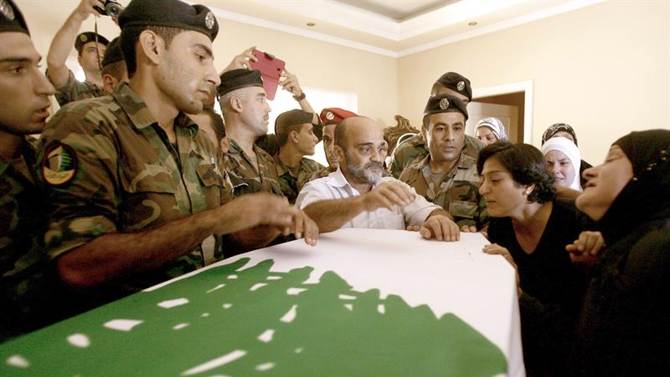
The Obama administration has responded to the beheadings of two American journalists by launching an air campaign to “degrade and destroy” Islamic State in Iraq and Syria. ISIS, as it is also known, is kidnapping and decapitating Lebanese citizens too, and in recent weeks two Lebanese soldiers were killed. But Beirut is in a state of paralysis, fearing that an assault on ISIS in Syria would result in the execution of about two-dozen other Lebanese troops and police currently held hostage by the group.
Lebanon already hosts nearly 1.5 million Syrian refugees, has a prolonged vacancy in the president’s office, and is experiencing increasing civil strife. So the kidnapping ordeal makes a precarious situation worse as Lebanon emerges as the next front line in the Islamist militia’s offensive. A state comprised largely of Sunni and Shiite Muslims and Christians, Lebanon is divided about the war in Syria. Members of Lebanon’s Sunni sect sympathize with the Syrian rebels against the government of Bashar Assad, and some are crossing the border to join the militant Islamist groups in the revolt. Meanwhile, the Lebanese Shiite militia Hezbollah has deployed thousands of troops in support of the nominally Shiite Assad in Damascus.
Arbitrating between these hostile sectarian groups is the Lebanese Armed Forces, or LAF, a historically nonaligned institution with broad popular support. Recently, however, this former bastion of sectarian neutrality has been cooperating with Hezbollah to target Sunni militants in Lebanon like ISIS. This tack has eroded the military’s stature and placed it squarely in the cross-hairs of Sunni terrorist groups.

Population Movements to Keserwan - The Khazens and The Maans
ما جاء عن الثورة في المقاطعة الكسروانية
ثورة أهالي كسروان على المشايخ الخوازنة وأسبابها
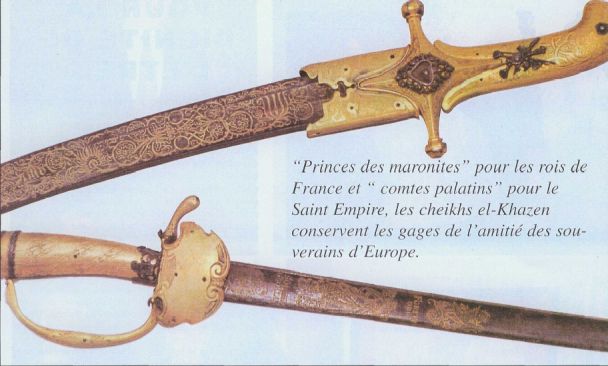
Origins of the "Prince of Maronite" Title
Growing diversity: the Khazin sheiks and the clergy in the first decades of the 18th century
Historical Members:
Barbar Beik El Khazen [English]
Patriach Toubia Kaiss El Khazen(Biography & Life Part1 Part2) (Arabic)
Patriach Youssef Dargham El Khazen (Cont'd)
Cheikh Bishara Jafal El Khazen
Patriarch Youssef Raji El Khazen
The Martyrs Cheikh Philippe & Cheikh Farid El Khazen
Cheikh Nawfal El Khazen (Consul De France)
Cheikh Hossun El Khazen (Consul De France)
Cheikh Abou-Nawfal El Khazen (Consul De France)
Cheikh Francis Abee Nader & his son Yousef
Cheikh Abou-Kanso El Khazen (Consul De France)
Cheikh Abou Nader El Khazen
Cheikh Chafic El Khazen
Cheikh Keserwan El Khazen
Cheikh Serhal El Khazen [English]
Cheikh Rafiq El Khazen [English]
Cheikh Hanna El Khazen
Cheikha Arzi El Khazen
Marie El Khazen