By , Staff writer / May 28, 2014
Clinching months of tactical victories for the Syrian regime, next week's presidential election kicks off today with advance voting for Syrians living overseas.
Leading the ballot is President Bashar al-Assad, who has led the country through a three-year civil war that has killed an estimated 160,000 people, caused an exodus of 3 million, and displaced internally many more.
The official election date is June 3. International observers have criticized the vote as illegitimate and impossible to hold during a civil war, The New York Times reports.
Mr. Assad is seeking a third seven-year term after taking over from his father, Hafez, in 2000. Neither of his little-known opponents, Hassan el-Nuri and Maher al-Najjar, is considered to have any chance of winning. The United States and the Syrian opposition have dismissed the election as a sham which, analysts said, is apparently intended to impart a sense of legitimacy to a government that tolerated no real dissent before the uprising and has cracked down unrelentingly on its opponents since the first stirrings of revolt in March 2011.
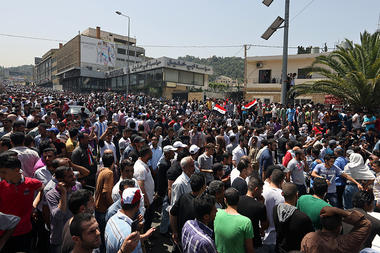
That hasn’t slowed the momentum. Today thousands of Syrian exiles in Lebanon jammed the streets outside the Syrian embassy in Beirut to cast their ballot on the first day of expatriate voting. Most of those gathered said they were voting for Assad. “My blood type is Bashar,” Ahmed al-Ali, a restaurant worker from Aleppo told the Times. “I eat bread Bashar brings to Syria. Every country has mistakes.
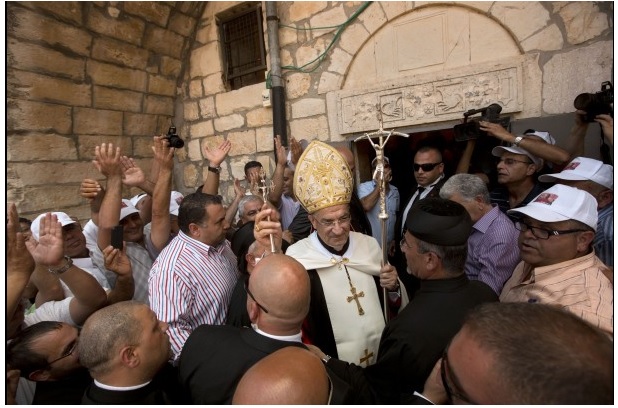
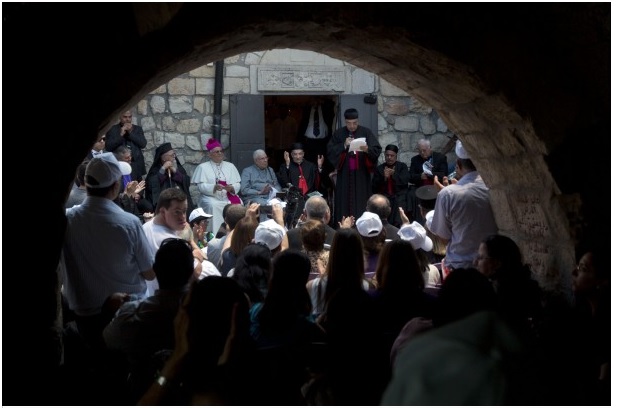
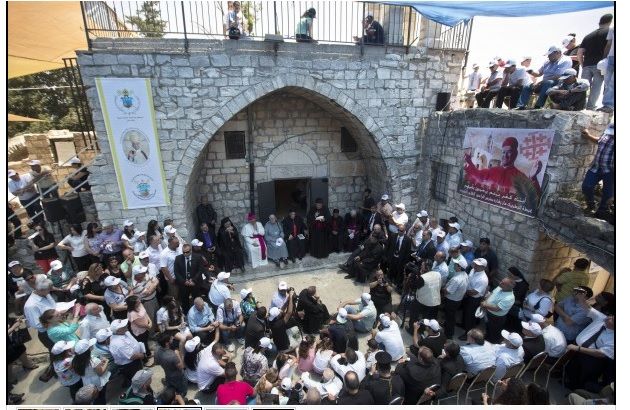
By , CAPERNAUM, Israel — The leader of Lebanon’s Maronite Catholic church celebrated an outdoor Mass Wednesday for hundreds of exiled countrymen who are considered traitors by many back home for helping Israel maintain an 18-year occupation of south Lebanon.
Cardinal Bechara Rai had soothing words for the former Lebanese militiamen and their families, who fled their country in 2000, many with just the clothes on their backs, as their Israeli allies withdrew from Lebanon. “Innocence paid the price and you are paying the price because of an international and regional game,” he said, standing behind the altar at sunset, with the biblical Sea of Galilee as a dramatic backdrop. He assured the exiles he was trying to help, adding: “We are following up your suffering with the respective authorities in Lebanon.”
Some of the faithful said they hope the cardinal’s unprecedented pilgrimage to Israel — the first Lebanese religious leader to do so — is a signal they may be able to return home someday. “We are very grateful,” said Vivian Shadid, 25. “We are full of hope that someone is fighting for us, that someone wants us.”
For others, return remains a distant possibility.
The young already speak better Hebrew than Arabic, while some older exiles, especially those who held senior positions in the former South Lebanon Army militia, would face imprisonment if they returned.
Victor Nader, a 55-year-old former senior SLA commander who now works as an electrician, said that “until lots of things change in Lebanon, I wouldn’t think about going back.” He said the cardinal’s visit boosted the morale of the community.
Mariam Younes, 19, was only 5 when her family fled. She speaks accent-free Hebrew and works as a waitress. She misses her extended family in Lebanon, she said, but is concerned about how the community there would receive the exiles. “We are considered traitors in Lebanon,” she said. “And then there’s the bad economic situation” in Lebanon.
Israel invaded Lebanon repeatedly, including in 1982 in an offensive that initially was meant to drive PLO fighters from southern Lebanon.
The war turned into a drawn-out military occupation of parts of the south, where Israel carved out a “security zone” meant to serve as a buffer against cross-border attacks by the Lebanese Hezbollah.
During those years, the South Lebanon Army militia fought alongside Israeli troops against Hezbollah, today the strongest force in Lebanon.
About 3,500 former SLA men and their families still live in Israel, said Shadid, 25, who studies music at Haifa University and said she can’t return because of her father’s military past.

By Alice Fordham - NPR NEWS
The Beirut Holiday Inn rises behind the man who built it, Abdal Mohsin Kattan in 1975. The Holiday Inn was one of the leading hotels in Beirut at a time when it was the most glamorous city in the Middle East. But when the Lebanese civil war broke out in 1975, the hotel was fiercely contested by rival militias. Lebanese are still debating what to do with the building. Thomas J. Abercrombie/National Geographic/Getty Images
To check into Beirut's Holiday Inn these days, you need a permit from the army and the stamina to climb 26 flights of decaying stairs to the concrete carcass of a restaurant at the top that used to rotate.
This towering edifice may not look it today, but it was once the toast of Beirut, the most glamorous city in the Middle East before the 1975-90 civil war turned the Lebanese capital into a byword for urban dystopia.
Unlike the U.S., where the Holiday Inn chain has a reputation for value, the one that opened in Beirut in the early 1970s quickly joined other upscale landmarks in the city, which lured the rich and powerful from throughout the Middle East and Europe.
Millionaires would sail their yachts through the shimmering Mediterranean waters and dock at the St. Georges Yacht Club. At the hotel, they would sip fine wines in a luxurious French restaurant. The chandeliers sparkled in the wedding hall. There were velvet seats in the cinema next door.
Now, standing at the bottom and craning your neck up, you're confronted with a ravaged, pockmarked shell of a building.
Lebanese Maronite patriarch visits Holly Land, first since 1948 to welcome Pope Francis

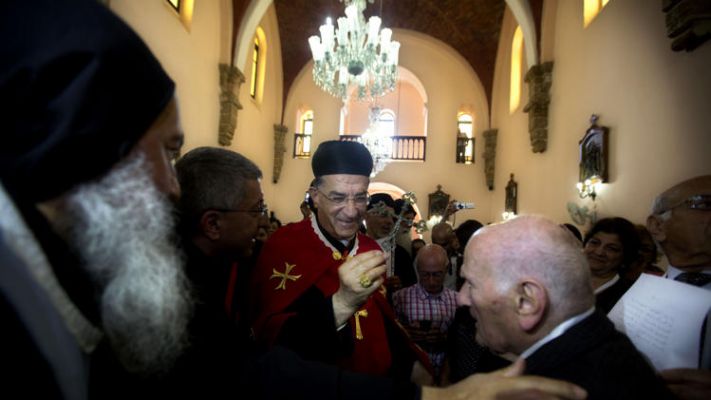

Cardinal Patriarch Rai said Monday that his journey is celebrating the roots of Christianity in the region. In a veiled response to his critics, he says he was misunderstood and that his journey is purely spiritual. He was cheered by several dozen faithful as he arrived at a Maronite parish in Jaffa, today part of Israel's second largest city, Tel Aviv.
On Monday morning, Rai left Jerusalem, visiting a monastery outside the city on his way to Jaffa. He is to join the pope again in the afternoon for Mass at Jerusalem's Cenacle, the room where Christians believe the Last Supper was held.
Francis' trip ends Monday, but Rai's will continue. He is scheduled Tuesday to return to the West Bank for a visit to Beit Sahour and is slated to return to Israel Wednesday and Thursday, touring the north, including the Galilee region, Nazareth, Acre and Haifa, where many of the country's Arab Christian minority live.
He will celebrate Mass with the Lebanese community living in Israel and is slated to return to Lebanon via Jordan Thursday.

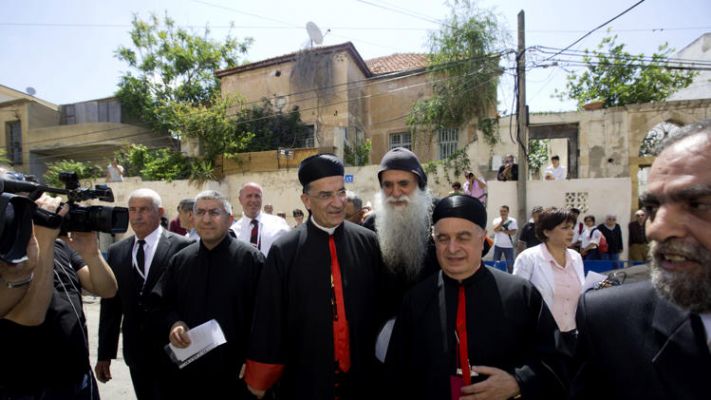
Maronite Patriarch Beshara al-Rai (C) visits the Latrun Monastery, near Jerusalem May 26, 2014. Rai joined the Pope Francis on his tour of the Holy Land, drawing criticism in Lebanon which remains in a formal state of war with its southern neighbor Israel. REUTERS/Nir Kafri


Pope continues historic visit in the Holy Land
Pope at Yad Vashem: Never again, Lord, never again!
Pope Francis offers prayers at Israeli separation wall in Bethlehem

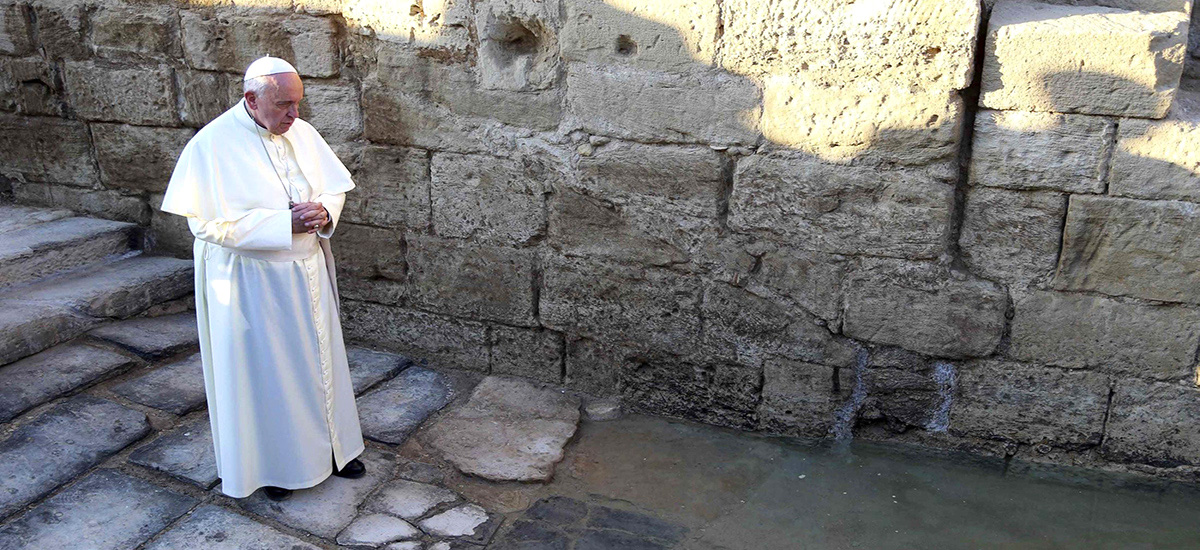
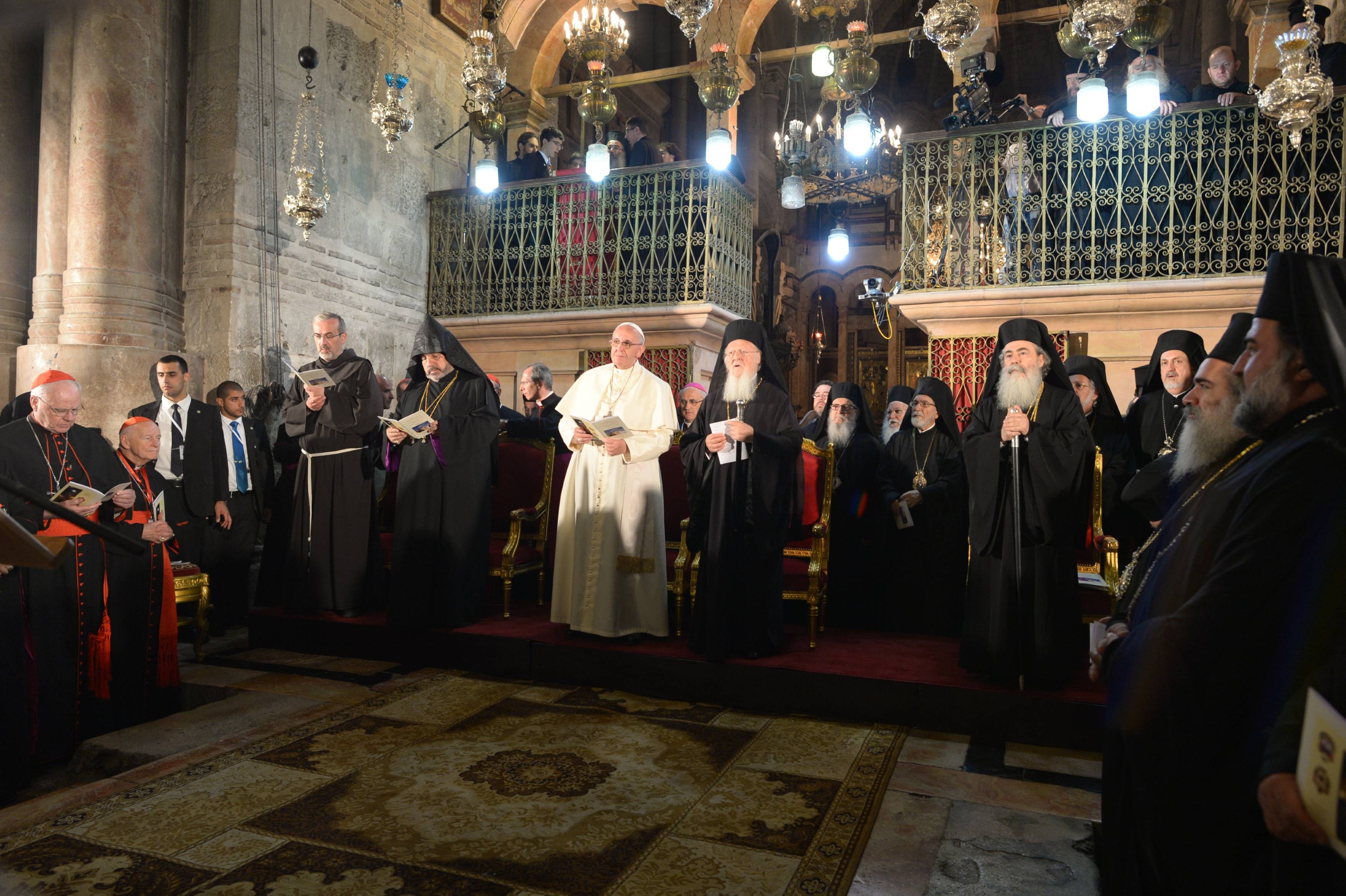
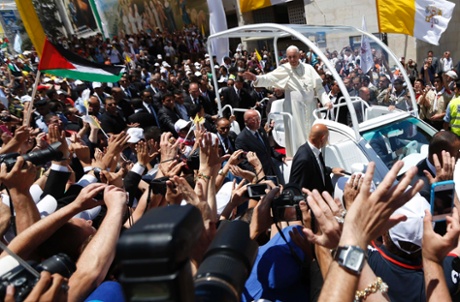
LOS ANGELES, CA (Catholic Online) - Arriving at Israel's Ben Gurion International Airport in Tel Aviv, Pope Francis was greeted by Peres and by Prime Minister Benjamin Netanyahu. The pope repeated his invitation to Peres using exactly the same words with which he had invited Abbas. He also urged Israel to stay on the "path of dialogue, reconciliation and peace," saying "there is simply no other way. Starvation never takes a vacation --
"The right of the state of Israel to exist and to flourish in peace and security within internationally recognized borders must be universally recognized," the pope said. "At the same time, there must also be a recognition of the right of the Palestinian people to a sovereign homeland and their right to live with dignity and with freedom of movement." Pope Francis likewise condemned the previous day's shootings at the Jewish Museum in Brussels, where three people, including two Israeli citizens, were killed.




Population Movements to Keserwan - The Khazens and The Maans
ما جاء عن الثورة في المقاطعة الكسروانية
ثورة أهالي كسروان على المشايخ الخوازنة وأسبابها
Origins of the "Prince of Maronite" Title
Growing diversity: the Khazin sheiks and the clergy in the first decades of the 18th century
Historical Members:
Barbar Beik El Khazen [English]
Patriach Toubia Kaiss El Khazen(Biography & Life Part1 Part2) (Arabic)
Patriach Youssef Dargham El Khazen (Cont'd)
Cheikh Bishara Jafal El Khazen
Patriarch Youssef Raji El Khazen
The Martyrs Cheikh Philippe & Cheikh Farid El Khazen
Cheikh Nawfal El Khazen (Consul De France)
Cheikh Hossun El Khazen (Consul De France)
Cheikh Abou-Nawfal El Khazen (Consul De France)
Cheikh Francis Abee Nader & his son Yousef
Cheikh Abou-Kanso El Khazen (Consul De France)
Cheikh Abou Nader El Khazen
Cheikh Chafic El Khazen
Cheikh Keserwan El Khazen
Cheikh Serhal El Khazen [English]
Cheikh Rafiq El Khazen [English]
Cheikh Hanna El Khazen
Cheikha Arzi El Khazen
Marie El Khazen