Lebanese men watch the opening of the trial in absentia of four members of the Hezbollah Shiite movement accused of murdering …
The opening session of the Special Tribunal for Lebanon trials witnessed a recollection of the bloody scenes of February 14, 2005, …
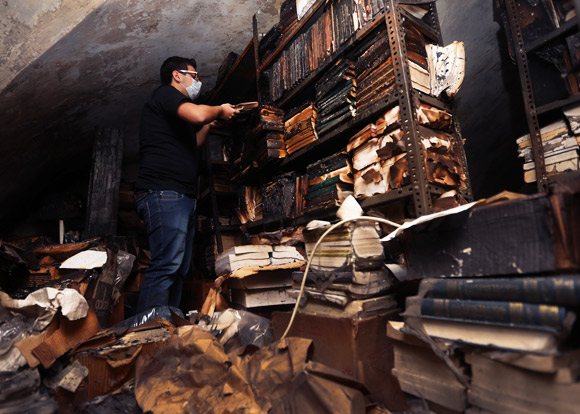
New York Times - On a Friday night shortly after New Year’s, a group of men broke into an antiquarian bookshop in the northern Lebanese city of Tripoli and set it on fire. The shop belonged to Father Ibrahim Sarrouj, a Greek Orthodox priest. A longtime resident of Tripoli’s old Serail neighborhood, he had amassed a large collection of books—rare first editions of scholarly texts, novels in different languages, dictionaries, encyclopedias, out-of-print magazines—in the forty-plus years since he opened for business. The fire burned for under an hour before it was discovered, but an untold number of books were destroyed.
Tripoli is a mess. Just a few miles from the Syrian border and comprising a religiously mixed population, it’s become one of the most dangerous places in Lebanon. Sunnis and Alawites—variously at odds since the Lebanese civil war and now feeling the stakes of their feud deepened by the existential conflict next door—lob mortars and rocket-propelled grenades at each other’s neighborhoods while car bombs explode outside congregational mosques. A preponderance of religious and political powerbrokers in the city has made it difficult for the Lebanese Army to establish order. Radical Islamists—previously a kooky fringe in Lebanese politics—attract more support each day from Tripolitans incensed by Hezbollah’s involvement on the side of the Assad regime in the Syrian civil war, which has brought over a million refugees into Lebanon. Meanwhile, the princes of the alleyways (as neighborhood strongmen are sometimes called) vie for influence with the city’s other grandees, including two Sunni billionaire politicians and a former security czar.
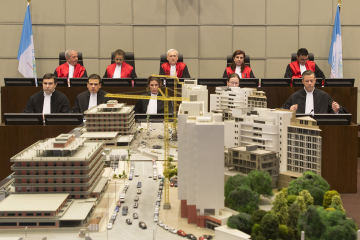
From left: Judges Walid Akoum, Janet Nosworthy, David Re, Micheline Braidy and Nicola Lettier preside over the first hearing in the in absentia trial of four people accused of murdering former Lebanese premier Rafiq Hariri at the Special Tribunal for Lebanon in The Hague on Jan.16, 2014
| TIME.com http://world.time.com/2014/01/16/lebanon-hariri-sectarian-arab-wars/#ixzz2qcBnYsSW
The billboards are popping up all over Beirut: The 3M company is offering to “protect your loved ones” with its line of polyvinyl films designed to keep glass windows from shattering into deadly shrapnel in the event of a bomb blast. And business is booming. A series of suicide bomb attacks over the past five months have turned this carefree capital by the sea into a safety conscious security zone, says Nada Nehme Khoury, 3M Lebanon’s managing director.
Not since the 2006 war with Israel have Beirut residents been so cautious. A widely disseminated U.S. State Department travel alert warning American citizens to avoid “western style” venues has only added to the sense of unease. Even the old downtown souks, that most Arab of outdoor shopping experiences, features brands like Adidas, Zara, H&M and a brand new multiplex cinema. In a city with a reputation for partying during war time—the 2006 World Press Photo of the year summed up local attitudes with a group of young Lebanese blasting past crumpled buildings in a red convertible—the violence is finally taking its toll. The wealthy speak of relocating to Europe or the U.S. A film festival was canceled. Middle class families are staying closer to home, and making them safer. “Usually it’s banks and embassies that install blast film,” says Khoury. “Now it’s families worried about their children.” To Khoury, it’s starting to feel a lot more like 1982, when she established her company three years into Lebanon’s 15-year civil war.
Population Movements to Keserwan - The Khazens and The Maans
ما جاء عن الثورة في المقاطعة الكسروانية
ثورة أهالي كسروان على المشايخ الخوازنة وأسبابها
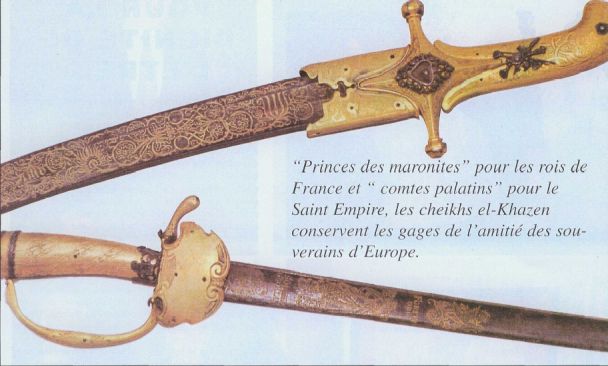
Origins of the "Prince of Maronite" Title
Growing diversity: the Khazin sheiks and the clergy in the first decades of the 18th century
Historical Members:
Barbar Beik El Khazen [English]
Patriach Toubia Kaiss El Khazen(Biography & Life Part1 Part2) (Arabic)
Patriach Youssef Dargham El Khazen (Cont'd)
Cheikh Bishara Jafal El Khazen
Patriarch Youssef Raji El Khazen
The Martyrs Cheikh Philippe & Cheikh Farid El Khazen
Cheikh Nawfal El Khazen (Consul De France)
Cheikh Hossun El Khazen (Consul De France)
Cheikh Abou-Nawfal El Khazen (Consul De France)
Cheikh Francis Abee Nader & his son Yousef
Cheikh Abou-Kanso El Khazen (Consul De France)
Cheikh Abou Nader El Khazen
Cheikh Chafic El Khazen
Cheikh Keserwan El Khazen
Cheikh Serhal El Khazen [English]
Cheikh Rafiq El Khazen [English]
Cheikh Hanna El Khazen
Cheikha Arzi El Khazen
Marie El Khazen