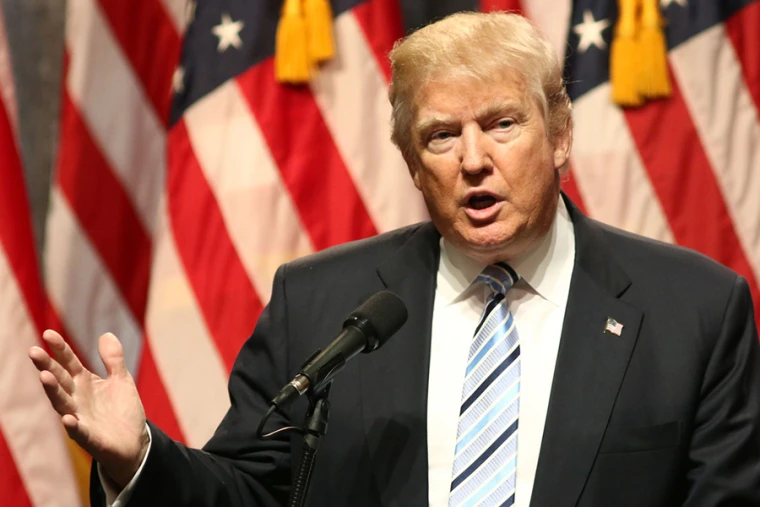
By Matt Hadro (CNA).- President Donald Trump on Friday called on state governors to reopen churches “right now.” At a Friday press briefing, Trump said that the U.S. Centers for Disease Control (CDC) would “at my direction” be issuing new guidance for churches to reopen. He said he was identifying houses of worship as “essential places that provide essential services,” noting that state governors had classified such establishments as liquor stores and abortion clinics as providing essential services, but not churches. The White House and the CDC have for weeks reportedly been in the process of drafting and publishing new guidelines for churches to reopen. On Friday, CNA learned that, according to someone familiar with the deliberations, the new CDC guidance is expected on Friday afternoon and will differ from its previous interim guidance for faith communities that was issued in March, at the outset of the U.S. pandemic. That guidance was reportedly not cleared by the White House before publishing. That guidance was reportedly met with concern by many in the faith community for certain provisions that seemed to intrude on the autonomy of religious groups, such as one recommendation that Jews should be allowed to use electronic devices on the Sabbath to stream services online.
The new guidance, CNA was told, would be more sensitive to the autonomy of churches and religions and will apply a “lighter touch” to them, functioning as a set of recommendations rather than instructions, and implying that actions taken by state and local governments that go beyond the federal recommendations are inappropriate. It has the input of lawyers with experience in religious freedom cases. The guidance will include a section for state and local leaders, saying they should recognize religious gatherings as something unique and different from other gatherings and protected by the First Amendment; it will imply that states should not be treating churches more strictly than they are treating other public gatherings or businesses reopening. Churches, however, will not be officially classified as “essential” establishments, CNA was told, as that classification can vary state-by-state in its implications for religious groups. However, calling churches “essential” in the administration’s “messaging” on the guidance was reportedly discussed.
![Lebanon is in throes of an economic meltdown that has crushed businesses, thrown tens of thousands of people out of work and led its currency to dramatically depreciate [File: Bloomberg]](https://www.aljazeera.com/mritems/imagecache/mbdxxlarge/mritems/Images/2020/5/21/42d6511bb558452892192529cf8d03b7_18.jpg)
by aljazeera.com -- by Timour Azhari -- Beirut, Lebanon - Lebanese Prime Minister Hassan Diab on Thursday marked 100 days in office by touting his government's achievements during a speech at the Grand Serail - the seat of government power in Beirut. But a few blocks away, the mood was decidedly uncelebratory, as protestors once again took to the streets to vent their frustrations with a broken apparatus of a state that is not reforming fast enough to quell their anger. Comparing Lebanon to a rapidly-sinking ship that his three-month-old government is saving against all odds, Diab emphasised his government's push for anti-corruption legislation, as well as its attempts to secure more than $20bn in aid from the international community to rescue Lebanon's crisis-ridden economy. "One hundred days ago, the ship was being rocked by incoming waves, and water was entering it from many big holes. The fuel tanks were empty, the motors powerless," Diab said. "The ship was sinking rapidly, and the lifeboats were either missing or of no use. One hundred days ago we had no other choice but to take over command of the ship." "A few adventurers stood on the deck of the boat in front of scared and worried eyes. They told the passengers, 'Let us attempt rescue,'" Diab went on. "Each of those adventures went about closing the holes and fixing the malfunctions. They used their bodies as sails and held the helm, and the voyage began."

by voanews.com -- Dale Gavlak -- AMMAN, JORDAN - Prime Minister Hassan Diab says Lebanon, now suffering from an acute financial crunch and facing a COVID-19 outbreak, is also at risk of starvation. He warns that the multiple crises could spark a new migration to Europe and is asking the United States and Europe for financial help. The financial crisis is on a scale never seen before in the country. Inflation, poverty and unemployment have soared in Lebanon in recent months, with prices of goods doubling in many cases. Diab says the crisis could result in people being unable to buy bread, a staple. Analyst Michael Young says there are only two ways ahead for Lebanon. One is to carry out overdue reforms that will permit the International Monetary Fund to provide $10 billion in the first phase of a bailout plan. Young says he believes it is the only available key to unlocking wider foreign aid from the World Bank and the West. The other choice, he told The National newspaper, is to follow the path leading to “bankruptcy, state collapse, chaos, possibly famine, and mass emigration.”
Professor Habib Malik of the Lebanese American University says reforms are badly needed, telling VOA that Lebanon faces difficult, stark choices that won’t be easy to enact. “Lebanon is suffering from multiple, very profound challenges," he said. "We know the IMF is not a charitable organization. They will come with all kinds of very austere conditions. This will translate into suffering for those who did not cause the problem but who have received the short end of the stick. The same political class who did all of this is just going to hang around. It’s the same criminal political class that got us here.”
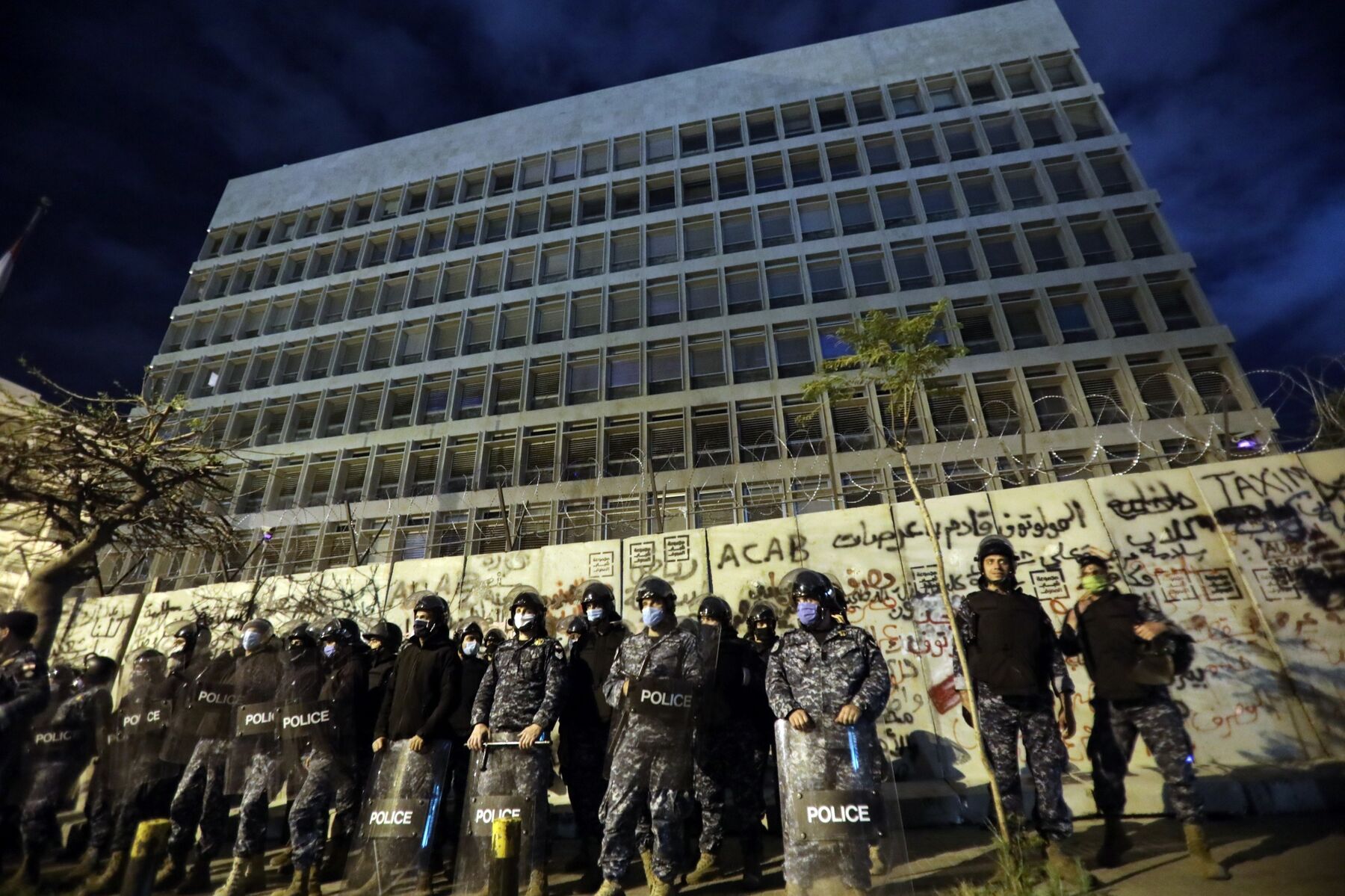
by bloomberg.com -- Dana Khraiche -- Lebanese banks are urging the government to sell state assets and defer maturities to avoid defaulting on its domestic debt and driving the country’s finances into an even deeper crisis. The Association of Banks in Lebanon made the recommendations in a response to the economic recovery plan the government is discussing with the International Monetary Fund after seeking $10 billion in assistance. Defaulting on domestic debt would “plunge Lebanon’s output to a level somewhere beyond Yemen’s and Cambodia’s and our people would be impoverished for the next decade,” Salim Sfeir, head of the banking lobby, said during a parliamentary committee hearing on Wednesday.
The government defaulted on $30 billion of Eurobonds in March and is now seeking to hold talks with bondholders, mainly local banks, to revamp its debt. That’s fueling concern among lenders that they may be driven to the wall. The country’s crisis has been years in the making, but financial conditions deteriorated rapidly in 2019 as political upheaval toppled the government of Premier Saad Hariri and foreign currency reserves began to run low, forcing businesses to turn to money changers for dollars they need to pay for imports. The banks are proposing that the government create a $40 billion “defeasance fund” that could settle its debt to the central bank “fairly,” according to a document seen by Bloomberg.
The fund would issue long-dated and interest-bearing securities to the central bank in exchange for a final settlement of the government’s debt. Lenders have parked more than half of their liquidity at the central bank, which holds about $34 billion in local currency debt. Banks would also negotiate a “relief package” on domestic bonds by offering significant coupon reductions through a voluntary debt exchange. They hold domestic debit valued at $14 billion. “This default-avoiding internal exchange can be executed both quickly and smoothly in the interest of all stakeholders,” according to the document. “Avoiding an internal default would indeed preserve existing and future depositors’ confidence.”


Population Movements to Keserwan - The Khazens and The Maans
ما جاء عن الثورة في المقاطعة الكسروانية
ثورة أهالي كسروان على المشايخ الخوازنة وأسبابها
Origins of the "Prince of Maronite" Title
Growing diversity: the Khazin sheiks and the clergy in the first decades of the 18th century
Historical Members:
Barbar Beik El Khazen [English]
Patriach Toubia Kaiss El Khazen(Biography & Life Part1 Part2) (Arabic)
Patriach Youssef Dargham El Khazen (Cont'd)
Cheikh Bishara Jafal El Khazen
Patriarch Youssef Raji El Khazen
The Martyrs Cheikh Philippe & Cheikh Farid El Khazen
Cheikh Nawfal El Khazen (Consul De France)
Cheikh Hossun El Khazen (Consul De France)
Cheikh Abou-Nawfal El Khazen (Consul De France)
Cheikh Francis Abee Nader & his son Yousef
Cheikh Abou-Kanso El Khazen (Consul De France)
Cheikh Abou Nader El Khazen
Cheikh Chafic El Khazen
Cheikh Keserwan El Khazen
Cheikh Serhal El Khazen [English]
Cheikh Rafiq El Khazen [English]
Cheikh Hanna El Khazen
Cheikha Arzi El Khazen
Marie El Khazen