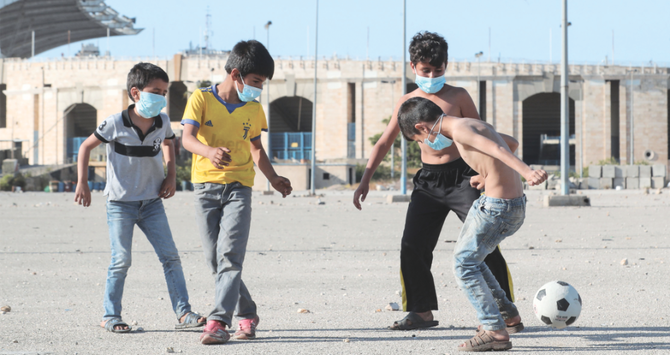
by arabnews.com -- NAJIA HOUSSARI -- The Lebanese Army, Internal Security Forces (ISF) and municipal police patrolled the streets to catch anyone violating the measures, while ISF armored vehicles were deployed on the streets of Beirut and check points were set up across the country. The exchange rate of the dollar to the Lebanese pound (LBP) slightly decreased on the black market in light of the closure of banks and money exchange shops. It was bought for LBP4,150 and sold for LBP4,250. Pharmacies, bakeries, food stores and gas stations were exempted from closing, while security forces caught and issued tickets to beachgoers. People in Tripoli were outraged by the total lockdown amid the economic crisis they are suffering from. Some even tried to open their shops by force on Wednesday night but, the security forces prevented them from doing so.
During a Cabinet meeting held on Thursday, the minister of health, Hamad Hassan, announced: “The ministry’s medical teams were deployed in various regions across the country as part of a widespread campaign aimed at testing those who came in contact with confirmed cases and those suspected of carrying the virus, in order to update the data related to the country’s epidemiological situation.” Hassan is scheduled to provide the government with a report on Sunday, showcasing the information gathered during the lockdown “so that we can work accordingly.” The third phase of the country’s repatriation process started on Thursday with Middle East Airlines (MEA) aircraft bringing back Lebanese nationals who had been tested for COVID-19 from Istanbul, Riyadh, Paris, Abuja, Abu Dhabi and London. Lebanese diplomatic sources told Arab News: “The repatriation of Lebanese citizens will continue to take place by air. So far, we do not intend to bring them back by sea.”

by naharnet -- The International Support Group of Lebanon on Wednesday called on the Lebanese government to “engage all relevant stakeholders, most importantly the Lebanese people, in consultations” on its financial rescue plan. “The ISG takes due note of the unanimous adoption by the Government of Lebanon of its Financial Recovery Plan as a constructive framework for future reforms as well as its decision to request an IMF program as a first step in the right direction,” the ISG said in a statement. “The ISG also takes due note of the assessment by the World Bank that the Plan recognizes the nature and depth of the crisis, the necessary structural reforms and adjustments needed to ensure a vibrant economy with sustainable growth and productive sectors, in a business climate and conditions favorable for private sector development and the prosperity of the Lebanese people,” it added. Recognizing the importance of “domestic political support” necessary for “successful conduct and rapid completion of negotiations with the IMF, the ISG encourages the Government of Lebanon to engage all relevant stakeholders, most importantly the Lebanese people in consultations on the contents of the plan and ways to expedite its implementation,” the Group went on to say. It added: “Equally, the ISG encourages the Government and Parliament to work together in creating the necessary conditions for timely implementation of the needed reforms and to ensure full transparency and accountability as demanded by the citizens of Lebanon.”
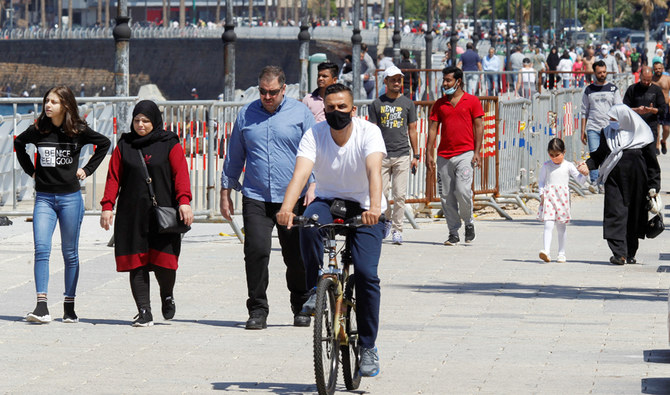
by arabnews.com -- NAJIA HOUSSARI -- BEIRUT: Lebanon’s government on Tuesday ordered the “full closure” of the country for four days, starting Wednesday night, as it seeks to ward off a coronavirus resurgence after easing some restrictions. The rise in new infections follows a drop in cases to zero last week. “This achievement is at risk of collapsing” because some people have not complied with the guidelines, Prime Minister Hassan Diab was quoted as saying during a Cabinet meeting. He said the government will re-evaluate its original five-stage plan for gradually reopening the economy. Hospitals, as well as the food and agriculture sectors, are excluded from the closure. Interior Minister Mohammed Fahmi said: “During the lockdown days, evacuation flights of Lebanese from abroad wishing to return will be completed.” But Dr. Abdul Rahman Al-Bizri, infectious disease specialist and member of the National Emergency Committee on COVID-19, told Arab News that the high number of infections is due to “chaos abroad during the process of repatriation of Lebanese wishing to return … and the chaos inside as result of the lack of follow-up.” He said: “The full-closure step is worthless if the government doesn’t come up with a plan by Monday to contain the epidemic.”
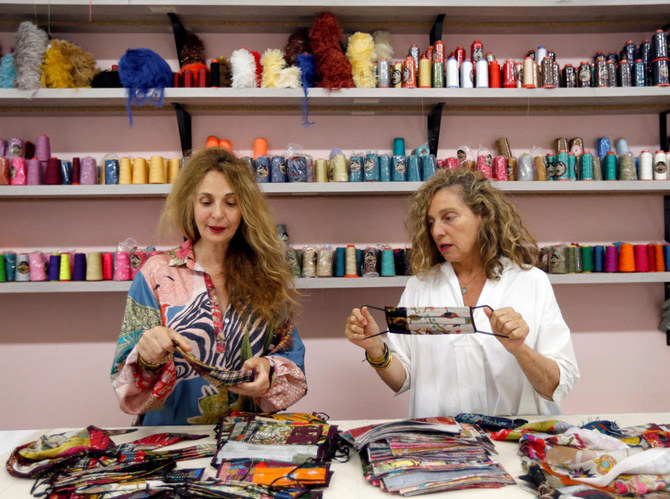
by reuters -- BEIRUT: Beirut-based designer Bokja specializes in making upholstered furniture with vintage fabric but the studio’s workers now dedicate their time to sewing colorful silk face masks to curb the spread of the new coronavirus. Profits from the masks, costing about $35, go to nurses on the frontline of Lebanon’s fight against the disease, which has compounded woes in a country wrestling with economic meltdown. “I saw a nurse from the Rafik Hariri Hospital crying on TV...so we decided that part of the proceeds will go to them,” said co-founder Huda Baroudi. Baroudi’s business is one of several that have converted production of items like furniture and clothing to masks. She said nurses have even ordered some. “They help boost morale” said Baroudi. Lebanon has been under lockdown since mid-March to curb an outbreak that has infected 859 people and killed 26. Authorities are warning of a new wave after cases surged in recent days, as the government eased some curbs and allowed businesses to reopen. Safety rules at supermarkets, pharmacies and shops require people to wear masks. “Face masks are a sad thing but when we gave it this form, and each one is different, it took us back to Bokja’s ideology which is to find beauty in ugliness,” said Maria Hibri, the second founder of Bokja.




Population Movements to Keserwan - The Khazens and The Maans
ما جاء عن الثورة في المقاطعة الكسروانية
ثورة أهالي كسروان على المشايخ الخوازنة وأسبابها
Origins of the "Prince of Maronite" Title
Growing diversity: the Khazin sheiks and the clergy in the first decades of the 18th century
Historical Members:
Barbar Beik El Khazen [English]
Patriach Toubia Kaiss El Khazen(Biography & Life Part1 Part2) (Arabic)
Patriach Youssef Dargham El Khazen (Cont'd)
Cheikh Bishara Jafal El Khazen
Patriarch Youssef Raji El Khazen
The Martyrs Cheikh Philippe & Cheikh Farid El Khazen
Cheikh Nawfal El Khazen (Consul De France)
Cheikh Hossun El Khazen (Consul De France)
Cheikh Abou-Nawfal El Khazen (Consul De France)
Cheikh Francis Abee Nader & his son Yousef
Cheikh Abou-Kanso El Khazen (Consul De France)
Cheikh Abou Nader El Khazen
Cheikh Chafic El Khazen
Cheikh Keserwan El Khazen
Cheikh Serhal El Khazen [English]
Cheikh Rafiq El Khazen [English]
Cheikh Hanna El Khazen
Cheikha Arzi El Khazen
Marie El Khazen